 Notice:

 search
search
search
Sep 19, 2026


When comparing air fryers, buyers often focus on capacity, power, temperature range and cooking programs. However, the heating system is one of the most important parts of an air fryer's thermal design.
One common question is:
Is a dual heating air fryer better than a single heating air fryer?
The short answer is: not necessarily.
A dual heating system can provide heating from more than one position and may offer additional flexibility in thermal design. A single heating system, when properly matched with the fan, airflow path, chamber geometry and temperature control, can also deliver strong cooking performance.
For brands, importers and retailers, the more useful question is not simply which system has more heating elements, but:
Which heating architecture provides the right balance of cooking performance, product complexity, cost, reliability and market positioning for the target product?
This article compares dual heating and single heating air fryers from a technical and B2B product-development perspective.
What Is a Single Heating Air Fryer?
A single heating air fryer uses one primary heating element to generate heat inside the cooking system.
In many conventional basket-style air fryers, the heating element is positioned above the food basket. A fan circulates air through or around the heating element and then directs the heated air toward the food.
The basic system can be represented as:
Heating Element → Fan → Hot Air → Food → Moisture Removal
The heating element provides thermal energy, while the fan and airflow system distribute that heat throughout the cooking chamber.
A single heating architecture generally has a simpler component structure. This can make it suitable for products where manufacturers need to balance:
l Target FOB price
l Product size
l Manufacturing complexity
l Reliability
l Production volume
l Retail positioning
However, single heating does not mean that the cooking system is simple.
The performance of a single-heating air fryer depends heavily on how effectively the heating element works together with the fan and airflow system.
What Is a Dual Heating Air Fryer?
A dual heating air fryer uses two heating elements within the same cooking system, typically positioned at different locations such as the top and bottom of the cooking chamber.
This should not be confused with a dual-basket air fryer.
Dual heating means:
Two heating elements in one cooking chamber
Dual basket means:
Two separate cooking compartments or baskets
They are different product architectures.
In a top-and-bottom dual heating system, the upper and lower heating elements can provide heat from different directions.
For example:
Upper Heating Element + Lower Heating Element + Fan + Airflow
The two heating elements can be controlled together or through different control strategies, depending on the product design.
The purpose is not simply to add another heater. The goal is to create a thermal system that better matches the cooking chamber, airflow and intended cooking applications.
Dual Heating vs. Single Heating: Key Differences
Factor | Single Heating | Dual Heating |
Number of heating elements | One main element | Two heating elements |
Heating direction | Mainly from one location | Heating from multiple locations |
System complexity | Lower | Higher |
Component count | Lower | Higher |
Bottom heating | Mainly through circulating hot air | Direct heating can be provided |
Thermal design flexibility | More limited | Greater flexibility |
Potential BOM complexity | Lower | Higher |
Product differentiation | More conventional | More technical differentiation |
Suitable positioning | Entry to mid-range, depending on design | Mid-range to premium, depending on configuration |
Performance dependency | Heating + airflow + chamber design | Heating + airflow + chamber design + control strategy |
The table shows why the question is more complicated than simply asking which one is "better."
1. Heating Distribution: Where Does the Heat Come From?
The first difference is heating distribution.
With a conventional single-heating design, most of the thermal energy enters the cooking system from one main location.
The airflow system must then distribute the heated air around the food.
This places greater importance on:
l Fan performance
l Airflow direction
l Basket design
l Chamber geometry
l Air inlet and outlet design
l Distance between heating element and food
A dual heating system adds another heat source at a different position.
For example, a top-and-bottom configuration can provide:
l Upper direct heating
l Lower direct heating
l Additional thermal input
l More flexibility in thermal distribution
However, adding a second heating element does not automatically guarantee more uniform cooking.
The heating elements still need to work together with the airflow system.
2. Cooking Uniformity: Does Dual Heating Cook More Evenly?
Cooking uniformity is one of the most important reasons buyers consider dual heating.
With single heating, the system often relies heavily on airflow to distribute heat throughout the cooking chamber.
If airflow is not well designed, some areas can receive more heat than others.
A dual heating system can introduce heat from different positions, potentially reducing the dependence on a single heat source.
However:
More heating elements do not automatically mean more even cooking.
Cooking uniformity is influenced by several variables:
Heating Element + Fan + Airflow + Chamber Geometry + Food Loading
For example, an air fryer with two heating elements but poorly designed airflow may still produce uneven cooking.
By contrast, a well-designed single-heating air fryer can deliver consistent results when its heating power and airflow system are properly matched.
Therefore, buyers should evaluate the complete thermal system rather than counting heating elements.
3. Crispiness and Browning
Crispiness is another area where heating design matters.
Air frying depends on heat transfer and moisture removal from the food surface.
The heating element provides the thermal energy, while airflow helps move heated air across the food and carry moisture away.
This means:
Heating → Airflow → Heat Transfer → Moisture Removal → Browning and Crispiness
A dual heating system can provide additional heat input from another direction. This may be useful for certain cooking applications.
However, it would be inaccurate to say:
"Dual heating always makes food crispier."
Crispiness depends on the entire thermal system.
Fan speed, airflow direction, food loading, basket surface area, temperature control and heating power all matter.
Independent air fryer testing has similarly found that heating power and fan airflow need to work together; airflow that is too weak can increase humidity, while airflow that is poorly matched to heater power can also reduce performance.
4. Heat-Up Time and Temperature Recovery
Another important difference is how the air fryer handles temperature changes.
There are two situations buyers should distinguish:
Preheating
How quickly can the cooking chamber reach the selected temperature?
Temperature recovery
How quickly can the air fryer recover after cold food is added or the drawer is opened?
A dual heating system may provide more total heating capacity, but total wattage alone does not determine performance.
For example:
2000W does not automatically mean better cooking than 1500W.
The result also depends on:
l Cooking chamber volume
l Heating element position
l Fan airflow
l Thermal insulation
l Temperature sensor location
l Control algorithm
l Food load
l Air outlet design
For B2B buyers, temperature recovery can therefore be a more useful sample-testing metric than simply comparing the power rating on the specification sheet.
5. Airflow: The Heating Element Cannot Work Alone
An air fryer is not simply a heating element inside a box.
The heating system and airflow system need to be designed as one thermal system.
The basic relationship is:
Heating Element → Fan → Airflow → Heat Transfer → Cooking Result
The fan moves air through the heating system and around the food.
If the fan is too weak, the system may not distribute heat and remove moisture effectively.
If airflow is too strong for the available heating power, the air may not receive enough heat before reaching the food.
This is why the relationship between heater power and fan performance is critical.
Testing by RTINGS found that fan speed needs to be appropriately matched to heating element power and basket size rather than simply maximizing fan speed.
This is particularly important when developing a dual heating air fryer.
Adding a second heating element changes the thermal load of the system, so the fan, motor, airflow path and control system need to be evaluated together.
For more information, see:
Why Does Airflow Matter in an Air Fryer?
6. Heating Element Technology Also Matters
"Dual heating" describes the number of heating elements, but not the type of heating technology.
A dual heating air fryer can potentially combine different heating element technologies.
For example:
l Upper halogen heating element
l Lower stainless steel tubular heating element
Different heating technologies can have different characteristics in terms of:
l Thermal response
l Radiant heat
l Heat distribution
l Physical design
l Temperature control
l Durability
l Cost
Therefore, buyers should not compare air fryers only by asking:
Single heating or dual heating?
A more complete question is:
What type of heating elements are used, where are they positioned, how much power does each element provide, and how do they work with the airflow system?
For a deeper comparison of heating element technologies, see:
Air Fryer Heating Element: Halogen vs. Stainless Steel Heating Tube
7. Power Consumption and Thermal Management
Dual heating can provide additional heating capacity, but it can also increase the thermal and electrical load of the product.
For example, a dual heating system may need to manage:
l Total rated power
l Individual heater power
l Switching between heating elements
l Temperature sensing
l Thermal protection
l Internal wiring
l Component temperature
l Housing surface temperature
The design objective should therefore not be simply to maximize wattage.
Instead, the goal should be:
Provide sufficient and controllable heating power for the chamber size and cooking application.
This is particularly important for different target markets because electrical requirements, rated voltage, frequency and certification requirements can vary.
The current IEC 60335-2-9:2026 pre-release version specifically includes portable air fryers within its scope and introduces additional requirements relating to portable air fryers. It is currently a pre-release version during its voting period, so buyers should distinguish it from the final published standard when planning compliance.
8. Product Cost and Manufacturing Complexity
For brands and importers, technical performance is only one side of the decision.
The other side is commercial feasibility.
A single heating system generally requires fewer heating components and may have a simpler electrical architecture.
A dual heating system can add:
l Additional heating element
l Additional wiring
l Additional terminals
l Additional thermal management requirements
l More complex control logic
l More assembly considerations
This can affect:
l BOM cost
l Assembly cost
l Testing requirements
l Production complexity
l Serviceability
l Final FOB price
However, the actual cost difference depends on the specific design.
For example, a dual heating system using relatively low-cost tubular heating elements may have a different cost structure from a premium system using a halogen heater combined with a stainless steel heating element.
Therefore, buyers should compare the complete specification, rather than assuming that every dual heating model will have a specific price premium.
For more information:
What Factors Affect the FOB Price of an Air Fryer?
9. Reliability and Maintenance
More components can mean more design considerations.
With a single heating system, there are fewer heating components to control and maintain.
With dual heating, manufacturers need to consider:
l Heating element reliability
l Thermal fuse protection
l Wiring temperature
l Connector reliability
l Control system
l Heat distribution
l Internal temperature
l Cleaning access
l Long-term thermal cycling
This does not mean that a dual heating air fryer is less reliable.
It means that engineering and quality control become more important as system complexity increases.
For OEM and ODM projects, buyers should therefore ask suppliers about:
l Heating element lifetime testing
l Continuous operation testing
l Thermal cycling
l Electrical safety testing
l Temperature protection
l Production inspection
l Finished-product testing
10. Product Positioning: Which System Fits Your Market?
This is particularly important for brands and importers.
Single heating may be suitable for products where:
l Target FOB cost is important
l Product architecture should remain simple
l The target market is price-sensitive
l The product focuses on standard air-frying functions
l The brand wants a conventional and proven configuration
Dual heating may be considered when:
l The product requires additional heating flexibility
l Bottom heating is part of the product proposition
l The product is designed for larger or more demanding cooking applications
l The brand wants a more differentiated technical configuration
l The product targets a higher retail positioning
l Baking, roasting or broader cooking applications are important
Neither architecture is automatically the right choice.
The correct choice depends on the product brief, target market, price positioning and required cooking performance.
FUNLOIV Example: An 8L Dual Heating Air Fryer
FUNLOIV's FL-AF8081DWS provides an example of how a dual heating system can be configured in an air fryer.
The model has:
l 8.0L capacity
l 1500–2000W rated power
l 1500W upper halogen heating element
l 500W bottom S/S304 heating element
l 60–230°C temperature range
l 12 preset cooking functions
l Digital touch control
l Transparent viewing window
l Full metal cooking cavity
l High-speed fan
The two heating elements use different technologies and are positioned to provide heating from the upper and lower parts of the cooking chamber. The product is designed around the interaction between the heating system and airflow rather than treating the heating elements as isolated components.
This type of configuration illustrates an important point:
Dual heating is not simply about adding another heater. It is about designing the heating elements, airflow, chamber and control system as one integrated cooking system.
For OEM and ODM buyers, this distinction is important when evaluating competing suppliers.
How Should Buyers Compare Dual Heating and Single Heating Air Fryers?
When evaluating samples, do not rely only on the specification sheet.
A practical comparison should include:
Ø Preheating time
Measure how long each model takes to reach the target temperature.
Ø Temperature accuracy
Compare the actual chamber temperature with the displayed temperature.
Ø Temperature recovery
Open the drawer, add food and measure how quickly the system returns to the target temperature.
Ø Cooking uniformity
Place food in different areas of the basket and compare the results.
Ø Browning
Check whether food develops a consistent color across the cooking surface.
Ø Crispiness
Compare the texture after cooking under the same conditions.
Ø Moisture removal
Evaluate whether the airflow system effectively removes surface moisture.
Ø Fan noise
Measure operating noise at different cooking stages.
Ø Power consumption
Compare actual power draw rather than relying only on the rated wattage.
Ø Thermal safety
Check surface temperature, thermal protection and continuous-operation performance.
Ø Basket and coating durability
Evaluate the basket, tray, coating and handle after repeated use.
Ø Cleaning and maintenance
Check whether the heating system and surrounding areas are easy to clean.
The objective is not simply to prove that one heating architecture is better.
The objective is to determine whether the complete cooking system meets the product specification.
For a more detailed sample evaluation process, see:
How Can I Test an Air Fryer Sample Before Placing a Bulk Order?
Dual Heating vs. Single Heating: A Practical Decision Framework
For an OEM or ODM project, buyers can use the following framework:
Product Requirement | Configuration to Consider |
Competitive entry-level price | Single heating |
Simple product architecture | Single heating |
Standard air-frying applications | Single or dual, depending on design |
Additional heating flexibility | Dual heating |
Upper + lower heating required | Dual heating |
Premium technical positioning | Dual heating may be considered |
Large cooking chamber | Evaluate heating + airflow together |
Strong crisping performance | Evaluate heater + airflow together |
Baking/roasting applications | Consider overall thermal architecture |
Differentiated product proposition | Dual heating may provide another technical feature |
The key word is consider.
The heating architecture should be selected according to the complete product specification rather than used as a standalone marketing claim.
Frequently Asked Questions
Ø Is a dual heating air fryer better than a single heating air fryer?
Not automatically. Dual heating can provide heating from multiple positions, but actual cooking performance depends on heating power, airflow, fan performance, chamber design, temperature control and food loading.
Ø Does dual heating make food crispier?
It can contribute to the overall thermal system, but crispiness depends heavily on heat transfer and moisture removal. Airflow and heating power must be properly matched.
Ø Does a dual heating air fryer cook faster?
It may, depending on the total heating capacity and system design. However, rated wattage alone does not determine cooking speed. Temperature recovery, airflow and chamber size also matter.
Ø What is the difference between dual heating and dual basket air fryers?
Dual heating refers to two heating elements within the cooking system. Dual basket refers to two cooking compartments or baskets. They are different design concepts.
Ø Is a single heating air fryer less effective?
No. A well-designed single heating system can provide strong cooking performance when its heating element, fan, airflow and temperature control are properly matched.
Ø Why do some dual heating air fryers still cook unevenly?
Adding a second heating element does not automatically solve airflow or temperature-distribution problems. Poor airflow design, unsuitable fan performance, food loading and control strategy can still lead to uneven cooking.
Ø Is dual heating more expensive?
It can increase component count and system complexity, but the actual cost difference depends on the heating elements, power configuration, controls, materials, production volume and OEM requirements.
Ø What should I ask an air fryer supplier about the heating system?
Ask for the heating element type, number and position of heating elements, individual wattage, total power, fan and motor specifications, temperature control method, thermal protection, testing procedure and sample performance data.
Conclusion: Which Air Fryer Heating System Is Better?
There is no universal answer to whether a dual heating or single heating air fryer is better.
A single heating system can provide a simpler architecture, lower component complexity and competitive product positioning when the heating element and airflow system are properly designed.
A dual heating system can provide additional heating flexibility and allow heat to be introduced from different positions, which can be useful for certain cooking applications and product concepts.
But the most important principle is:
More heating elements do not automatically mean better cooking performance.
For an air fryer, the complete system matters:
Heating Element + Fan + Airflow + Chamber Design + Temperature Control = Cooking Performance
For brands and importers developing an OEM or ODM air fryer, the best approach is to define the target capacity, cooking applications, temperature range, power requirements, retail positioning and target cost first. The heating architecture can then be selected to match those requirements.
If you are evaluating a new air fryer project, FUNLOIV can support the process from product configuration and sample development to OEM/ODM customization, quality control and production follow-up.
Send us your target capacity, heating configuration, temperature range and market requirements, and we can discuss a suitable air fryer solution for your project.

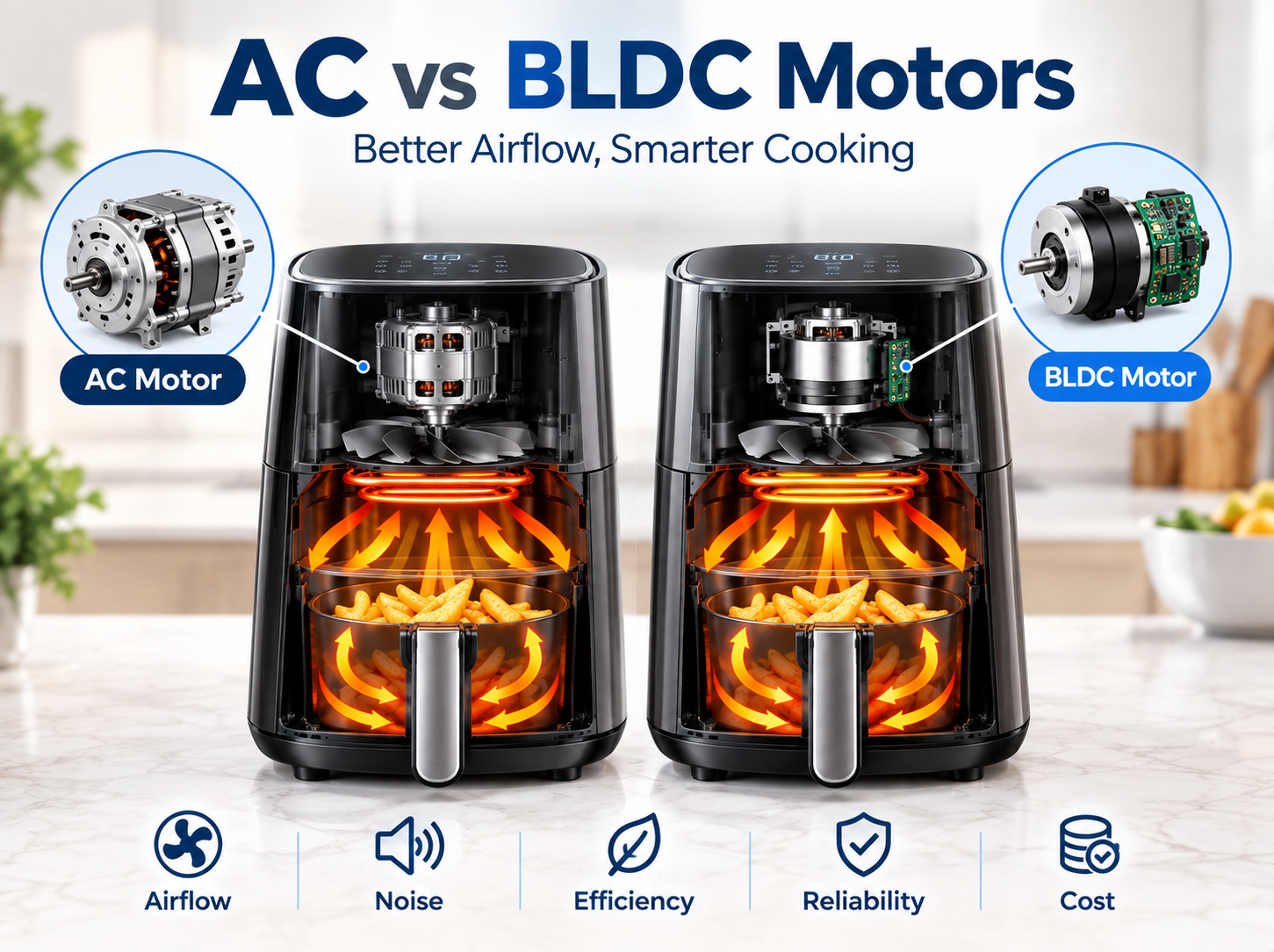
What Is the Difference Between AC and BLDC Motors in Air Fryers?
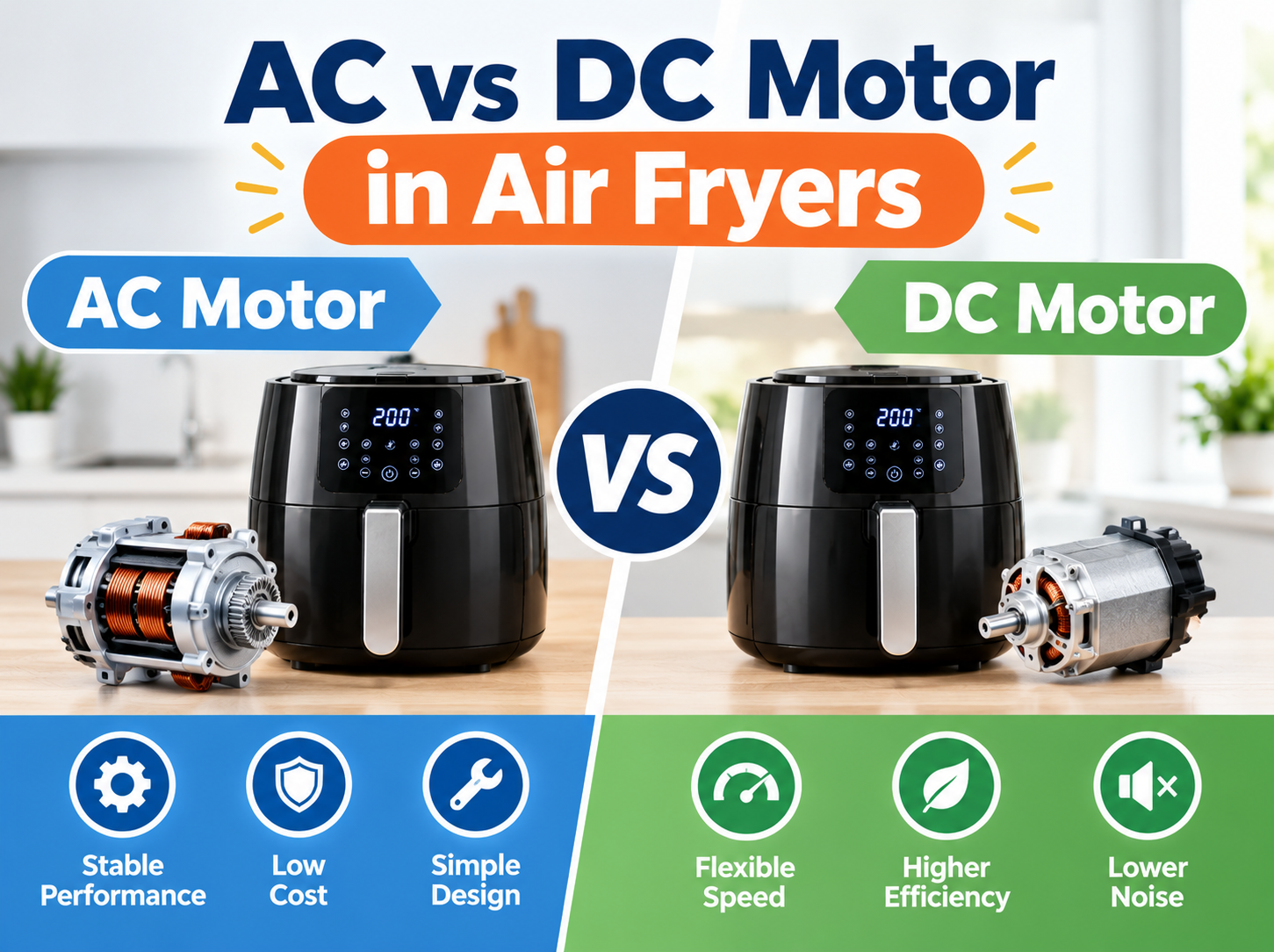
What Is the Difference Between AC and DC Motors in Air Fryers?

Air Fryer for the Middle East: A GCC Buyer’s Guide to G-Mark, Specifications and Compliance
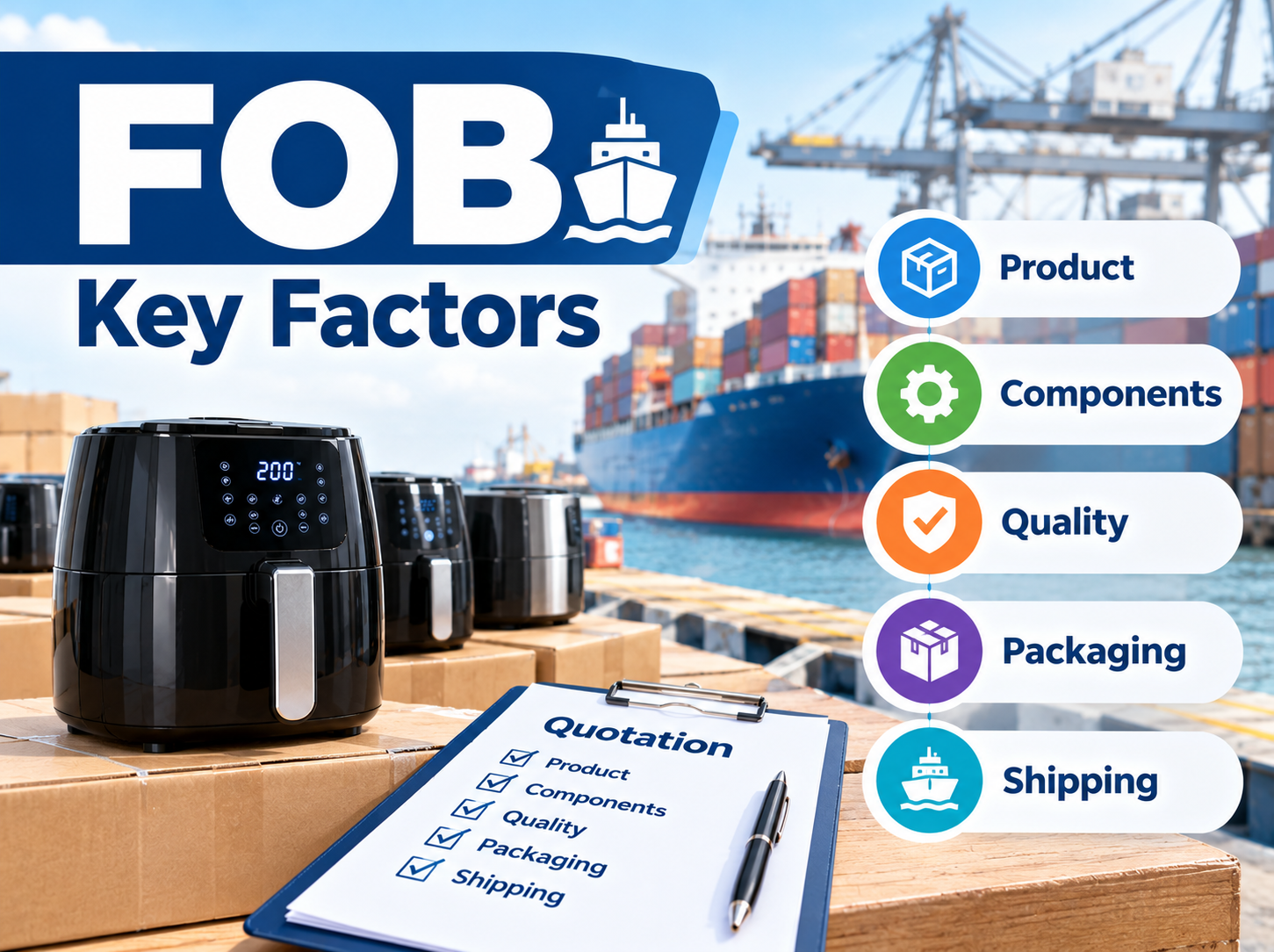
What Factors Affect the FOB Price of an Air Fryer?
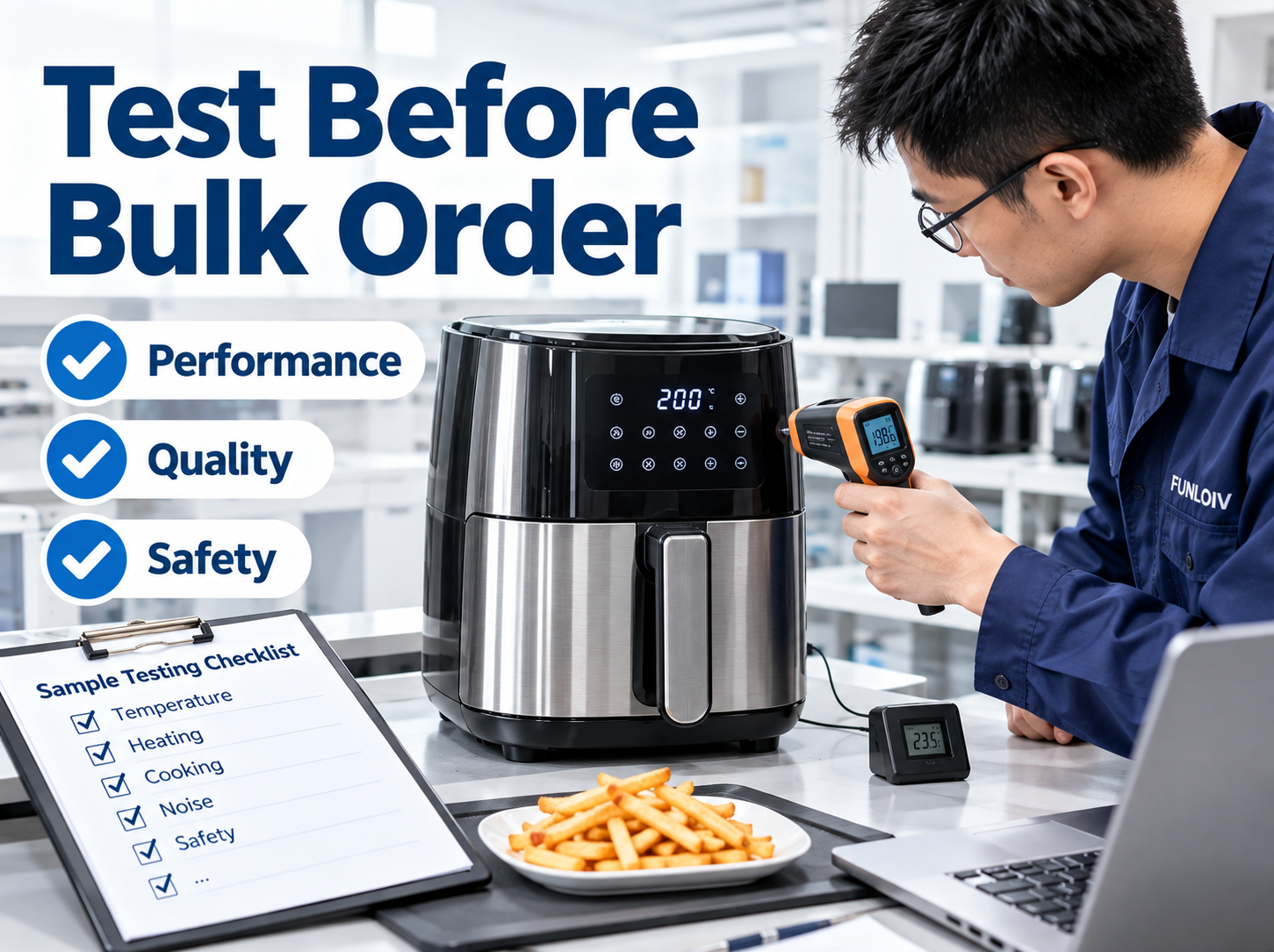
How Can I Test an Air Fryer Sample Before Placing a Bulk Order?
Air Fryer RFQ Checklist: 20 Specifications Buyers Should Include
 + 86 181 3826 8709
 info@funloiv.com
 6/F., Guanglong Building, Pingxin North Road, Longgang, Shenzhen City, Guangdong, China


@ 2009-2026 Shenzhen Funloiv Electric Appliance Co., LtdAll rights reserved


