 Notice:

 search
search
search
Sep 19, 2026


When B2B buyers compare air fryers, they usually focus on capacity, rated power, temperature range, heating elements, basket design and control functions.
The motor is often overlooked.
However, the motor drives the fan that circulates hot air through the cooking chamber. This makes the motor an important part of the air fryer's airflow and heat-transfer system.
A simplified air fryer system can be understood as:
Heating Element → Motor → Fan → Airflow → Food → Heat Transfer
In reality, the system is more complex. Heating power, fan speed, airflow resistance, cooking-chamber geometry, temperature control and basket design all work together.
This is why two air fryers with similar capacity and wattage can still have different airflow, noise and cooking performance.
So, what is the difference between an AC motor and a BLDC motor in an air fryer?
The answer is not simply that one is better than the other.
The more useful question for B2B buyers is:
How does the motor technology affect airflow control, noise, efficiency, reliability, product cost and overall air fryer design?
1. What Is an AC Motor in an Air Fryer?
AC stands for Alternating Current.
An AC motor operates using alternating current and has been widely used in household appliances because of its mature technology and relatively simple electrical architecture.
Many conventional air fryers use relatively simple AC motor systems to drive the fan.
One common example is the shaded-pole motor, which is a simple and cost-oriented motor technology. In air fryer testing, fan speeds of conventional designs are often constrained by the characteristics of the AC motor and the supply frequency.
Typical characteristics of an AC motor system include:
l Mature and widely used technology
l Relatively simple construction
l Straightforward electrical architecture
l Competitive component cost
l Suitable for conventional fixed-speed airflow systems
l Limited flexibility for variable fan-speed control in simple designs
However, it is important not to assume that AC motor means low quality.
A well-designed air fryer with an AC motor can provide effective airflow, stable heating and reliable operation.
The actual performance depends on how the motor, fan, heating element and cooking chamber are engineered together.
2. What Is a BLDC Motor in an Air Fryer?
BLDC stands for Brushless DC Motor.
A BLDC motor is a type of DC motor that uses electronic commutation instead of mechanical brushes.
This distinction is important:
A BLDC motor is a type of DC motor, but not every DC motor is a BLDC motor.
In a BLDC system, an electronic controller controls the motor's electrical phases. This provides engineers with greater flexibility in controlling motor speed and operating behavior.
For an air fryer, this can be particularly useful because the motor is driving the fan.
Instead of treating the fan as a simple on/off component, a BLDC-based system can be designed to provide more flexible speed control.
Typical characteristics of a BLDC motor system include:
l Brushless construction
l Electronic commutation
l Flexible speed control
l Greater airflow-control potential
l Potentially lower motor-related noise at suitable operating speeds
l Good potential for efficiency under appropriate operating conditions
l More flexibility for advanced product development
l Additional electronic control requirements
However, BLDC technology can also increase the complexity and cost of the complete motor-control system.
3. AC vs BLDC: What Is the Main Difference?
The fundamental difference is not simply the power source.
The more important difference for an air fryer is how the motor can be controlled and how that control affects the fan and airflow system.
Factor | AC Motor | BLDC Motor |
Motor type | Alternating-current motor | Brushless DC motor |
Commutation | Depends on motor design | Electronic |
Speed control | Often limited in simple appliance designs | More flexible |
Airflow control | Generally less flexible | More flexible |
System complexity | Lower in basic designs | Higher |
Electronic control | Simpler | More involved |
Component cost | Generally lower | Generally higher |
Noise-control potential | Depends on design | Greater control potential |
Variable-speed operation | Limited in simple systems | Well suited |
Product development flexibility | Moderate | Higher |
Premium positioning | Possible | Often more suitable |
Long-term reliability | Depends on motor design | No brush wear, but other components still matter |
These are general engineering tendencies rather than absolute rules.
For example, an AC motor system can also be electronically controlled in some designs.
Therefore, buyers should evaluate the actual motor and control architecture instead of assuming that every AC motor is fixed-speed.
4. How Does the Motor Affect Air Fryer Airflow?
This is one of the most important questions for air fryer buyers.
The motor itself does not directly cook the food.
Instead:
Motor → Fan → Airflow → Heat Transfer
The motor drives the fan, and the fan moves heated air through the cooking chamber.
The airflow helps:
l Transfer heat to the food
l Remove surface moisture
l Distribute hot air around the food
l Maintain the cooking environment
l Support crisping and browning
Modern air fryer testing has shown that fan speed and airflow are important performance variables alongside heating power and temperature control.
However, more airflow is not automatically better.
If the fan moves air too quickly, the heating system may not be able to maintain the desired air temperature. Research testing has demonstrated that increasing fan speed without increasing available heating power can actually slow temperature recovery.
This leads to an important engineering principle:
The goal is not maximum airflow. The goal is optimized airflow.
5. AC vs BLDC: Fan-Speed and Airflow Control
This is where BLDC technology can provide a meaningful design advantage.
A simple AC motor system may operate the fan at a relatively fixed speed.
A BLDC motor can be electronically controlled to operate at different speeds.
For example, an air fryer could potentially use different fan speeds for:
l Preheating
l Reheating
l Baking
l Roasting
l Air frying
l Dehydrating
l High-temperature crisping
This gives product engineers more flexibility to match airflow with the cooking program.
Why does this matter?
Different cooking modes do not necessarily require identical airflow.
For example:
High airflow
May be useful when strong air circulation is required.
Medium airflow
May be suitable for general cooking.
Lower airflow
May help reduce noise or provide a different cooking profile when maximum circulation is unnecessary.
The key advantage of BLDC is therefore not simply:
“The motor spins faster.”
It is:
“The motor can provide greater flexibility in controlling fan speed and airflow.”
6. Does a BLDC Motor Make an Air Fryer Cook Better?
Not automatically.
This is one of the most important points for B2B buyers.
A BLDC motor can give engineers more control over airflow, but the motor alone does not determine cooking performance.
A complete air fryer system includes:
l Heating element
l Motor
l Fan
l Temperature sensor
l Control system
l Air inlet
l Air outlet
l Cooking chamber
l Basket or tray
l Insulation
These components need to be matched.
For example:
Higher fan speed → stronger airflow
But also:
Higher fan speed → greater air movement through the heater and greater exhaust
If the heating element cannot provide enough energy, the cooking chamber may struggle to maintain the target temperature.
Testing has shown that increasing airflow can improve heat transfer when the heating system is capable of supporting it, but simply increasing fan speed without matching
heating power can produce worse results.
Therefore:
BLDC provides more control. It does not automatically guarantee better cooking.
This distinction is particularly important when evaluating premium air fryer claims.
7. How Does BLDC Affect Air Fryer Noise?
Noise is another area where motor technology can matter.
An air fryer's operating noise does not come from the motor alone.
It can be influenced by:
l Motor
l Fan blades
l Fan speed
l Bearings
l Motor mounting
l Housing structure
l Air turbulence
l Air inlet and outlet design
l Vibration
A BLDC motor can provide greater flexibility for low-speed operation, which may help reduce motor-related noise under suitable operating conditions.
However, it would be inaccurate to claim:
Every BLDC air fryer is quieter than every AC air fryer.
A poorly designed BLDC system can still be noisy.
Likewise, a well-engineered AC motor and fan system can provide acceptable noise performance.
For B2B buyers, the better question is:
What is the actual measured noise level of the complete air fryer?
When evaluating a supplier, ask for:
l Noise level in dB
l Measurement distance
l Fan-speed setting
l Test environment
l Whether the measurement was taken at maximum power
l Whether the test was performed with or without food
A motor specification alone is not enough to establish the noise performance of the finished product.
8. How Does BLDC Affect Energy Efficiency?
BLDC motors can offer efficiency advantages under suitable operating conditions.
One reason is that electronic control can allow the motor to operate at an appropriate speed rather than continuously running at maximum output.
However, buyers should avoid the common assumption that:
BLDC automatically means lower total air fryer energy consumption.
The energy consumption of the complete appliance depends on:
l Heating-element power
l Cooking temperature
l Cooking time
l Motor efficiency
l Fan speed
l Control strategy
l Insulation
l Cooking load
l Airflow design
In most air fryers, the heating element consumes substantially more power than the fan motor. Therefore, improving motor efficiency does not necessarily translate into a proportional reduction in the appliance's total energy consumption.
For B2B product development, the more meaningful question is:
How does the motor and airflow system improve the overall operating efficiency of the appliance?
This requires testing the complete product rather than evaluating the motor in isolation.
9. AC vs BLDC: Reliability and Service Life
Reliability is an important consideration for importers, brand owners and retailers.
One potential advantage of BLDC technology is the absence of mechanical brushes.
Because there are no brushes to wear against a commutator, brush-related wear is not a concern.
However, this does not mean that every BLDC motor automatically has a longer service life.
Actual reliability depends on:
l Bearing quality
l Motor construction
l Operating temperature
l Motor load
l Fan balance
l Operating RPM
l Controller quality
l Electronic components
l Continuous operating time
l Thermal management
For an air fryer supplier, it is therefore more useful to provide a defined reliability specification than simply saying:
“We use a BLDC motor.”
B2B buyers should ask:
l What is the expected motor lifetime?
l Under what operating conditions was it evaluated?
l Has the motor undergone continuous-operation testing?
l What is the motor's rated temperature range?
l How is the motor protected against overheating?
l Is the same motor specification used in mass production?
10. Why Does a BLDC Air Fryer Usually Cost More?
A BLDC air fryer may have a higher BOM and development cost than a conventional AC motor model.
The difference is not necessarily caused by the motor alone.
A BLDC system may require:
l BLDC motor
l Motor driver
l Control electronics
l PCB components
l Speed-control logic
l Firmware or software development
l Additional engineering
l Additional testing
The architecture can therefore be simplified as:
Conventional AC System
AC Motor → Fan → Basic Control
BLDC System
BLDC Motor → Electronic Driver → Speed Control → Fan → Advanced Control
The second system can provide more development flexibility, but it can also require additional components and engineering resources.
This is one reason B2B buyers should not compare two air fryer quotations based only on:
“Both products are 8L.”
The motor architecture may be one of many reasons why two otherwise similar-looking products have different FOB prices.
11. Does BLDC Automatically Mean Variable-Speed Airflow?
No.
This is another important distinction.
A BLDC motor is well suited to electronic speed control, but the presence of a BLDC motor does not automatically mean that the finished air fryer offers multiple fan speeds.
The final product depends on:
l Motor controller
l PCB design
l Control software
l User interface
l Cooking algorithms
l Product architecture
A BLDC air fryer could therefore still operate with a relatively simple control strategy.
When evaluating a BLDC air fryer, buyers should ask:
How is the BLDC motor controlled?
For example:
l Fixed speed
l Two-speed control
l Multi-speed control
l Continuous variable speed
l Program-dependent speed control
This information is much more useful than simply seeing “BLDC Motor” on a specification sheet.
12. AC vs BLDC for Different Air Fryer Product Positions
The appropriate motor depends on the product strategy.
AC Motor May Be Suitable For:
l Entry-level air fryers
l Cost-sensitive products
l High-volume mainstream products
l Simple control systems
l Fixed-speed airflow designs
l Projects where BOM cost is a major consideration
BLDC Motor May Be Suitable For:
l Premium air fryers
l Low-noise product positioning
l Variable-airflow products
l Advanced cooking programs
l Technology-focused product differentiation
l Products where airflow control is an important design objective
This does not mean that BLDC is always the better commercial choice.
A buyer should select the motor based on:
Target Price + Product Positioning + Airflow Requirement + Noise Target + Cooking Strategy + Reliability Requirement
13. Why Is Motor Selection Important for Large-Capacity Air Fryers?
Motor selection becomes increasingly important as the cooking chamber becomes larger.
A larger air fryer may require:
l Larger fan diameter
l Greater airflow
l Higher motor load
l Different airflow paths
l More carefully matched heating power
Research on air fryer design has shown that larger-capacity models often use larger fans, while fan size and motor load need to be considered together.
For large-capacity air fryers, buyers should therefore evaluate:
Motor + Fan + Heating Power + Cooking Chamber
rather than asking only for the motor's rated wattage.
14. What About Dual-Basket and Vertical Air Fryers?
Dual-basket and vertical air fryers introduce additional airflow challenges.
If two cooking zones operate at the same time, the product needs to maintain appropriate airflow and heating performance across both zones.
Depending on the design, this could involve:
l One shared fan system
l Multiple fan systems
l Independent heating zones
l Independent airflow control
l Different temperature settings
l Different cooking times
l Simultaneous operation
For an OEM or ODM project, buyers should ask:
Can the motor and fan system maintain the required airflow when both cooking zones operate simultaneously?
This should be verified through product testing rather than inferred from nominal wattage or motor type.
15. What Should B2B Buyers Ask an Air Fryer Supplier About the Motor?
Before placing an OEM, ODM or private-label order, buyers should ask the supplier for specific motor and airflow information.
Motor Specification
l Is the motor AC or BLDC?
l If it is BLDC, what is the motor specification?
l What is the rated motor power?
l What is the rated RPM?
l What is the operating temperature range?
l What is the expected service life?
Fan and Airflow
l What is the fan diameter?
l What is the fan design?
l Is the fan speed adjustable?
l What airflow does the fan generate?
l How is airflow distributed through the cooking chamber?
l Has the airflow system been tested under full-load conditions?
Noise
l What is the measured noise level?
l At what distance was it measured?
l At what fan speed?
l Was the measurement taken at maximum heating power?
Reliability
l Has the motor undergone continuous-operation testing?
l How is the motor protected from overheating?
l Has the motor and fan assembly been tested together?
l Is the same motor specification used in mass production?
Production and After-Sales
l Is the motor specification locked after sample approval?
l Can replacement motors be supplied?
l Are spare motor or fan assemblies available?
l What happens if the motor supplier changes?
l Can the supplier provide relevant test records?
This type of checklist can help buyers distinguish between a supplier that simply provides a motor specification and a supplier that understands the complete air fryer system.
16. How Should Buyers Test an AC or BLDC Air Fryer?
Motor performance should be evaluated as part of the complete air fryer.
A practical sample evaluation can include the following.
Ø Start-Up Test
Check whether the motor starts smoothly and consistently.
Ø Noise Test
Measure operating noise under defined conditions.
Ø Vibration Test
Check whether abnormal vibration is transmitted to the housing.
Ø Continuous-Operation Test
Run the air fryer for an agreed period and monitor motor performance.
Ø Temperature Test
Check the motor and surrounding components after extended operation.
Ø Fan-Speed Test
For a variable-speed BLDC system, verify whether different speed settings produce the expected behavior.
Ø Full-Load Test
Operate the heating and motor systems together under the intended cooking conditions.
Ø Temperature-Recovery Test
Open the basket or add a normal cooking load and observe how effectively the system recovers the target temperature.
Ø Cooking-Consistency Test
Compare cooking results across different loads and cooking programs.
Ø Sample-to-Production Verification
Confirm that the motor, fan and control specifications used in mass production match the approved sample.
For safety and regulatory compliance, the complete appliance should be evaluated according to the applicable standards and destination-market requirements.
17. Motor and Heating Element Must Be Designed as One System
One of the most important principles in air fryer development is that the motor should not be selected independently of the heating system.
Consider this simplified relationship:
Higher Fan Speed → Higher Airflow → Greater Heat Transfer
But also:
Higher Fan Speed → Greater Air Exchange → Greater Heating Demand
If the heating system cannot provide sufficient energy, excessive airflow may prevent the cooking chamber from reaching or maintaining the desired temperature.
This is why experienced product development should evaluate:
l Motor
l Fan
l Heating element
l Temperature sensor
l Airflow path
l Cooking chamber
l Control algorithm
as one system.
The goal is not to maximize every individual specification.
The goal is to balance the system.
18. Is BLDC the Right Choice for Your Air Fryer Project?
The answer depends on your product requirements.
Consider AC when:
l Target FOB price is highly cost-sensitive
l The product uses a relatively simple airflow system
l Fixed-speed operation is sufficient
l The product is positioned in the entry or mainstream segment
l A simple electrical architecture is preferred
Consider BLDC when:
l Variable fan-speed control is required
l Airflow optimization is an important product feature
l Low-noise operation is part of the product positioning
l Advanced cooking programs are planned
l The product targets a higher-value segment
l Additional electronic control complexity is acceptable
The motor should therefore be selected after defining the overall product requirements.
19. AC vs BLDC Motor: What Should Buyers Compare?
When comparing two air fryer suppliers, use a complete specification rather than comparing the motor type alone.
Category | What to Compare |
Motor | AC or BLDC |
Motor power | Rated motor power |
Speed | RPM and speed-control range |
Fan | Diameter and design |
Airflow | Airflow performance |
Heating | Heater power and configuration |
Temperature | Temperature range and control |
Noise | Measured operating noise |
Reliability | Continuous-operation testing |
Control | Motor-control strategy |
Cost | Motor + electronics + development |
Product positioning | Entry, mainstream or premium |
Mass production | Sample-to-production consistency |
After-sales | Motor and fan spare parts |
This approach helps buyers determine whether the supplier quotations are actually comparable.
20. Frequently Asked Questions
Is a BLDC motor better than an AC motor in an air fryer?
Not automatically. A BLDC motor can provide greater flexibility for fan-speed and airflow control, but overall cooking performance depends on the complete motor, fan, heating and temperature-control system.
What is the main advantage of a BLDC motor in an air fryer?
The main potential advantage is greater electronic control of fan speed and airflow. This gives product engineers more flexibility when designing cooking programs and airflow behavior.
Are BLDC air fryers quieter?
They can be, particularly when the motor and fan are properly designed and operated at appropriate speeds. However, actual noise also depends on the fan, bearings, vibration, airflow and housing.
Does a BLDC motor make an air fryer cook faster?
Not necessarily. A BLDC motor can provide more airflow-control flexibility, but cooking speed depends on the relationship between airflow, heating power, temperature control and cooking-chamber design.
Do BLDC motors consume less electricity?
A BLDC motor can be efficient under suitable operating conditions, but the total energy consumption of an air fryer depends mainly on the complete system, including heating power, cooking time, motor operation and control strategy.
Is BLDC the same as DC?
BLDC means Brushless DC. It is a type of DC motor technology. However, “DC motor” by itself does not specify whether the motor is brushed or brushless.
Does a BLDC motor automatically provide variable fan speed?
No. Variable-speed operation depends on the motor controller, PCB, firmware and overall product design.
Why does a BLDC air fryer usually cost more?
A BLDC system may require additional electronic components, motor-control circuitry, engineering and testing compared with a simple AC motor system. The final cost depends on the complete product architecture.
What should I ask an air fryer supplier about the motor?
Ask about the motor type, rated power, RPM, fan design, airflow, speed-control range, noise, reliability testing, operating temperature, expected service life and whether the mass-production motor matches the approved sample.
Conclusion: AC vs BLDC Is About the Complete Airflow System
The difference between AC and BLDC motors in air fryers is more than a difference in motor technology.
For B2B buyers, the more important issue is how the motor works together with the fan, heating element and control system.
An AC motor can provide a mature, relatively simple and cost-conscious solution for conventional air fryers.
A BLDC motor can provide greater flexibility for fan-speed control, airflow management and product differentiation.
But BLDC does not automatically mean better cooking, lower noise or lower energy consumption.
The most important relationship is:
Motor → Fan → Airflow → Heating → Temperature Control → Cooking Performance
When these elements are properly matched, the air fryer can achieve a better balance of cooking performance, noise, reliability, energy use and product cost.
For OEM and ODM buyers, the right question is therefore not simply:
“Should we use an AC or BLDC motor?”
Instead, ask:
“Which motor and airflow system is best matched to our target capacity, cooking performance, noise level, price positioning and market requirements?”
Looking for an OEM/ODM air fryer with a specific motor, airflow or noise requirement? Send us your target capacity, motor preference and market requirements. FUNLOIV can help you evaluate a suitable air fryer solution for your project.

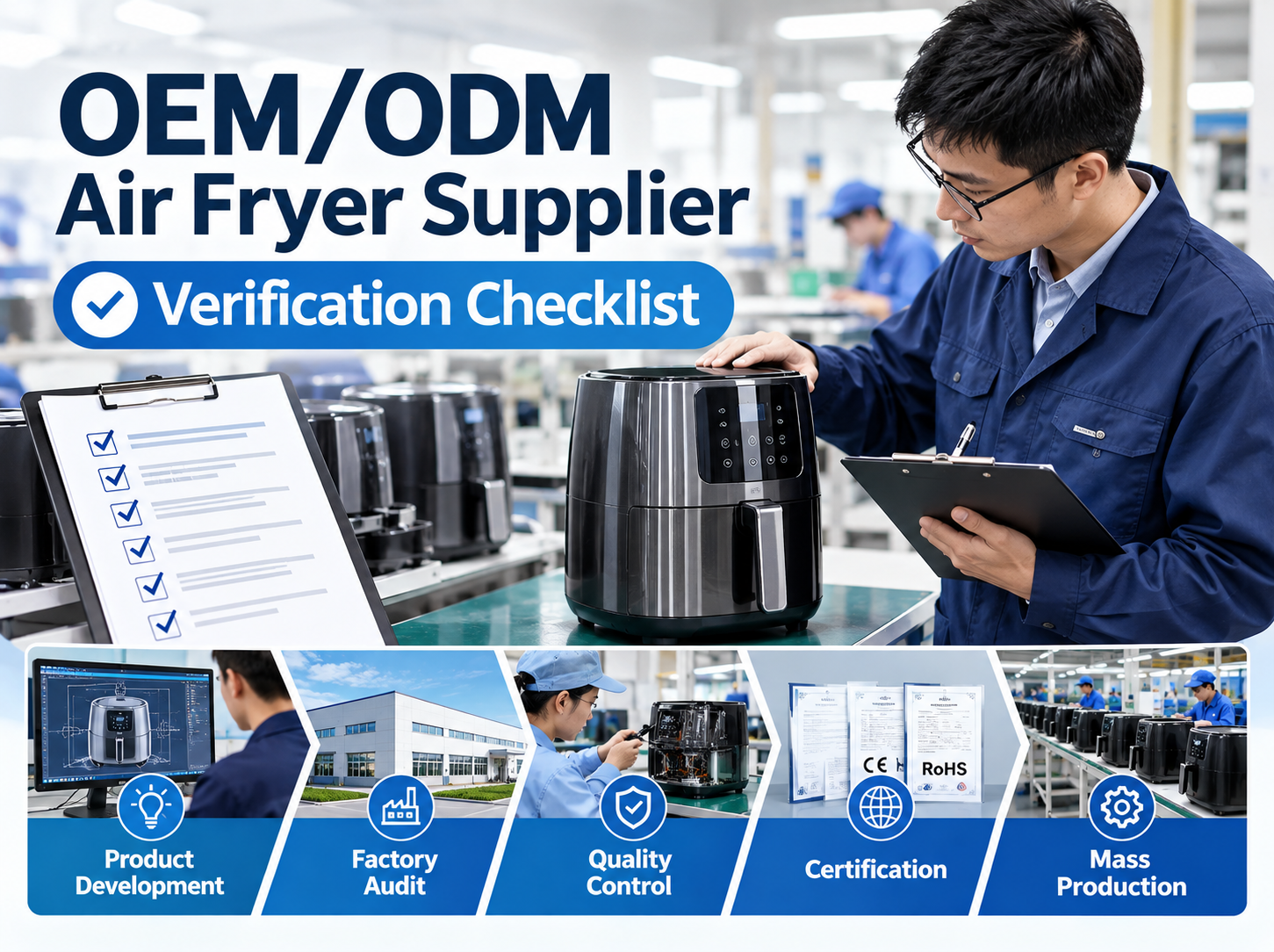
How To Verify Whether an Air Fryer Supplier Is Reliable?
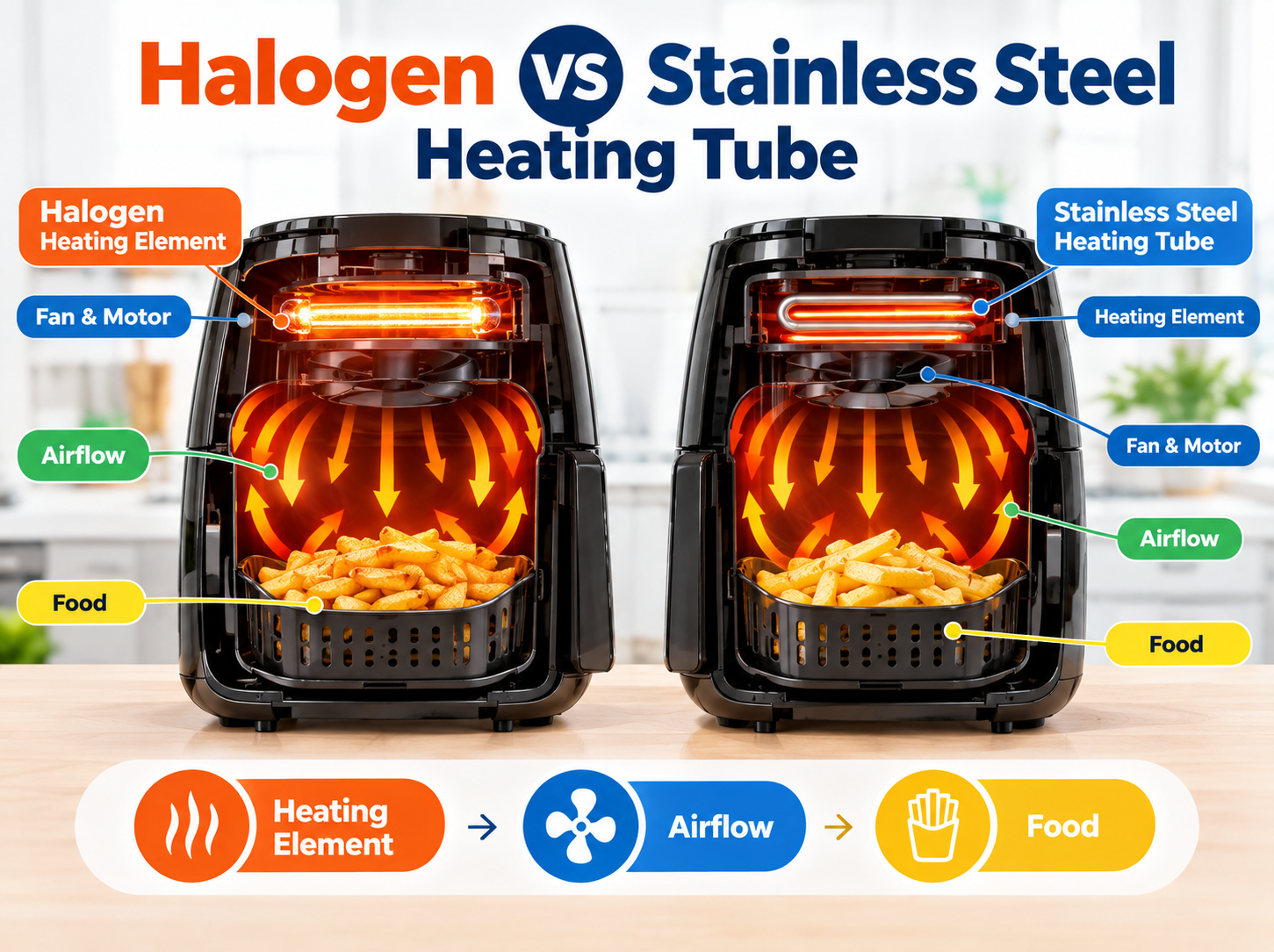
Air Fryer Heating Element: Halogen vs Stainless Steel Tube
Can An Air Fryer Replace A Toaster Oven?
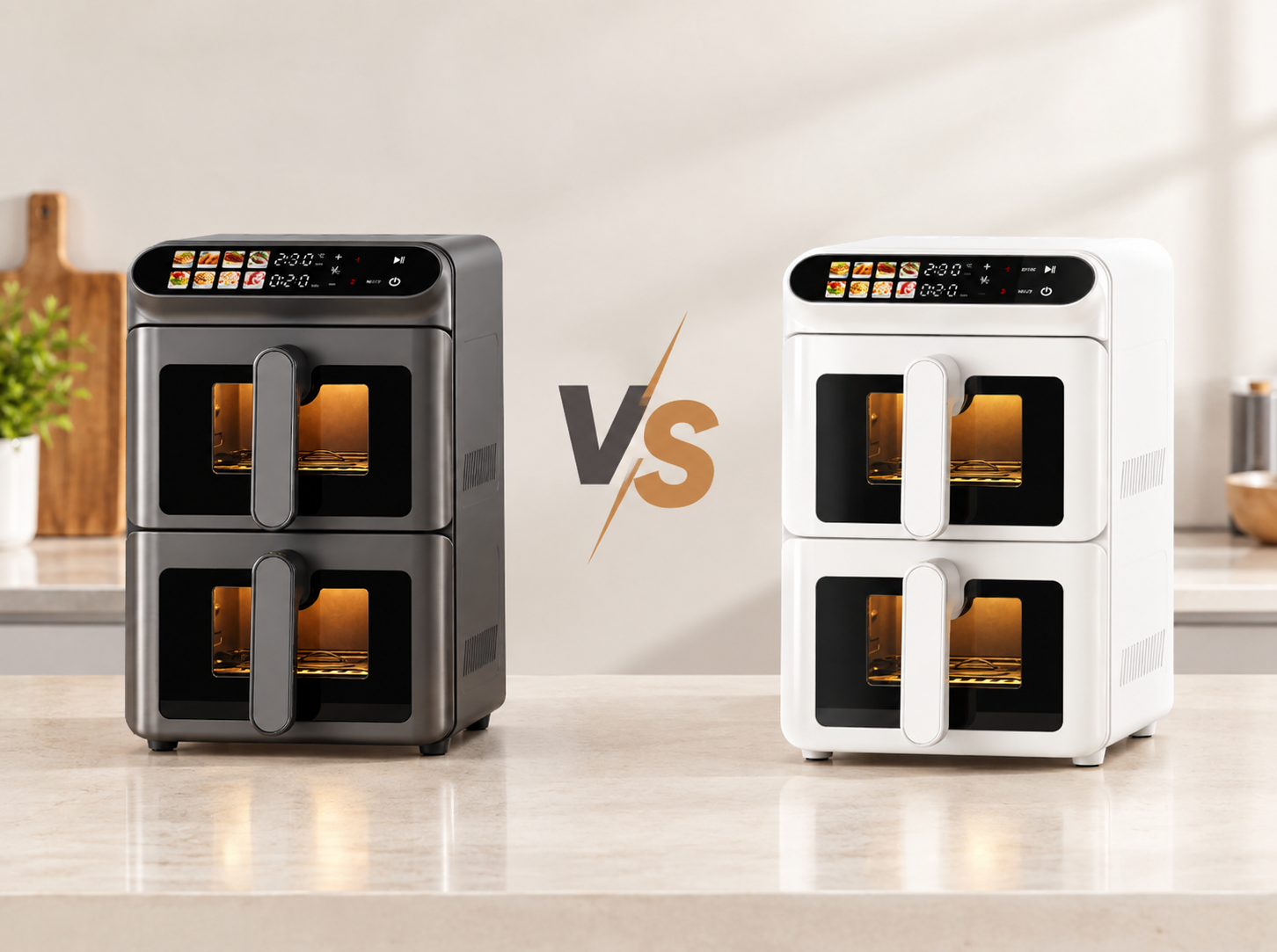
Metal-Body vs. Plastic-Body Air Fryer

Wilko collapse - What Went Wrong With The High Street Retailer?
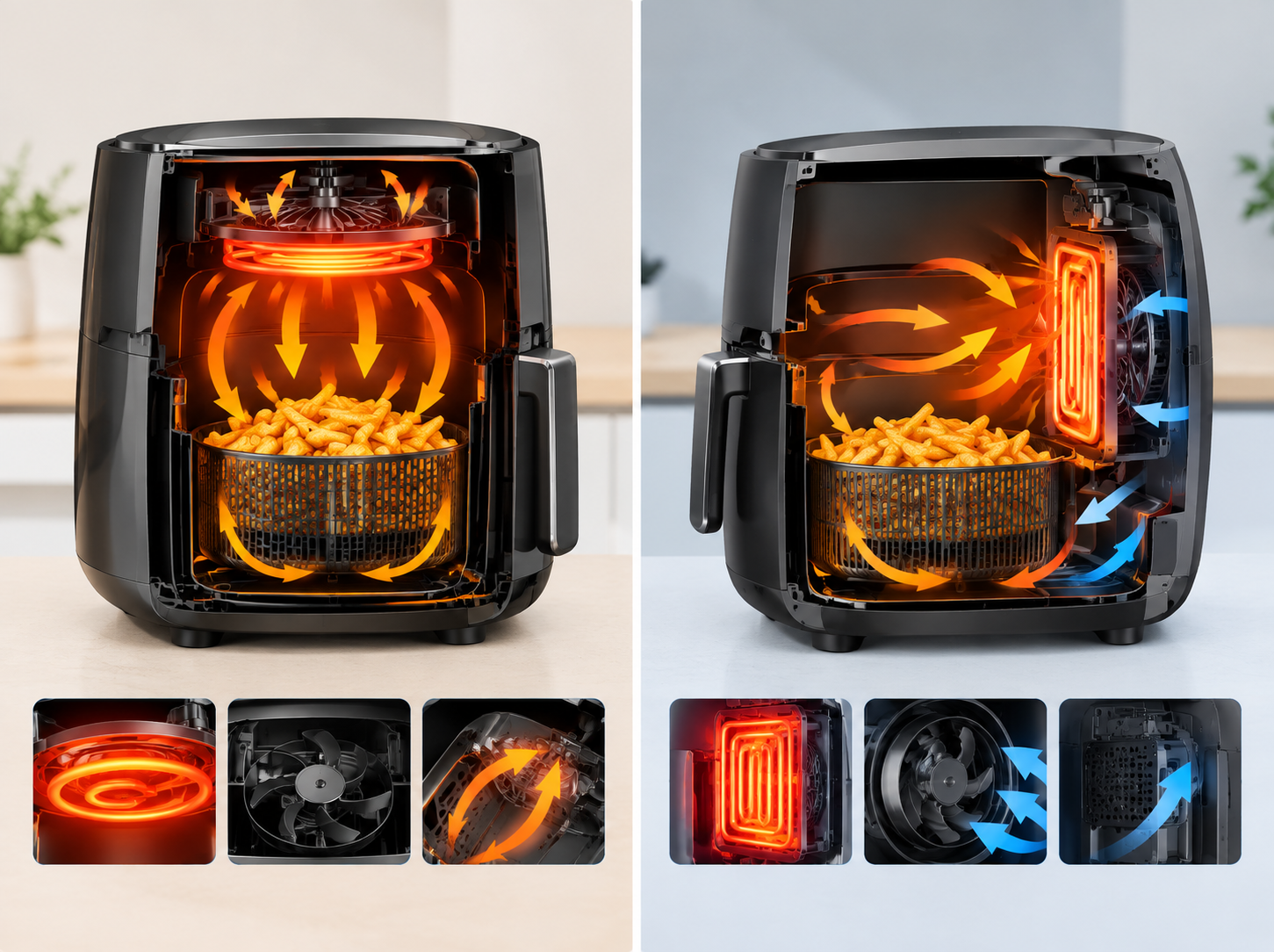
Top Heating vs. Rear Heating Air Fryer:
 + 86 181 3826 8709
 info@funloiv.com
 6/F., Guanglong Building, Pingxin North Road, Longgang, Shenzhen City, Guangdong, China


@ 2009-2026 Shenzhen Funloiv Electric Appliance Co., LtdAll rights reserved


