 Notice:

 search
search
search
Sep 15, 2026


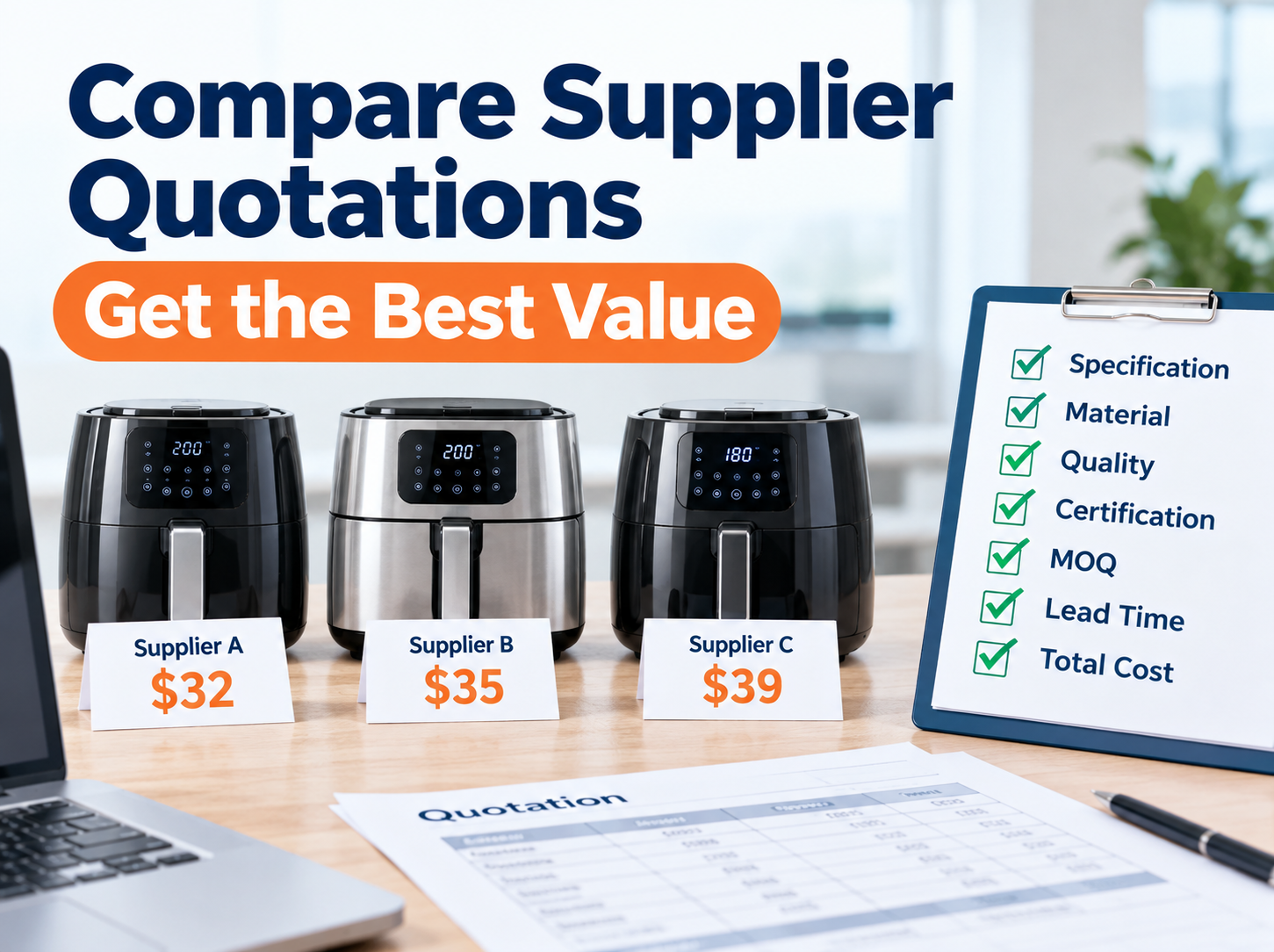
After sending an RFQ to several air fryer suppliers, many buyers face the same situation:
You receive three, four or even five quotations.
Supplier A offers USD 32.
Supplier B offers USD 35.
Supplier C offers USD 39.
At first glance, Supplier A appears to be the best option.
But is it?
Not necessarily.
A lower air fryer quotation may be based on a different product specification, lower-cost materials, different packaging, a lower quantity, a different Incoterm, fewer included services, or different quality and certification assumptions.
This is why professional buyers should not compare FOB price alone.
A better air fryer supplier comparison should consider:
Specification + Material + Quality + Certification + MOQ + Lead Time + Warranty + Commercial Terms + Total Cost
This guide explains how to compare air fryer supplier quotations on a true apples-to-apples basis.
The biggest problem is that suppliers do not always quote exactly the same product.
For example:
Supplier | Capacity | Body | Control | Packaging | Price |
Supplier A | 6L | Plastic | Digital | Retail box | USD 29 |
Supplier B | 8L | Metal | Digital | Retail box | USD 35 |
Supplier C | 8L | Metal | Digital | Retail box | USD 38 |
Looking only at the price, Supplier A appears much cheaper.
But these are not equivalent products.
The capacity, material and product positioning are different.
Another common situation is:
Supplier | Unit Price | Incoterm | Packaging | Testing |
Supplier A | USD 35 | FOB | Included | Included |
Supplier B | USD 33 | EXW | Extra | Extra |
Supplier C | USD 38 | FOB | Included | To be confirmed |
Again, the three prices cannot be compared directly.
The first step in quotation comparison is therefore:
Make sure every supplier is quoting the same product, the same quantity and the same commercial scope.
Before comparing prices, confirm that all suppliers are quoting the same product configuration.
Check at least:
· Capacity
· Basket or drawer configuration
· Rated power
· Voltage and frequency
· Temperature range
· Timer
· Heating system
· Motor and fan
· Control type
· Display
· Preset programs
· Accessories
· Product dimensions
For example, an 8L digital air fryer with dual heating should not be compared directly with a 6L mechanical air fryer.
For OEM/ODM projects, also check:
· Product model
· Product revision
· Drawing version
· Reference sample
· Customized functions
· Tooling requirements
“Can you confirm that your quotation is based on exactly the same specification as our RFQ?”
If the answer is no, normalize the specification before comparing the price.
Two air fryers may have similar specifications but very different construction.
For example:
· Plastic housing vs. metal housing
· Different metal thickness
· Different internal cavity materials
· Different basket materials
· Different heating elements
· Different coating specifications
· Different motor quality
· Different thermal protection
Material differences can directly affect:
· Product cost
· Durability
· Heat resistance
· Perceived quality
· Product positioning
· Retail price
· Long-term product performance
Therefore, ask suppliers to clearly identify the main materials included in the quotation.
Instead of comparing:
“8L air fryer — USD 35”
compare:
“8L / 1800W / metal housing / specified coating / specified heating element / digital control / retail packaging — USD 35 FOB”
The second quotation gives you a much better basis for comparison.
Capacity is only one part of an air fryer specification.
Two 8L air fryers can have completely different feature sets.
Compare:
· Heating system
· Airflow design
· Motor type
· Temperature range
· Cooking programs
· Viewing window
· Dual-layer rack
· Basket configuration
· Automatic shut-off
· Thermal protection
· Dishwasher-safe accessories
· User interface
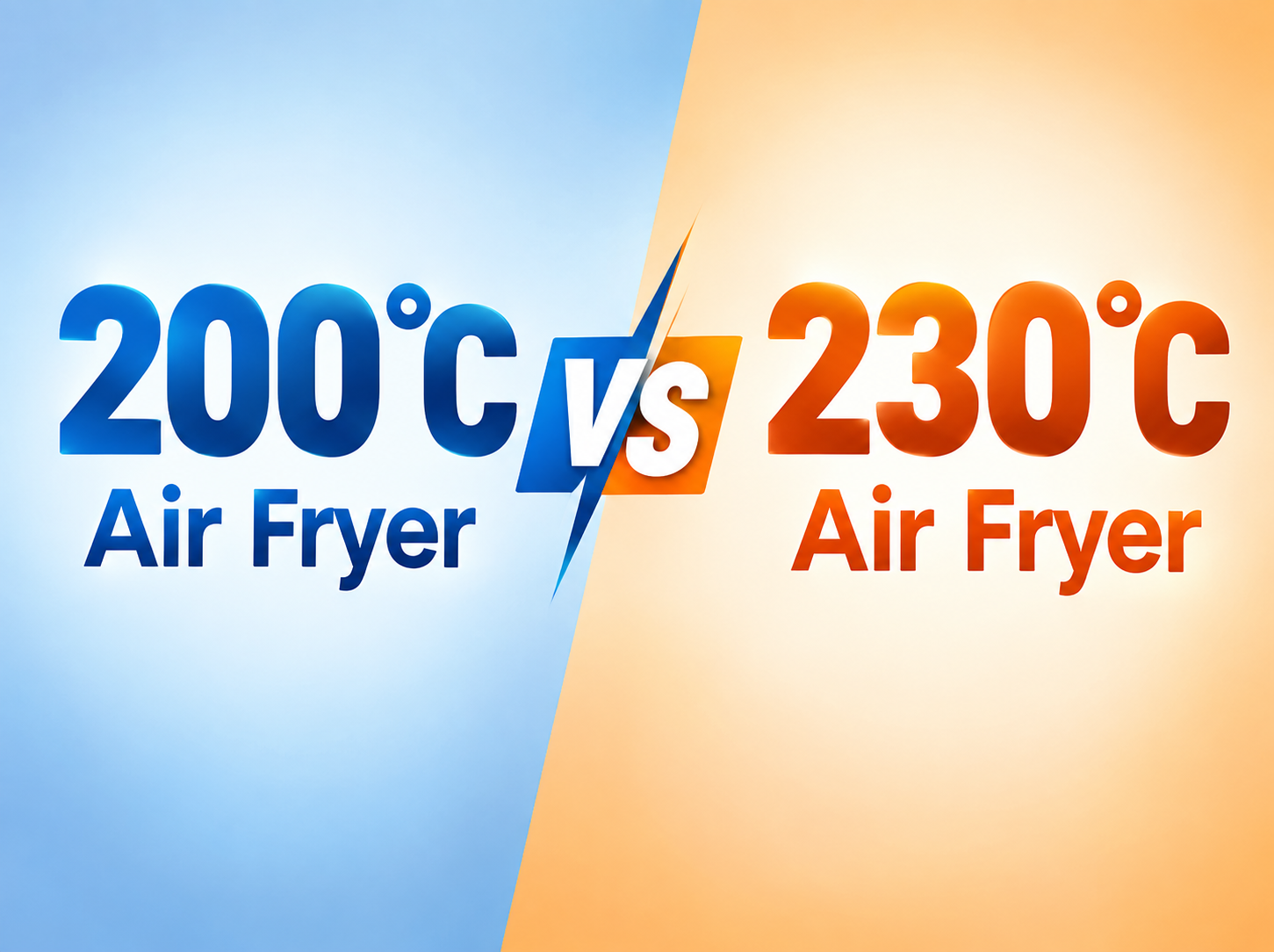
For example, one air fryer may offer a temperature range of 60–200°C while another offers 60–230°C.
One may use a basic plastic housing while another uses a premium metal housing.
One may have a single heating element while another uses a dual-heating system.
The quotation should therefore be evaluated together with the technical specification.
Never assume that two identical-looking unit prices include the same items.
Ask each supplier to confirm whether the quoted price includes:
· Product
· Accessories
· Retail packaging
· User manual
· Warranty card
· Logo
· Product labels
· Barcode
· Carton markings
· Customized artwork
· Testing
· Certification
· Inspection
· Spare parts
For OEM/ODM projects, also ask about:
· Tooling
· Mold cost
· Engineering cost
· PCB development
· Sample development
· Packaging design
A supplier may offer a lower unit price but exclude several costs that another supplier has already included.
MOQ is more than just one number.
Ask:
“What does your MOQ apply to?”
For example:
· MOQ per model?
· MOQ per color?
· MOQ per SKU?
· MOQ per packaging design?
· MOQ per voltage version?
· MOQ per order?
A supplier may quote:
MOQ: 500 pcs
But the actual conditions could be:
500 pcs per color and 500 pcs per packaging design.
Another supplier may offer:
1,000 pcs total, mixed colors allowed.
The second supplier may actually be more flexible for a buyer testing a new market.
For serious sourcing projects, compare at least:
MOQ + price at MOQ + price at larger quantity
For example:
Quantity | Supplier A | Supplier B | Supplier C |
500 pcs | $38 | $39 | $41 |
1,000 pcs | $35 | $36 | $38 |
3,000 pcs | $33 | $34 | $36 |
This gives you a much better understanding of the supplier’s pricing structure.
Certification should never be treated as a simple checkbox.
Do not compare:
Supplier A: CE
Supplier B: CE
Supplier C: CE
and assume they are equivalent.
Instead, ask:
· Does the certificate/report cover the exact model?
· Does it cover the same voltage version?
· Does it cover the same configuration?
· Is the report issued by a recognized testing laboratory?
· Does it cover the target market?
· Are additional tests required for customized versions?
· Who is responsible for new testing if the product is modified?
For kitchen appliances, compliance may involve electrical safety, EMC, RoHS, food-contact materials and other market-specific requirements.
The target market should therefore be specified before the quotation is finalized.
For example:
Target market: Germany / EU
Product: 8L digital air fryer
Required compliance: Applicable EU requirements
This is more useful than simply asking for “CE.”
A quotation should also be evaluated according to the supplier’s ability to consistently reproduce the approved sample.
Ask:
· Are major components inspected before production?
· Are heating elements tested?
· Are motors tested?
· Are electronic components checked?
· Are products electrically tested during assembly?
· Are critical components inspected?
· Are functional tests performed?
· Is aging testing performed?
· How many units are tested?
· What is the testing standard?
· Is pre-shipment inspection available?
· Can third-party inspection be arranged?
· What inspection standard is used?
A professional supplier should be able to explain its quality process clearly rather than simply saying:
“Our quality is very good.”
For example, FUNLOIV states that major components and raw materials are checked before assembly, products are electrically tested on the production line, aging testing is conducted on selected units from each order, and pre-shipment inspection is conducted before shipment.
A good sample does not automatically mean good mass production.
This is particularly important for OEM/ODM air fryer projects.
Ask suppliers:
· Is the quoted model the same as the sample?
· Will the same critical components be used?
· Can components be substituted?
· Who approves engineering changes?
· Will the production sample be retained?
· Can a pre-production sample be approved before mass production?
A useful rule is:
The quotation should be compared with the approved production configuration, not simply the first sample you received.
If Supplier A offers a cheaper sample but changes the heating element, motor, coating or PCB during production, the original quotation is no longer a meaningful comparison.
Never compare lead time as a single number without asking when the clock starts.
For example:
Supplier A:
30 days after deposit
Supplier B:
35 days after artwork approval
Supplier C:
40 days after sample approval
These are not necessarily three comparable lead times.
Ask each supplier:
“When does your production lead time officially start?”
Also compare:
· Sample lead time
· Tooling lead time
· Certification lead time
· Packaging development
· Artwork approval
· Material preparation
· Mass production
· Final inspection
· Shipment readiness
A shorter quoted lead time is not necessarily better if important stages have simply been excluded.
Warranty is often ignored during quotation comparison because it does not appear in the unit price.
But it can become very important after the products reach the market.
Compare:
· Warranty period
· Defect responsibility
· Spare parts policy
· Replacement policy
· Technical support
· Complaint response
· Root-cause analysis
· After-sales communication
Also ask:
“What happens if the defect rate is higher than expected?”
This question can reveal how seriously a supplier manages product quality.
FUNLOIV currently publishes a one-year warranty policy and states that free spare parts are provided at 1% of the order quantity for after-sales support. These terms should still be confirmed for the specific project and quotation.
The same unit price can produce a very different cash-flow situation.
Compare:
· FOB / EXW / CIF / other Incoterms
· Payment terms
· Deposit percentage
· Balance payment timing
· Sample cost
· Tooling payment
· Certification cost
· Inspection cost
· Price validity period
· Currency
· Bank charges
For example:
Supplier A: USD 35 FOB, 30% deposit / 70% before shipment
may be commercially different from:
Supplier B: USD 34 EXW, 40% deposit / 60% before shipment
Therefore, always normalize the commercial terms before deciding which supplier is cheaper.
The most useful comparison is not simply:
Unit Price
but:
Total Sourcing Cost
A practical calculation can include:
Product Cost
+ Tooling Cost Allocation
+ Packaging
+ Testing / Certification
+ Inspection
+ Inland Transportation
+ Freight
+ Duties and Import Costs
+ Expected Quality / After-Sales Cost
For example:
Supplier A:
· Unit price: $34
· Packaging: Included
· Testing: Included
· Inspection: Included
· FOB: Yes
Supplier B:
· Unit price: $32
· Packaging: +$1
· Testing: +$500
· Inspection: +$300
· EXW: Yes
Supplier B may look cheaper at first glance.
But after normalizing the quotation, the cost difference may become very small.
This is why professional buyers should compare total sourcing value, not simply the lowest factory price.
A simple comparison table can help you make the decision more objectively.
Evaluation Factor | Supplier A | Supplier B | Supplier C |
Exact Specification | ✓ / ✕ | ✓ / ✕ | ✓ / ✕ |
Capacity | |||
Heating System | |||
Body Material | |||
Basket / Cavity Material | |||
Control System | |||
Certification | |||
Packaging | |||
MOQ | |||
FOB Price | |||
Tooling Cost | |||
Sample Lead Time | |||
Mass Production Lead Time | |||
Payment Terms | |||
Warranty | |||
Spare Parts | |||
QC System | |||
Inspection Support | |||
Supplier Capability | |||
Overall Score |
This table is much more useful than a simple:
Supplier A = $35
Supplier B = $34
Supplier C = $38
For a more professional sourcing process, you can assign different weights to each evaluation factor.
For example:
Evaluation Factor | Suggested Weight |
Product Specification | 20% |
Quality & Reliability | 20% |
Total Cost | 20% |
Certification & Compliance | 10% |
Lead Time | 10% |
MOQ & Flexibility | 5% |
Warranty & After-Sales | 5% |
Supplier Capability | 10% |
Total | 100% |
Then score each supplier from 1 to 5.
Supplier A:
Product: 5
Quality: 4
Cost: 5
Certification: 4
Lead Time: 4
MOQ: 3
Warranty: 4
Capability: 4
Supplier B may have a slightly higher price but a much stronger quality and compliance score.
In that situation, Supplier B may be the better long-term supplier.
The exact weighting should depend on your project. A premium retail brand may give more weight to quality and product differentiation, while a high-volume retailer may place more weight on cost, capacity and delivery.
During quotation comparison, pay attention to these warning signs.
If the quotation does not clearly explain the specification, quantity, Incoterm or included items, ask for clarification.
A very low price may be legitimate, but it should be investigated.
Ask:
“What is different between your quotation and the other offers?”
Examples include:
· No MOQ
· No lead time
· No packaging details
· No certification information
· No warranty
· No material specification
Ask for the applicable report or certificate and confirm model coverage.
Ask what the lead time starts from and what stages are excluded.
If a supplier proposes an alternative material or component, ask them to show it as a separate option.
Do not allow an alternative specification to silently replace your original RFQ.
The best way to compare quotations is to create one standardized RFQ and send exactly the same information to every supplier.
Your RFQ should define:
Product
→ Capacity
→ Configuration
→ Power
→ Voltage
→ Heating system
→ Material
→ Functions
→ Accessories
Commercial
→ Quantity
→ MOQ
→ Incoterm
→ Target delivery date
→ Payment terms
Compliance
→ Target market
→ Certification
→ Testing
→ Food-contact requirements where applicable
Branding
→ Logo
→ Color
→ Packaging
→ Manual
→ Labeling
Then ask every supplier to reply using the same structure.
This turns a collection of different quotations into a real supplier comparison.
There is no universal answer.
The best supplier is not necessarily:
The cheapest supplier.
And it is not necessarily:
The supplier with the highest price.
The better question is:
Which supplier provides the best combination of product specification, quality, compliance, price, MOQ, lead time, service and long-term supply reliability?
For a brand or importer, the best quotation is the one that matches the product strategy and minimizes sourcing risk while maintaining a commercially viable cost.
Before placing the first bulk order, make sure you can answer these questions:
· Are all suppliers quoting the same model?
· Are the specifications identical?
· Are the materials clearly defined?
· Are the accessories included?
· How is incoming material inspected?
· How is production quality controlled?
· Is aging testing conducted?
· Is pre-shipment inspection available?
· Does the certification match the exact product?
· Does it match the target market?
· Are additional tests required?
· Is the price FOB, EXW or another Incoterm?
· Is packaging included?
· Are tooling and testing included?
· Is the MOQ realistic?
· When does lead time start?
· Is sample approval included?
· Is packaging development included?
· What is the warranty?
· Are spare parts available?
· How are quality claims handled?
If these questions have clear answers, you are much closer to making a reliable supplier decision.
If you are comparing quotations from multiple air fryer suppliers, a structured comparison sheet can save significant time.
Instead of keeping several supplier quotations in separate emails, use one standardized Air Fryer Supplier Comparison Checklist to compare:
· Product specifications
· Materials
· Features
· Certification
· MOQ
· FOB price
· Packaging
· Tooling
· Quality control
· Lead time
· Warranty
· Payment terms
· Supplier capability
· Total sourcing cost
You can then score each supplier and identify the strongest overall offer.
Request the comparison template from FUNLOIV and use it to evaluate your shortlisted suppliers on the same basis.
If you are currently comparing air fryer suppliers and want to benchmark a quotation against another supplier, you can send FUNLOIV:
1. Your target capacity
2. Product reference or specification
3. Target market
4. Estimated order quantity
5. Required functions
6. Packaging requirements
We can provide an air fryer quotation based on your requirements and clarify the product specification, MOQ, certification, lead time and other commercial terms.
Request an Air Fryer Quotation
The goal is not simply to offer a lower FOB price.
The goal is to provide a quotation that is clear, comparable and aligned with your product requirements.


Why Personal Care Appliances Become Popular Globally?
How to Choose an OEM/ODM Air Fryer Supplier in China:
How To Verify Whether an Air Fryer Supplier Is Reliable?
200°C vs 230°C Air Fryer:
How to Compare Quotations from Different Air Fryer Suppliers?
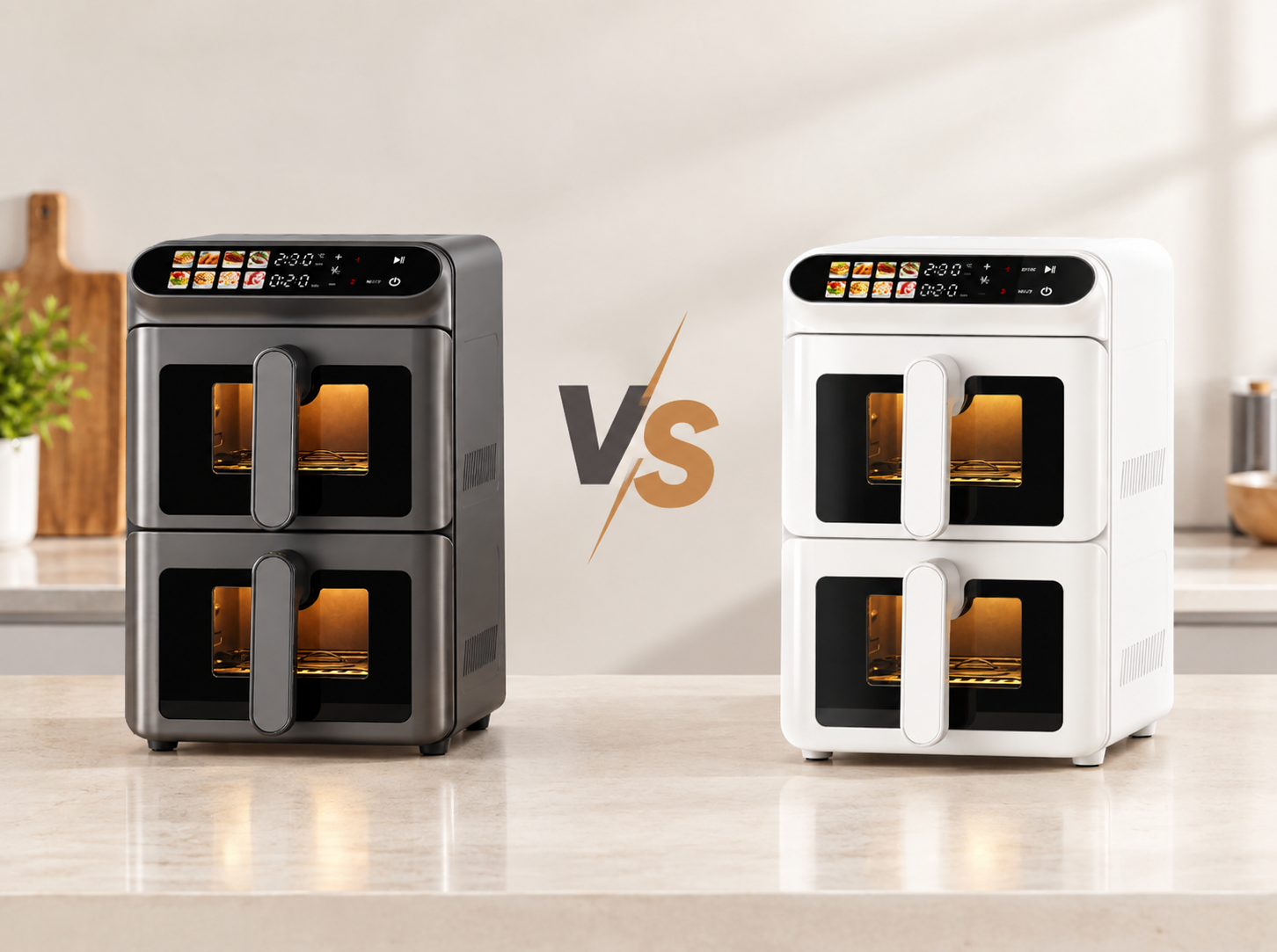
Metal-Body vs. Plastic-Body Air Fryer
 + 86 181 3826 8709
 info@funloiv.com
 6/F., Guanglong Building, Pingxin North Road, Longgang, Shenzhen City, Guangdong, China


@ 2009-2026 Shenzhen Funloiv Electric Appliance Co., LtdAll rights reserved


