 Notice:

 search
search
search
Sep 21, 2026


When importing air fryers, buyers often ask:
l What safety standard applies to air fryers?
l Does an air fryer need CE certification in Europe?
l Is UL or ETL certification required in the USA?
l What is required for Australia and New Zealand?
l Does an air fryer need INMETRO certification in Brazil?
l Is G-Mark required for GCC markets?
l Does a CE certificate cover food-contact materials?
l How can I verify whether an air fryer supplier's certificate is valid?
There is no single certification that automatically makes an air fryer compliant in every market.
Air fryer compliance is a combination of product safety standards, electrical and EMC requirements, chemical and food-contact requirements, market-specific regulations, conformity assessment, technical documentation and production control.
For importers and brand owners, the key question is therefore not simply:
"Does this air fryer have a certificate?"
A better question is:
"Does this exact air fryer configuration meet the applicable requirements of my target market, and can the supplier provide valid evidence of compliance?"
This guide explains the main air fryer safety standards, certifications and compliance requirements that buyers should consider when sourcing air fryers internationally.
1. Air Fryer Safety Standards vs. Certifications vs. Regulations
One of the first things buyers should understand is that standards, regulations and certifications are not the same thing.
What Is an Air Fryer Safety Standard?
A standard provides technical requirements for how a product should be designed, constructed and tested.
For air fryers, the IEC 60335 series is one of the most important international safety-standard families to understand.
What Is a Regulation?
A regulation or directive establishes legal requirements for products placed on a specific market.
For example, electrical products placed on the EU market may need to comply with applicable EU legislation covering areas such as electrical safety and electromagnetic compatibility.
What Is a Certification?
Certification is evidence that a product has gone through a defined conformity-assessment process, often involving a third-party certification body.
Depending on the market, this may involve certification marks or recognized testing and certification systems such as UL, ETL, GS, RCM, INMETRO or the GCC conformity system.
What About CE Marking?
CE marking should not simply be described as a "CE safety certificate."
For products covered by applicable EU legislation, CE marking represents the manufacturer's declaration that the product complies with the relevant EU requirements.
The manufacturer must also maintain supporting technical documentation and an EU Declaration of Conformity where applicable.
Therefore:
CE marking ≠ one universal certificate
Instead:
EU regulations → applicable standards → conformity assessment → technical documentation → Declaration of Conformity → CE marking
This distinction is important when evaluating an air fryer supplier.
2. IEC 60335-1 and IEC 60335-2-9: Key Air Fryer Safety Standards
For household air fryers, buyers should pay particular attention to the IEC 60335 family.
IEC 60335-1
IEC 60335-1 provides general safety requirements for household and similar electrical appliances.
It covers areas such as:
l Electrical safety
l Insulation
l Leakage current
l Earthing
l Temperature rise
l Abnormal operation
l Mechanical hazards
l Construction
l Protection against electric shock
l Marking and instructions
IEC 60335-2-9
IEC 60335-2-9 provides particular requirements for grills, toasters and similar portable cooking appliances.
This is especially relevant to air fryers because air fryers are portable electrical cooking appliances that combine:
Heating + Airflow + Temperature Control + Electrical Components
The current 2026 pre-release version of IEC 60335-2-9 specifically identifies air fryers within its scope.
It also contains requirements addressing areas such as portable air fryers, forced-air circulation, external surface temperature and simultaneous activation of heating elements and motors.
Important Update: IEC 60335-2-9:2026
IEC 60335-2-9:2026 is currently a pre-release version and was made available during its voting period beginning in September 2026.
It should therefore not be described as the final published edition until the official publication process is complete.
For air fryer buyers and suppliers, this is important because technical requirements can evolve as standards are revised.
When reviewing an air fryer test report, always check which edition of the applicable standard was used.
3. What Safety Tests Should an Air Fryer Pass?
A certification document alone does not tell the complete story.
Buyers should understand the main categories of testing behind air fryer safety.
Electrical Safety Testing
Typical areas include:
l Rated input power
l Rated voltage
l Leakage current
l Dielectric strength
l Insulation
l Grounding
l Protective earthing where applicable
l Abnormal operation
l Electrical component safety
l Thermal protection
Temperature and Thermal Testing
Air fryers contain high-power heating systems operating at elevated temperatures. Important test areas can include:
l Heating element temperature
l Internal temperature
l External surface temperature
l Handle temperature
l Control-panel temperature
l Basket temperature
l Plastic-component temperature
l Temperature control
l Thermal fuse operation
l Thermostat or sensor performance
Mechanical Safety Testing
Depending on the product construction, buyers should also consider:
l Stability
l Tip-over resistance
l Basket or drawer strength
l Handle strength
l Door or viewing-window strength
l Drawer locking and insertion
l Mechanical durability
l Moving-part protection
Functional Safety
For electronic air fryers, buyers should also verify:
l Auto shut-off
l Over-temperature protection
l Timer operation
l Temperature control
l Fan operation
l Heating-element operation
l Sensor performance
l Control-panel operation
l Abnormal-operation protection
For advanced air fryers, the interaction between the heating element, motor, fan, sensor and control system is particularly important.
4. Air Fryer Certifications and Compliance by Market
Different markets have different regulatory systems.
The following table provides a practical starting point for importers.
Market | Main Compliance Areas | Typical Evidence / Marking |
European Union | Electrical safety, EMC, RoHS, food-contact and other applicable requirements | CE + Declaration of Conformity |
Great Britain | Electrical safety, EMC and applicable UK product requirements | CE or UKCA, depending on applicable route |
USA | Electrical safety, applicable NRTL requirements, EMC and other market requirements | UL / ETL or other accepted route |
Canada | Electrical safety and applicable Canadian requirements | CSA / cETL or applicable certification |
Australia | Electrical safety, EESS and applicable standards | RCM / required evidence |
New Zealand | Electrical safety and applicable local requirements | RCM / applicable evidence |
Brazil | Mandatory conformity requirements for products within scope | INMETRO conformity route |
GCC | Gulf technical regulations, safety and EMC requirements | Gulf Conformity Mark / applicable evidence |
This table should be treated as a buyer orientation guide, not as a substitute for checking the exact current regulations applicable to a specific product, model and destination country.
5. Europe: CE, Electrical Safety, EMC, RoHS and Food Contact
For air fryers sold in the European Union, buyers need to consider more than simply placing a CE logo on the product.
Depending on the exact product and applicable legislation, compliance can involve areas such as:
l Electrical safety
l Electromagnetic compatibility
l Restriction of hazardous substances
l Food-contact materials
l Applicable environmental requirements
l Product labeling
l Instructions and safety information
l Technical documentation
l Declaration of Conformity
CE Marking
CE marking indicates that the manufacturer declares conformity with the applicable EU requirements.
Importantly, CE marking is linked to the actual product configuration.
If a supplier changes important components or construction, the existing technical documentation and conformity assessment may need to be reviewed.
For example, changes to:
l Heating elements
l Motor
l PCB
l Power rating
l Thermal protection
l Construction
l Materials
l Critical safety components
may affect the compliance status of the product.
What Should an EU Buyer Ask an Air Fryer Supplier For?
At minimum, depending on the applicable requirements:
l EU Declaration of Conformity
l Applicable test reports
l Electrical safety documentation
l EMC documentation
l RoHS evidence
l Food-contact documentation where applicable
l Product specifications
l User manual
l Product labeling
l Technical documentation or supporting evidence
6. Great Britain: CE and UKCA
For air fryers sold in Great Britain, buyers should distinguish between Great Britain and Northern Ireland, because the conformity-marking framework is not identical.
As of 2026, Great Britain continues to recognize CE marking for many products under the applicable UK product regulations, alongside UKCA.
Therefore, buyers should not automatically assume:
"UK market = UKCA only."
The correct approach is to identify:
l The exact market
l The applicable product regulations
l The conformity-assessment route
l The appropriate marking
l The required technical documentation
For Great Britain, both CE and UKCA may be relevant depending on the applicable product requirements and conformity route.
For Northern Ireland, different rules apply and CE requirements remain particularly important.
7. USA: UL, ETL and NRTL Certification
The US market requires a different approach.
One of the most important concepts for electrical products is the Nationally Recognized Testing Laboratory (NRTL) system.
OSHA recognizes NRTLs to test and certify products to applicable safety standards.
For household electric cooking and food-serving appliances, UL 1026 is one relevant safety standard.
Depending on the certification route, an air fryer may therefore be evaluated through organizations such as:
l UL Solutions
l Intertek
l Other OSHA-recognized NRTLs
UL vs. ETL
A common misconception is:
"ETL is not as valid as UL."
For US workplace electrical safety purposes, the important question is whether the certification mark is issued by an appropriately recognized NRTL for the applicable product and standard.
Therefore, buyers should not simply ask:
"Do you have UL?"
Instead, ask:
"Which NRTL certified this product, to which standard, and does the certification cover my exact model?"
What Should US Buyers Check?
l Certification mark
l Certification body
l Applicable safety standard
l Exact model number
l Rated voltage
l Rated power
l Factory location
l Critical components
l Certification status
l Product labeling
8. Australia and New Zealand: RCM and EESS
Australia and New Zealand have their own electrical-equipment compliance framework.
A key system for Australia is the Electrical Equipment Safety System (EESS).
The Regulatory Compliance Mark (RCM) is used within the relevant Australian and New Zealand regulatory framework.
Not every electrical product follows exactly the same conformity route.
Certain categories of electrical equipment require certification before they can be supplied to the Australian or New Zealand market.
Therefore, buyers should determine the classification of the exact air fryer and confirm the applicable requirements.
Questions for an Australia / New Zealand Air Fryer Supplier
Ask the supplier:
l Is the product covered by EESS?
l What level or category applies?
l Which Australian/New Zealand standard was used?
l Is certification required?
l Who is the Responsible Supplier?
l What evidence of compliance is available?
l Does the certification cover the exact model?
9. Brazil: INMETRO Certification for Air Fryers
Brazil is an important market where buyers should pay particular attention to local conformity requirements.
INMETRO's regulatory framework for household and similar electrical appliances includes air fryers within the relevant scope.
The Brazilian system should not be understood as simply:
"Send the product to INMETRO and receive a certificate."
INMETRO establishes the regulatory requirements and conformity-assessment framework.
Product certification is carried out by accredited conformity-assessment bodies.
Therefore, a supplier claiming:
"We have INMETRO"
should be asked for the actual certification documentation and the details of the certification body.
Brazilian Buyers Should Verify
l INMETRO regulatory scope
l Applicable Portaria
l Certification body
l Certificate number
l Brand
l Manufacturer
l Factory
l Exact model
l Rated voltage
l Rated power
l Certification status
l Product marking
10. GCC / Middle East: G-Mark and Gulf Compliance
For air fryers intended for GCC markets, buyers should consider the applicable Gulf Technical Regulation for Low Voltage Electrical Equipment and Appliances and the relevant conformity-assessment requirements.
The Gulf conformity system includes safety and electromagnetic-compatibility requirements.
The Gulf Conformity Mark is used within the applicable GCC conformity framework.
The GSO conformity platform also provides product and certificate information that can be used to verify conformity data.
For example, air fryers are listed within the GSO product system under categories covering grills and similar portable cooking appliances.
GCC Buyers Should Check
l Applicable Gulf Technical Regulation
l Applicable product category
l Safety testing
l EMC testing
l Gulf conformity assessment
l Manufacturer information
l Model number
l Rated voltage and power
l Product marking
l Packaging and labeling requirements
l Country-specific importer requirements
A particularly important point for GCC sourcing is that a certificate should always be checked against the exact model and manufacturer.
11. Food-Contact Material Compliance: Don't Forget the Basket
Air fryer compliance is not only about electrical safety.
An air fryer also contains components that directly or indirectly contact food.
Examples include:
l Cooking basket
l Tray
l Grill
l Food-contact coating
l Silicone components
l Plastic food-contact components
l Stainless-steel components
In the EU, food-contact materials are governed by specific legislation, including Regulation (EC) No 1935/2004 and Good Manufacturing Practice requirements.
This creates an important distinction:
Electrical safety compliance does not automatically prove food-contact compliance.
A supplier may have a valid electrical safety report while still needing separate evidence for food-contact materials.
What Should Buyers Ask?
For relevant components, ask for:
l Food-contact test reports
l Material declarations
l Coating information
l Applicable migration testing
l Supplier declarations
l Material specifications
l Relevant EU or destination-market requirements
This is especially important when an air fryer uses:
l Non-stick coatings
l Silicone
l Plastic components
l Colored coatings
l Adhesives
l Special surface treatments
12. RoHS, REACH and Chemical Compliance
Electrical safety is only one part of product compliance.
Depending on the destination market, buyers may also need to consider chemical and environmental requirements.
RoHS
RoHS requirements focus on restrictions on certain hazardous substances in electrical and electronic equipment.
For air fryers, compliance may involve materials and components such as:
l PCB assemblies
l Cables
l Connectors
l Solder
l Electronic components
l Plastic components
l Metal components
REACH
REACH focuses on chemical substances and can create obligations concerning restricted substances and substances of very high concern.
For buyers, the important point is:
A safety test report should not automatically be treated as proof of every chemical compliance requirement.
Different documents may be needed for different compliance areas.
13. What Compliance Documents Should an Air Fryer Supplier Provide?
Before placing a bulk order, importers should create a supplier compliance document checklist.
Depending on the target market and product configuration, useful documents may include:
Document | Why It Matters |
Test Report | Shows results of defined testing |
Certificate | Provides certification evidence where applicable |
Declaration of Conformity | Supports market conformity declaration |
CB Certificate | Can support international conformity work |
CB Test Report | Provides detailed test evidence |
EMC Report | Supports EMC compliance |
RoHS Report | Supports substance-restriction compliance |
Food-Contact Test Report | Supports food-contact compliance |
REACH Declaration | Supports chemical compliance |
Factory Audit | Provides information about manufacturing capability |
Technical Documentation | Supports regulatory compliance |
User Manual | Provides safety and operating information |
Product Label | Supports market-specific marking |
Packaging Artwork | Helps verify required information |
Critical Component List | Helps control tested configuration |
Not every document is required in every market.
The correct document list depends on the destination market, product configuration and applicable regulations.
14. How to Verify an Air Fryer Certificate
A certificate should never be accepted simply because it looks professional.
Buyers should verify the following information.
Ø Certificate Number
Can the certificate be verified through the certification body's system?
Ø Manufacturer
Does the certificate identify the actual manufacturer or the correct legal entity?
Ø Factory
Does the factory address match the factory actually producing your order?
Ø Brand
Does the certification cover the brand under which the product will be sold?
Ø Model Number
Does the certificate include the exact model you are purchasing?
Ø Rated Power
Does the rated power match the commercial product?
For example:
1800W certificate
vs.
2000W production model
should not automatically be treated as the same configuration.
Ø Voltage and Frequency
Check:
l 220–240V / 50Hz
l 220–240V / 50–60Hz
l 120V / 60Hz
l Other market-specific configurations
Ø Critical Components
Check whether the tested product uses the same:
l Heating element
l Motor
l PCB
l Thermal fuse
l Thermostat
l Power cord
l Plug
l Insulation
l Safety components
Ø Standard Edition
Check which version of the relevant standard was used.
Ø Certification Status
Check whether the certification is:
l Current
l Suspended
l Expired
l Cancelled
l Limited to specific models
15. Why Certification Does Not Replace Production Quality Control
One of the most important concepts for an air fryer importer is:
Certification and production quality control are not the same thing.
A certification process evaluates a defined product configuration against defined requirements.
Mass production must then consistently reproduce that configuration.
Consider the following production chain:
Approved Design
↓
Certification Testing
↓
Golden Sample
↓
Incoming Quality Control
↓
Production Quality Control
↓
Electrical Testing
↓
Aging Testing
↓
Final Inspection
↓
Pre-Shipment Inspection
↓
Mass Production Consistency
If the certified sample uses one heating element, but production uses another component without proper evaluation, the original test report may no longer tell the complete story.
This is why professional buyers should evaluate both:
Compliance Capability
and
Production Quality Capability
16. Air Fryer Compliance Checklist for Importers
Before placing a bulk order, use the following checklist.
Market
l Confirm destination country
l Identify applicable product regulations
l Identify required conformity route
l Confirm importer / responsible economic operator requirements
Product
l Confirm exact model number
l Confirm rated voltage
l Confirm rated frequency
l Confirm rated power
l Confirm heating system
l Confirm motor and fan
l Confirm temperature range
l Confirm materials
l Confirm food-contact components
Safety
l Electrical safety testing
l EMC testing
l Temperature testing
l Abnormal-operation testing
l Thermal protection
l Mechanical safety
l Stability testing
l Functional testing
Certification
l Certificate number
l Certification body
l Applicable standard
l Standard edition
l Manufacturer
l Factory
l Brand
l Exact model
l Rated power
l Certification status
Documentation
l Declaration of Conformity
l Test reports
l Certificate
l Food-contact documentation
l RoHS documentation
l REACH documentation where applicable
l User manual
l Product label
l Packaging artwork
Production
l Approved golden sample
l Critical component list
l Incoming QC
l Production QC
l Electrical safety testing
l Aging testing
l Final inspection
l Pre-shipment inspection
17. Frequently Asked Questions About Air Fryer Certifications
Ø What certification does an air fryer need in Europe?
There is no single universal "air fryer certificate" for Europe. Buyers need to identify the applicable EU legislation and conformity requirements, which may include electrical safety, EMC, RoHS, food-contact and other applicable requirements. CE marking and the required supporting documentation are part of the EU conformity framework.
Ø What safety standard applies to air fryers?
IEC 60335-1 provides general safety requirements for household and similar electrical appliances, while IEC 60335-2-9 provides particular requirements for grills, toasters and similar portable cooking appliances. The 2026 pre-release edition of IEC 60335-2-9 specifically includes air fryers within its scope.
Ø Does an air fryer need UL certification in the USA?
The exact certification route depends on the product, market and applicable requirements. UL 1026 is a relevant safety standard for electric household cooking and food-serving appliances, and US workplace electrical safety requirements recognize certification through OSHA-recognized NRTLs.
Ø Is ETL certification acceptable for an air fryer in the USA?
ETL is an Intertek certification mark associated with an OSHA-recognized NRTL. Buyers should verify that the certification covers the applicable product, standard and exact model.
Ø Does CE certification cover food-contact materials?
Not automatically. Electrical and product-safety compliance should be considered separately from food-contact material requirements.
Ø Does an air fryer need INMETRO certification in Brazil?
Air fryers fall within the relevant scope of Brazil's mandatory conformity framework for household and similar electrical appliances. Buyers should confirm the current applicable requirements and certification route for the exact model.
Ø What is RCM for air fryers?
RCM is the Regulatory Compliance Mark used within the Australian and New Zealand electrical-equipment compliance framework. The exact conformity requirements depend on the equipment classification and applicable regulations.
Ø Does a GCC air fryer need G-Mark?
Air fryers can fall within the GCC conformity framework for low-voltage electrical equipment and similar portable cooking appliances. Buyers should confirm the applicable Gulf technical regulation and conformity-assessment route for the exact product and destination markets.
Ø How can I verify an air fryer supplier's certificate?
Check the certificate number, certification body, manufacturer, factory, brand, exact model number, rated power, applicable standard, critical components and certification status. Where possible, verify the certificate through the certification body's official database.
Ø Can I use the same air fryer certification in different countries?
Not necessarily. International test reports and CB-based documentation can help support multiple markets, but each destination market may have additional national requirements, markings, documentation or conformity procedures.
18. Final Takeaway: Compliance Should Be Verified at the Product Level
For air fryer importers, compliance should not be reduced to a list of logos on a product specification sheet.
A reliable compliance process looks more like:
Target Market
l → Applicable Regulations
l → Safety Standards
l → Testing
l → Certification / Conformity Assessment
l → Technical Documentation
l → Approved Product Configuration
l → Production Quality Control
l → Pre-Shipment Verification
The most important question is therefore not:
"Does the supplier have CE, UL, ETL or another certificate?"
It is:
"Does the certification and supporting documentation apply to the exact air fryer model, manufacturer, factory and configuration that I am buying?"
For brands and importers developing private-label air fryers, compliance should be considered from the beginning of the OEM/ODM development process rather than after the product has already entered mass production.
At FUNLOIV, air fryer development can be evaluated together with product specifications, safety requirements, testing, quality control, production and export-market requirements, helping buyers establish a clearer compliance path before bulk production.
Looking for an air fryer OEM/ODM supplier?
Contact FUNLOIV to discuss your target market, product configuration and compliance requirements before starting your next air fryer project.
Related Articles
l Air Fryer Heating Element: Halogen vs. Stainless Steel Heating Tube.
l Why Does Airflow Matter in an Air Fryer?
l What Is the Difference Between AC and BLDC Motors in Air Fryers?
l What Makes an Air Fryer Cook More Evenly?
l How Can I Test an Air Fryer Sample Before Placing a Bulk Order?
l What Quality-Control Standards Should I Require from an Air Fryer Supplier?
l What Air Fryer Tests Should Be Included in a Pre-Shipment Inspection?
l What Factors Affect the FOB Price of an Air Fryer?
l How to Compare Quotations from Different Air Fryer Suppliers?
l 230°C Air Fryer: What Buyers Should Check Before Importing?
l A Dual Heating vs Single Heating Air Fryer- Which Is Better?
l What Is the Difference Between AC and DC Motors in Air Fryers?
l Air Fryer for the Middle East - A GCC Buyer’s Guide to G-Mark, Specifications and Compliance?
l What Are the Most Common Quality Problems with Air Fryers?
l Air Fryer RFQ Checklist: 20 Specifications Buyers Should Include.
l How To Verify Whether an Air Fryer Supplier Is Reliable?
l How to Choose an OEM-ODM Air Fryer Supplier in China?
l 200°C vs 230°C Air Fryer: Which one is better?
l Metal-body vs plastic-body air fryer: which is better for a premium brand?
l Top Heating vs. Rear Heating Air Fryers: Which one is better for a B2B buyer?

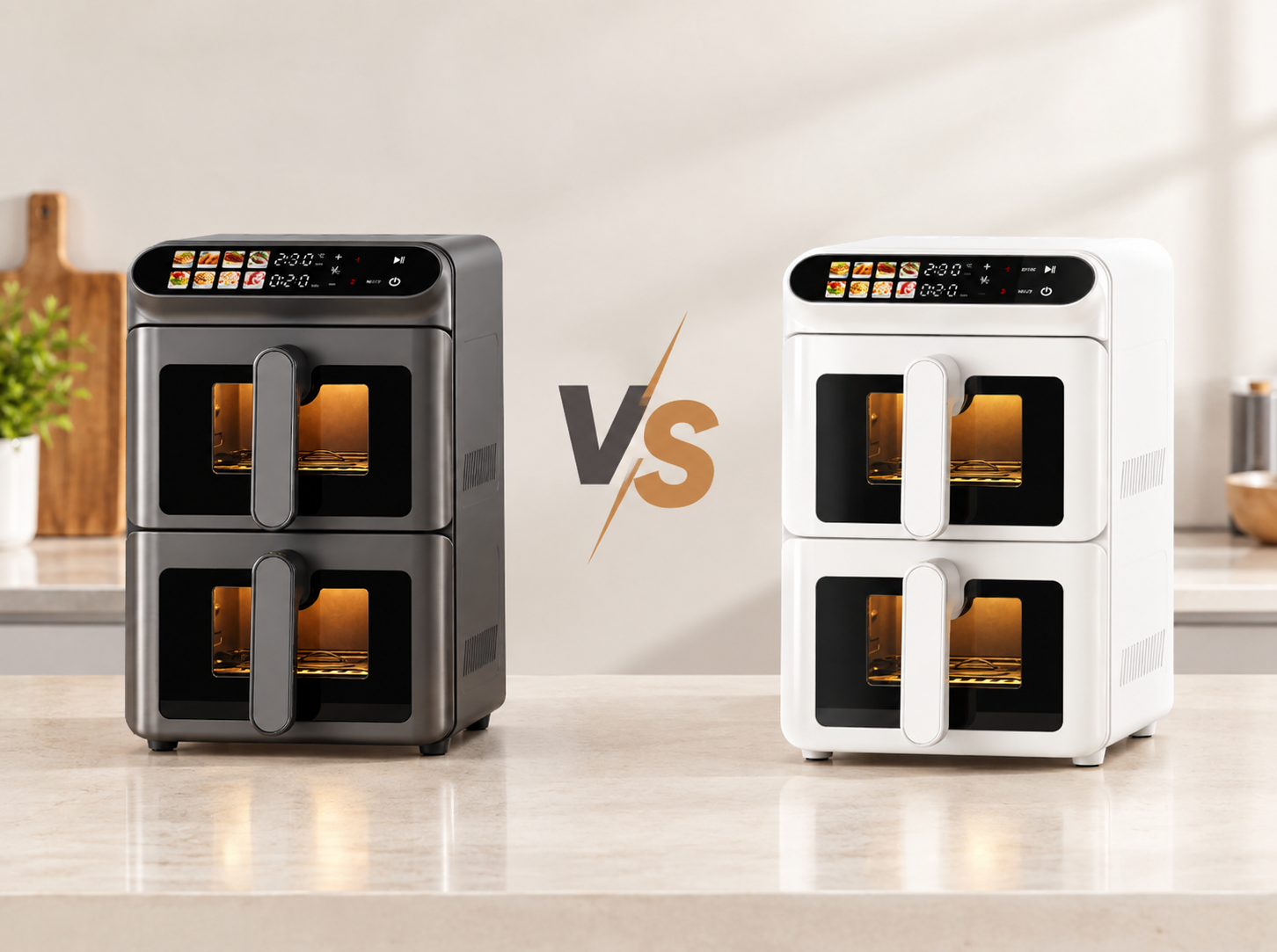
Metal-Body vs. Plastic-Body Air Fryer: : which is better for a premium brand?
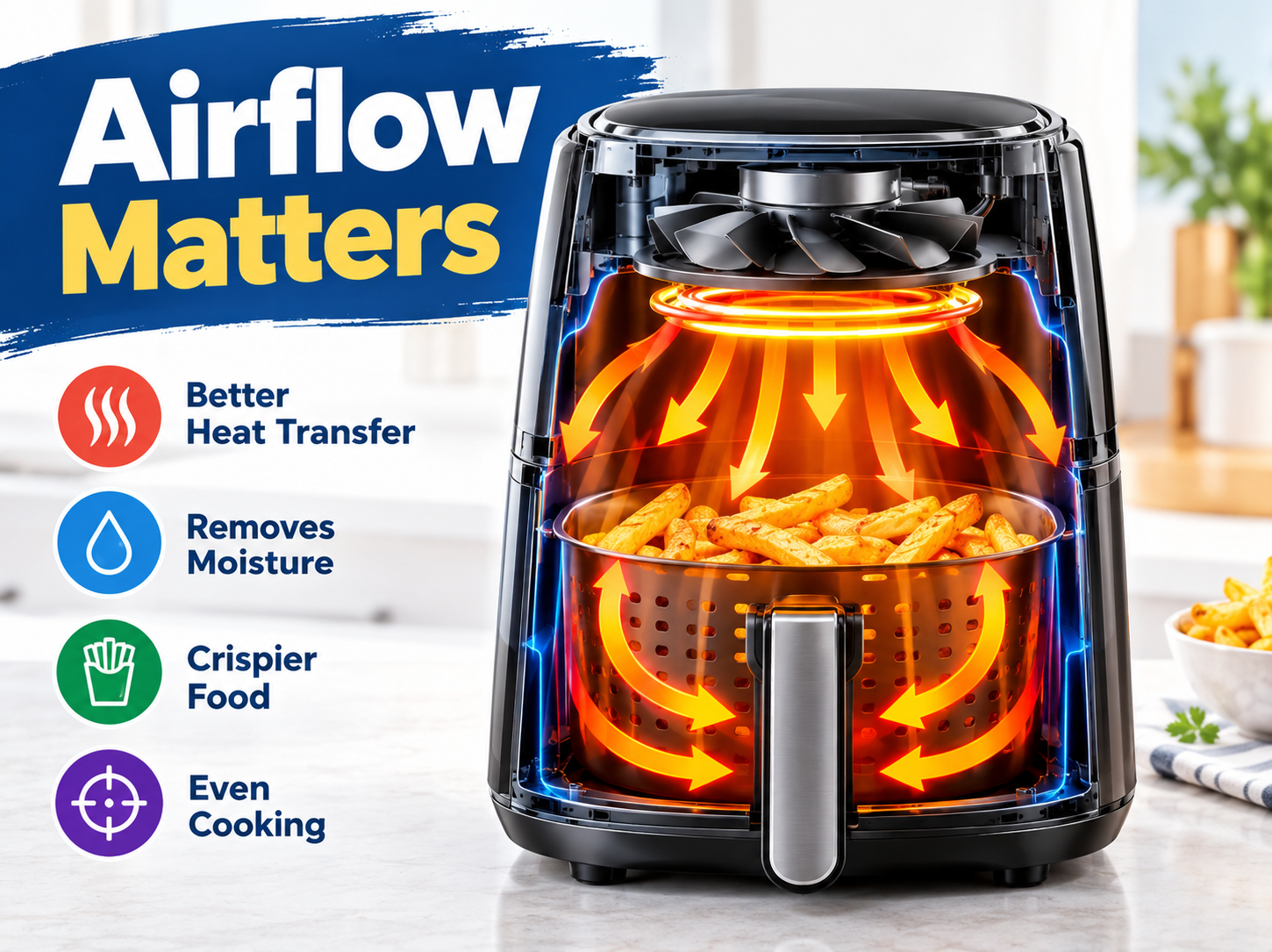
Why Does Airflow Matter in an Air Fryer?

Kitchen Appliance Regulations In the European Union
Can An Air Fryer Replace A Toaster Oven?
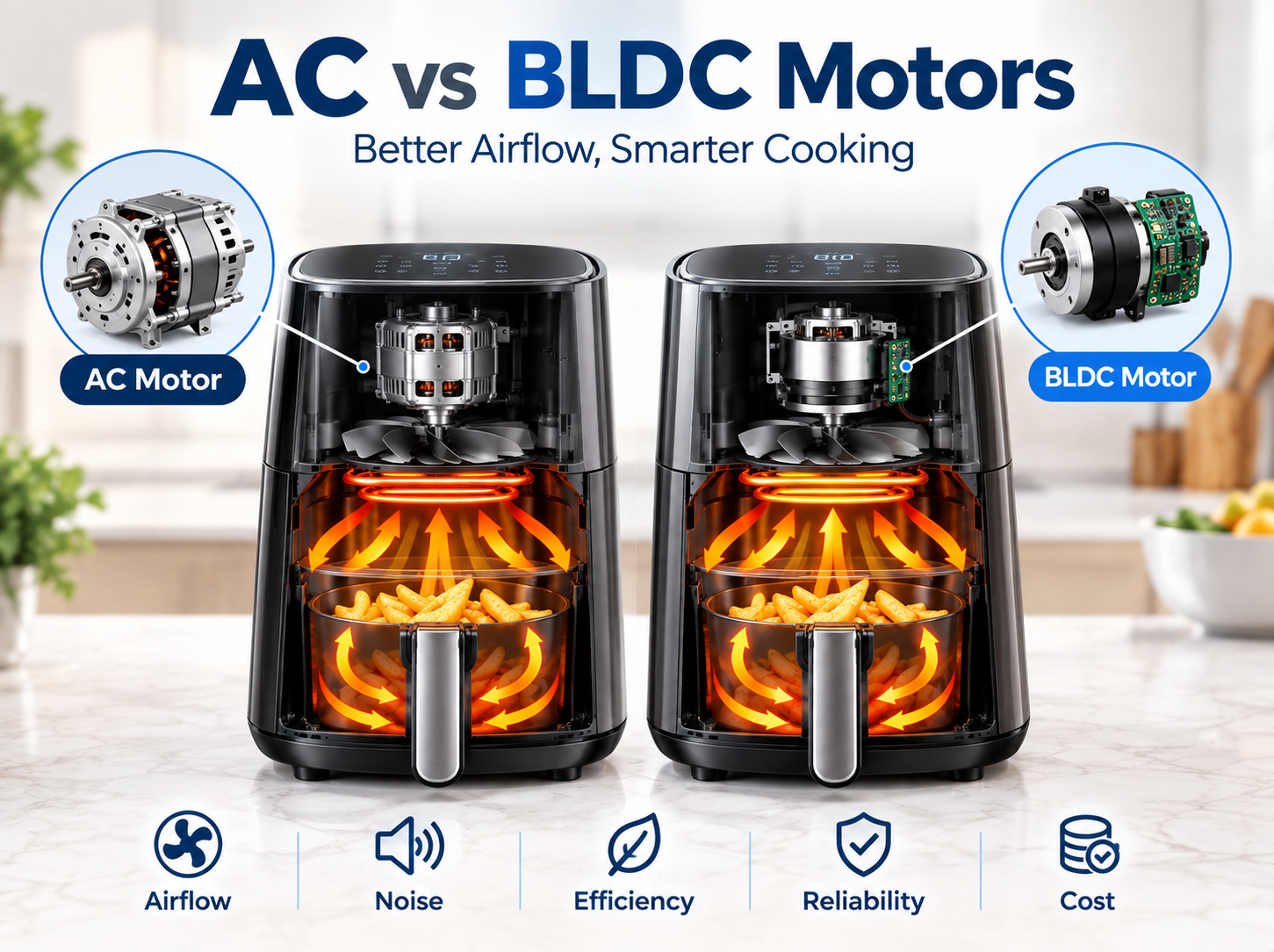
What Is the Difference Between AC and BLDC Motors in Air Fryers?
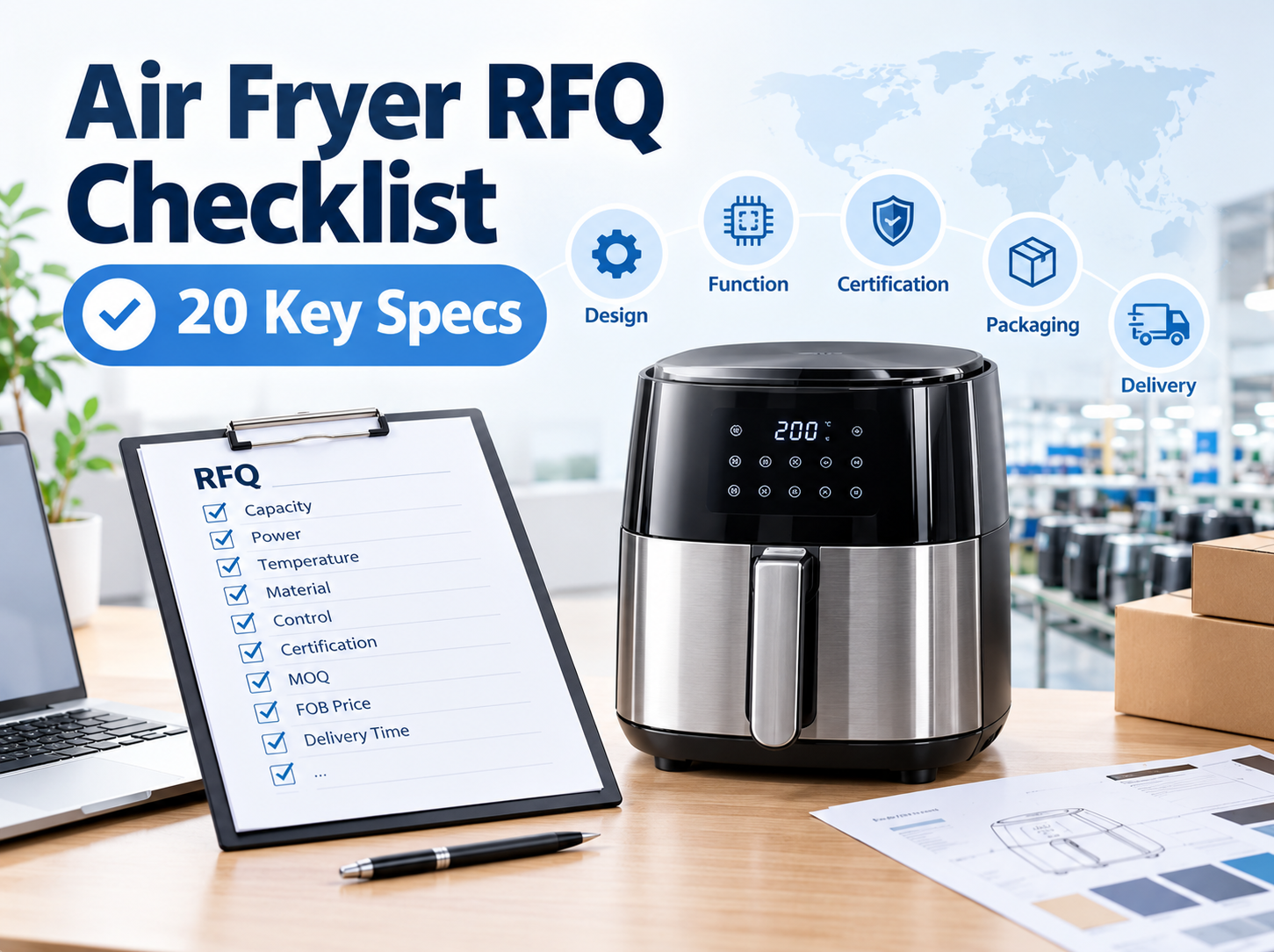
Air Fryer RFQ Checklist: 20 Specifications Buyers Should Include
 + 86 181 3826 8709
 info@funloiv.com
 6/F., Guanglong Building, Pingxin North Road, Longgang, Shenzhen City, Guangdong, China


@ 2009-2026 Shenzhen Funloiv Electric Appliance Co., LtdAll rights reserved


