 Notice:

 search
search
search
Sep 23, 2026


For an air fryer importer, brand owner or private-label buyer, approving an engineering sample is only one step before mass production.
A product may work correctly during normal operation but still have potential safety issues related to electrical insulation, excessive temperature rise, thermal protection, motor failure, abnormal operation, mechanical structure or material selection.
This is why pre-mass-production safety testing is an important part of an air fryer development project.
The purpose is not simply to ask:
Does the air fryer work?
A more important question is:
Does the air fryer remain safe under normal and reasonably foreseeable abnormal conditions?
A practical pre-production safety process can be viewed as:
Product Design → Engineering Sample → Safety Testing → Design Verification → Certification/Compliance → Golden Sample → Mass Production
The exact tests required depend on the product design, target market, applicable regulations and relevant safety standards. Buyers should therefore confirm the testing plan with the qualified testing laboratory or certification body before starting a formal compliance program.
This guide explains the main safety tests that air fryer buyers and suppliers should consider before mass production.
1. What Does Pre-Mass-Production Safety Testing Mean?
Pre-mass-production safety testing is the process of evaluating an air fryer's safety-related design and components before the final product enters large-scale production.
It is different from a basic functional test.
A functional test asks:
l Does the heater work?
l Does the fan rotate?
l Does the display work?
l Does the timer work?
l Does the air fryer reach the set temperature?
Safety testing goes further.
It asks:
l What happens if the temperature becomes too high?
l What happens if airflow is restricted?
l What happens if the motor stops?
l Can accessible surfaces become excessively hot?
l Is the electrical insulation adequate?
l Can the thermal protection system respond correctly?
l Can the product remain stable during normal use?
l Are internal materials suitable for the expected temperatures?
For B2B buyers, the objective is to identify safety-related design problems before the cost and complexity of mass production make changes more difficult.
2. Which Safety Standards Apply to Air Fryers?
Air fryers are electrical cooking appliances, so the applicable safety requirements normally depend on their design and target market.
For many household and similar portable cooking appliances, the IEC 60335 safety series is an important reference framework.
IEC 60335-1 provides general safety requirements for household and similar electrical appliances, while the appropriate Part 2 standard provides additional requirements for specific appliance categories.
IEC 60335-2-9:2019 covers grills, toasters and similar portable cooking appliances with cooking functions such as baking, roasting and grilling. The standard is used together with the relevant edition of IEC 60335-1.
However, buyers should not assume that one standard or one certification route automatically applies to every air fryer.
The applicable requirements can depend on:
l Product construction
l Rated voltage
l Intended use
l Target market
l Heating system
l Control system
l Product category
l Applicable national or regional requirements
Therefore, a supplier should be able to explain:
Which standards and test requirements are being used for this specific product and target market?
3. Input Power and Rated Power Testing
Input power is one of the first safety-related parameters that should be verified.
For example, if an air fryer is specified as:
220–240 V / 50 Hz / 2000 W
the actual electrical input should be evaluated under the applicable operating conditions.
Testing may include:
l Rated voltage
l Rated frequency
l Input current
l Input power
l Maximum power
l Different operating modes
l Heater-only or combined operating conditions where applicable
This becomes particularly important for air fryers with:
l Dual heating elements
l High-power heating systems
l Multiple operating modes
l Electronic controls
l DC or BLDC motors
l Additional electrical functions
The buyer should not rely only on the rating label.
A useful supplier question is:
Has the actual power input been verified under the intended operating conditions?
4. Temperature Rise and Surface Temperature Testing
An air fryer is designed to operate at high internal temperatures, but that does not mean every external surface should become excessively hot.
Temperature testing should consider areas that users may touch, such as:
l Main housing
l Basket handle
l Drawer handle
l Control panel
l Door or viewing window
l Accessible metal surfaces
Other areas may also require evaluation depending on the product design:
l Air outlet
l Internal housing
l Heating-element area
l Motor area
l PCB compartment
l Power cord and wiring
For a high-temperature model, such as a 230°C air fryer, thermal design becomes particularly important.
The buyer should consider:
Cooking Temperature + Internal Heat Distribution + Insulation + Airflow + Component Temperature + Accessible Surface Temperature
A high maximum cooking temperature should therefore be evaluated together with the complete thermal design.
5. Heating Element Safety Testing
The heating element is one of the most important safety-related components in an air fryer.
Depending on the design, an air fryer may use:
l Stainless-steel tubular heating elements
l Halogen heating elements
l Upper heating elements
l Lower heating elements
l Dual heating systems
Safety testing should consider:
Heating Performance
l Heating response
l Temperature stability
l Heating element operation
l Temperature recovery
Thermal Design
l Distance from surrounding components
l Insulation
l Mounting structure
l Heat transfer to adjacent materials
Electrical Design
l Wiring
l Connections
l Insulation
l Terminals
l Component ratings
Long-Term Operation
l Thermal cycling
l Repeated heating
l Component temperature
l Mechanical fixing
l Possible deformation
A heating element should not be evaluated separately from the surrounding system.
The complete system is:
Heating Element → Thermal Management → Airflow → Temperature Control → Protective Devices
This is also why the choice between halogen and stainless-steel tubular heating elements should be considered together with the overall product design.
6. Temperature Control and Thermal Protection
A temperature setting on the display does not by itself guarantee safe temperature control.
The safety evaluation should consider:
Temperature Sensor
l Sensor position
l Sensor response
l Temperature measurement
l Stability
Temperature Control
l Set temperature
l Actual temperature
l Temperature fluctuation
l Temperature recovery
Thermal Protection
Depending on the design, this may include:
l Thermal fuse
l Thermal protector
l Temperature limiter
l Electronic protection
l Automatic shut-off
A useful question for a supplier is:
What happens if the normal temperature-control system does not operate as intended?
The safety system should be designed so that a foreseeable fault does not create an unacceptable hazard.
7. Abnormal Operation Testing
Normal operation testing is not enough for a safety-focused product evaluation.
A good safety test plan should also consider reasonably foreseeable abnormal conditions.
Depending on the design and applicable standard, examples may include:
l Fan failure
l Motor abnormal operation
l Restricted airflow
l Heating control malfunction
l Abnormal temperature conditions
l Failure of certain protective components
l Control-system faults
The purpose is not to simulate every possible failure.
The purpose is to determine whether the product's protective design can prevent an abnormal condition from developing into a dangerous situation.
This is an important distinction:
Performance testing asks how well the air fryer works. Safety testing also asks what happens when the system does not work normally.
8. Motor and Fan Safety Testing
The motor and fan are essential parts of the air fryer's thermal and airflow system.
Safety-related motor and fan evaluation may include:
l Normal motor operation
l Motor temperature
l Operating current
l Fan performance
l Abnormal noise
l Vibration
l Motor stall conditions where applicable
l Restricted airflow conditions where applicable
l Thermal protection
This is particularly relevant for:
l Large-capacity air fryers
l Dual-basket models
l Vertical air fryers
l High-temperature models
l DC motor models
l BLDC motor models
A motor problem can affect more than noise.
Reduced airflow may change the temperature distribution inside the cooking chamber and increase the thermal load on other components.
Therefore:
Motor → Fan → Airflow → Heat Transfer → Thermal Management
should be evaluated as one system.
9. Electrical Safety Testing
Electrical safety is a fundamental part of air fryer testing.
Depending on the applicable standard and product construction, the test program may include areas such as:
Insulation
Verification of insulation between relevant electrical and accessible parts.
Dielectric Strength / Hi-Pot
Testing the insulation system under the specified electrical stress.
Leakage Current
Checking leakage current under the applicable test conditions.
Grounding / Protective Earthing
For products using protective earthing, the continuity and integrity of the protective path should be verified.
Wiring and Connections
Inspect:
l Wire routing
l Terminal connections
l Connectors
l Insulation
l Wire temperature ratings
l Mechanical fixing
l Clearance and creepage where applicable
For an OEM/ODM project, these checks should be completed before final production release.
A buyer should ask:
Has the final production-intent electrical configuration been tested, rather than only an earlier engineering prototype?
10. Mechanical and Structural Safety Testing
Electrical safety is only one part of the overall safety assessment.
Mechanical design can also create safety risks.
Areas to evaluate may include:
l Basket locking
l Drawer insertion
l Handle strength
l Housing strength
l Product stability
l Sharp edges
l Loose components
l Moving fan components
l Structural fixing
l Deformation under expected operating conditions
For dual-basket air fryers, buyers should pay particular attention to the drawer mechanism.
The design should be evaluated for:
l Correct drawer positioning
l Secure mechanical engagement
l Repeated opening and closing
l Interaction with the heating system
l User access to internal components
For a product intended for mass production, mechanical safety should be evaluated using production-intent components and construction.
11. Stability and Tip-Over Testing
Stability becomes especially important for larger or taller air fryers.
Examples include:
l 8L models
l 9L models
l 10L models
l 11L models
l Vertical dual-drawer air fryers
A vertical design may reduce countertop width, but its greater height means that the relationship between:
Product Height + Center of Gravity + Drawer Extension + Load
needs to be considered.
Testing should evaluate whether the product remains stable during reasonably foreseeable use.
For example:
l Drawer opening
l Basket removal
l Maximum intended food load
l Repeated drawer operation
l Product placement on the intended surface
This is particularly relevant when designing a vertical dual-drawer air fryer for retail markets.
12. Material, Insulation and Fire-Related Safety
Material selection is closely connected to thermal and electrical safety.
Buyers should ask suppliers to verify the suitability of materials used near:
l Heating elements
l High-temperature areas
l Electrical components
l Wiring
l Motor assemblies
l Air outlets
Potential areas of concern include:
l Material deformation
l Insufficient insulation
l Heat transfer to adjacent components
l Inappropriate plastic selection
l Wire insulation temperature rating
l Flammability-related requirements
However, buyers should avoid assuming that:
Metal body = automatically safer
or:
Plastic body = automatically unsafe
Safety depends on the complete product design.
A properly engineered product should match:
Material + Temperature + Insulation + Component Location + Thermal Management + Applicable Requirements
13. Cleaning, Moisture and Misuse-Related Safety
Air fryers are exposed to food residue, grease, moisture and cleaning activities.
Therefore, safety evaluation should consider reasonably foreseeable use and cleaning conditions.
Depending on the product design, areas to consider may include:
l Moisture entering electrical areas
l Cleaning-related exposure
l Basket washing
l Water around control components
l Grease accumulation
l Food residue near heating components
l Cleaning instructions
l Dishwasher-related requirements where applicable
The objective is not to make the air fryer "waterproof."
Instead, the product should be evaluated against the cleaning and moisture conditions reasonably expected for its intended use.
The user manual is also important.
If a particular cleaning method could create a safety risk, the instructions should clearly explain what users should and should not do.
14. Endurance and Thermal Cycling Testing
A product that passes a one-time safety test may still require additional reliability evaluation before mass production.
This is why endurance and repeated-operation testing can be useful during product development.
Possible evaluations include:
Continuous Operation
Run the air fryer for the applicable operating period and monitor:
l Temperature
l Motor
l Heating system
l Electrical components
l Protective devices
Thermal Cycling
Repeat:
Heating → Cooling → Heating → Cooling
and monitor changes in:
l Components
l Connections
l Insulation
l Housing
l Heating elements
l Temperature sensors
Motor Endurance
Monitor:
l Motor temperature
l Noise
l Vibration
l Airflow stability
Heating Element Endurance
Monitor:
l Heating performance
l Thermal cycling
l Mounting
l Deformation
l Electrical condition
Mechanical Endurance
For products with drawers or moving parts:
l Drawer opening/closing
l Handle operation
l Basket insertion/removal
l Mechanical locking
The objective is to identify potential weaknesses before the product enters large-scale production.
15. Final Safety Verification Before Mass Production
After the individual tests are completed, the project should have a clear mass-production safety gate.
A practical process can be divided into six stages.
Stage 1 — Design Review
l Product specification confirmed
l Critical components identified
l Heating system confirmed
l Motor and fan confirmed
l Thermal protection confirmed
l Electrical architecture reviewed
Stage 2 — Engineering Sample
l Functional testing completed
l Temperature testing completed
l Electrical safety reviewed
l Mechanical safety reviewed
l Abnormal-operation risks identified
Stage 3 — Safety Testing
l Input power
l Temperature rise
l Surface temperature
l Heating element
l Temperature control
l Thermal protection
l Electrical safety
l Motor/fan safety
l Abnormal operation
l Mechanical safety
l Stability
Stage 4 — Compliance / Certification
l Applicable market requirements confirmed
l Applicable standards confirmed
l Required laboratory testing completed
l Certification or conformity documentation prepared where applicable
Stage 5 — Golden Sample Approval
l Final product configuration approved
l Critical components approved
l Safety-related components frozen
l Golden sample retained
l Production specification released
Stage 6 — Mass Production Release
Only after the required safety, compliance, performance and reliability requirements have been satisfactorily addressed should the product move into mass production.
Pre-Mass-Production Air Fryer Safety Test Checklist
For B2B buyers, the following checklist can be used when evaluating an air fryer supplier.
Test Area | What Should Buyers Check? |
Rated power | Voltage, frequency, current and input power |
Heating | Heating element operation and thermal performance |
Temperature | Temperature accuracy and stability |
Surface temperature | Accessible external surfaces |
Thermal protection | Thermal fuse, protector or other protection |
Motor | Motor operation and temperature |
Fan | Airflow, vibration and abnormal conditions |
Electrical safety | Insulation, dielectric strength and leakage where applicable |
Grounding | Protective earthing where applicable |
Wiring | Routing, insulation and connections |
Mechanical safety | Basket, drawer, handle and housing |
Stability | Product stability during intended use |
Abnormal operation | Response to applicable fault conditions |
Materials | Suitability for expected temperatures and conditions |
Moisture | Reasonably foreseeable cleaning/moisture exposure |
Endurance | Repeated operation and thermal cycling |
Documentation | Test reports, specifications and compliance documents |
What Should Buyers Ask an Air Fryer Supplier Before Mass Production?
Before approving a supplier, buyers should ask:
l Which safety standards apply to this air fryer?
l Which target markets have been considered in the test plan?
l Has the final product configuration been safety tested?
l Has the rated input power been verified?
l Has the surface temperature been tested?
l How is the heating element protected?
l What thermal protection devices are used?
l How is abnormal temperature controlled?
l Has the motor/fan system been evaluated under abnormal conditions?
l Has electrical safety testing been completed?
l Has the grounding system been verified where applicable?
l Has the basket/drawer structure been tested?
l Has product stability been evaluated?
l Have production-intent materials been used?
l Have critical components been approved?
l Has endurance or thermal cycling testing been performed?
l Which laboratory completed the formal testing?
l Can the supplier provide the applicable test report?
l Has the final product configuration been compared with the tested sample?
l What happens if a safety-related component changes after certification?
The last question is particularly important.
A safety report is connected to a specific product configuration. If a supplier changes a heating element, PCB, motor, thermal protector or other safety-critical component, the impact of that change should be assessed rather than assuming the original test result automatically remains valid.
Safety Testing vs. Performance Testing vs. Quality Inspection
These three activities should not be confused.
Type | Main Question |
Safety Testing | Is the product safe under applicable conditions? |
Performance Testing | Does the product perform as specified? |
Quality Inspection | Does production match the approved specification? |
For example:
Safety Testing
Can the product remain within applicable safety limits under the required test conditions?
Performance Testing
Can the air fryer reach and maintain the specified temperature?
Quality Inspection
Does every production unit have the correct heating element, motor, wiring, housing and control components?
A strong OEM/ODM project needs all three.
Why Safety Testing Should Be Completed Before Mass Production
Safety problems discovered during mass production can be expensive to correct.
A design change may affect:
l Tooling
l Components
l PCB
l Wiring
l Heating system
l Housing
l Packaging
l Certification
l Production schedule
If a safety-related issue is identified during engineering development, the supplier may still be able to modify the design before production tooling and certification are finalized.
This is why:
Safety testing should be treated as a design-verification step, not simply as a certification formality.
For buyers, the objective is not only to obtain a test report.
The objective is to make sure that the product being mass-produced is consistent with the product that was tested and approved.
Frequently Asked Questions
Ø What safety tests should be completed before mass production of an air fryer?
Depending on the product design and target market, the safety evaluation may include electrical safety, temperature rise, surface temperature, heating-element safety, thermal protection, motor/fan safety, abnormal operation, mechanical safety, stability, material suitability and endurance-related testing.
Ø Is air fryer safety testing the same as certification testing?
No. Certification testing is performed against applicable regulatory or certification requirements. Buyers may also perform their own product verification and sample testing to confirm that the product meets their specifications and quality requirements.
Ø Does every air fryer need the same safety tests?
No. The applicable test plan depends on product construction, electrical design, intended use, target market and applicable standards.
Ø Should safety testing be completed before or after mass production?
Safety-related design verification should be completed before mass production. Formal certification or conformity assessment may also need to be completed at the appropriate stage before market placement, depending on the target market.
Ø Should the production sample be tested again after design changes?
If a change affects safety-related components, materials, electrical architecture, heating systems, thermal protection or other relevant characteristics, the change should be reviewed to determine whether additional testing or certification assessment is required.
Ø What is the difference between an air fryer sample test and a safety test?
A sample test may evaluate performance, usability, cooking results, noise, temperature accuracy and other buyer requirements. Safety testing focuses specifically on hazards and protective measures under applicable test conditions.
Ø Is 230°C an air fryer safety test?
No. 230°C is a product temperature specification, not a complete safety test.
A 230°C air fryer should be evaluated for its heating system, temperature control, thermal protection, material selection, surface temperatures and other applicable safety requirements.
Ø Why should buyers test the motor and fan?
The motor and fan influence airflow and thermal management. A motor or fan problem can affect cooking performance and may also change the thermal conditions inside the appliance.
Ø Can a supplier start mass production before safety testing is completed?
Production planning and some preparatory activities may begin earlier, but the final product configuration should not be released for mass production without addressing the required safety and compliance verification for the target market.
Final Takeaway
For air fryer importers and brand owners, safety should be verified before mass production, not only after the product reaches the market.
A comprehensive pre-production evaluation should consider:
Electrical Safety
↓
Heating System
↓
Temperature Control
↓
Thermal Protection
↓
Motor & Fan
↓
Abnormal Operation
↓
Mechanical Safety
↓
Material & Insulation
↓
Stability
↓
Endurance
↓
Compliance
The most important question is not simply:
"Has the air fryer passed a safety test?"
A better B2B sourcing question is:
"Has the final production-intent design been properly evaluated against the safety and compliance requirements of the target market?"
For brands, importers and retailers, this approach can help identify safety-related design risks before tooling, certification and mass production become difficult or expensive to change.
Related Air Fryer Buyer Guides
For a complete air fryer sourcing and quality-control process, buyers may also want to review:
Related Articles
l Air Fryer Heating Element: Halogen vs. Stainless Steel Heating Tube.
l Why Does Airflow Matter in an Air Fryer?
l What Is the Difference Between AC and BLDC Motors in Air Fryers?
l What Makes an Air Fryer Cook More Evenly?
l How Can I Test an Air Fryer Sample Before Placing a Bulk Order?
l What Quality-Control Standards Should I Require from an Air Fryer Supplier?
l What Air Fryer Tests Should Be Included in a Pre-Shipment Inspection?
l What Factors Affect the FOB Price of an Air Fryer?
l How to Compare Quotations from Different Air Fryer Suppliers?
l 230°C Air Fryer: What Buyers Should Check Before Importing?
l A Dual Heating vs Single Heating Air Fryer- Which Is Better?
l What Is the Difference Between AC and DC Motors in Air Fryers?
l Air Fryer for the Middle East - A Guide to G-Mark, Specifications and Compliance?
l What Are the Most Common Quality Problems with Air Fryers?
l Air Fryer RFQ Checklist: 20 Specifications Buyers Should Include.
l How To Verify Whether an Air Fryer Supplier Is Reliable?
l How to Choose an OEM-ODM Air Fryer Supplier in China?
l 200°C vs 230°C Air Fryer: Which one is better?
l Metal-body vs plastic-body air fryer: which is better for a premium brand?
l Top Heating vs. Rear Heating Air Fryers: Which one is better for a B2B buyer?
l Is a Vertical Dual-Drawer Air Fryer Better for Saving Kitchen Space?
l Air Fryer Certifications & Compliance by Market- A Safety Guide for Importers.
l Vertical vs. Horizontal Dual-Basket Air Fryer- Which Is Better for Retail?
l What Air Fryer Capacity Is Best for the European Market?
l What Are the Common Warranty and After-Sales Problems with Air Fryers?
l What MOQ, Lead Time and Payment Terms Should I Expect from an Air Fryer Supplier?
l How Can I Prevent Plastic Melting or Deformation in an Air Fryer?
Looking for an Air Fryer OEM/ODM Supplier?
Choosing an air fryer supplier is not only about product configuration and FOB price.
For a private-label or OEM/ODM project, buyers should also evaluate:
Product Development → Safety Testing → Certification → Sample Approval → Production QC → Pre-Shipment Inspection → Spare Parts → After-Sales Support
FUNLOIV works with brands and importers on air fryer product development, OEM/ODM production, quality control and export requirements.
Contact FUNLOIV to discuss your air fryer project and safety requirements before mass production.

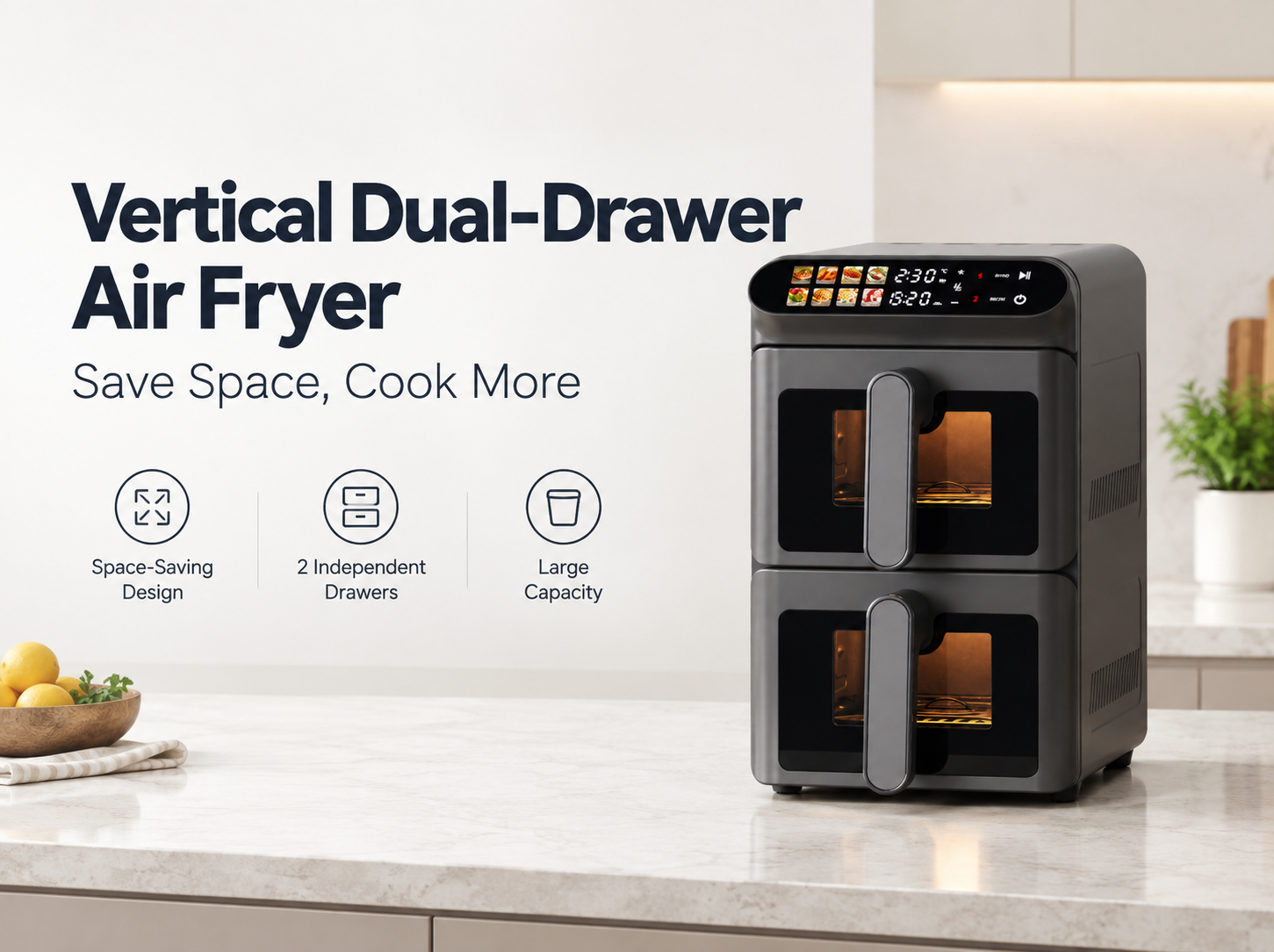
Is a Vertical Dual-Drawer Air Fryer Better for Saving Kitchen Space?
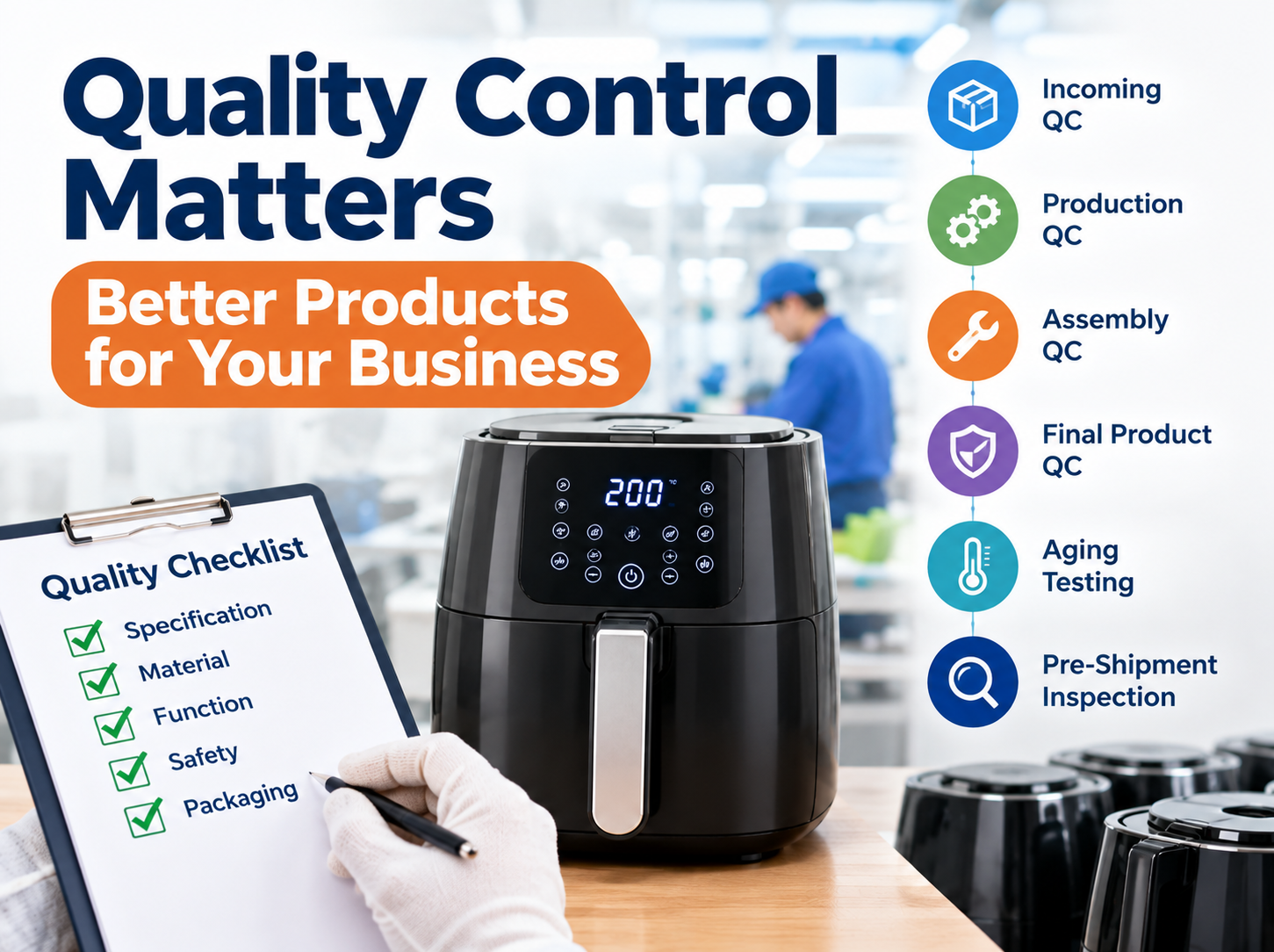
What Quality-Control Standards Should I Require from an Air Fryer Supplier?

Wilko collapse - What Went Wrong With The High Street Retailer?
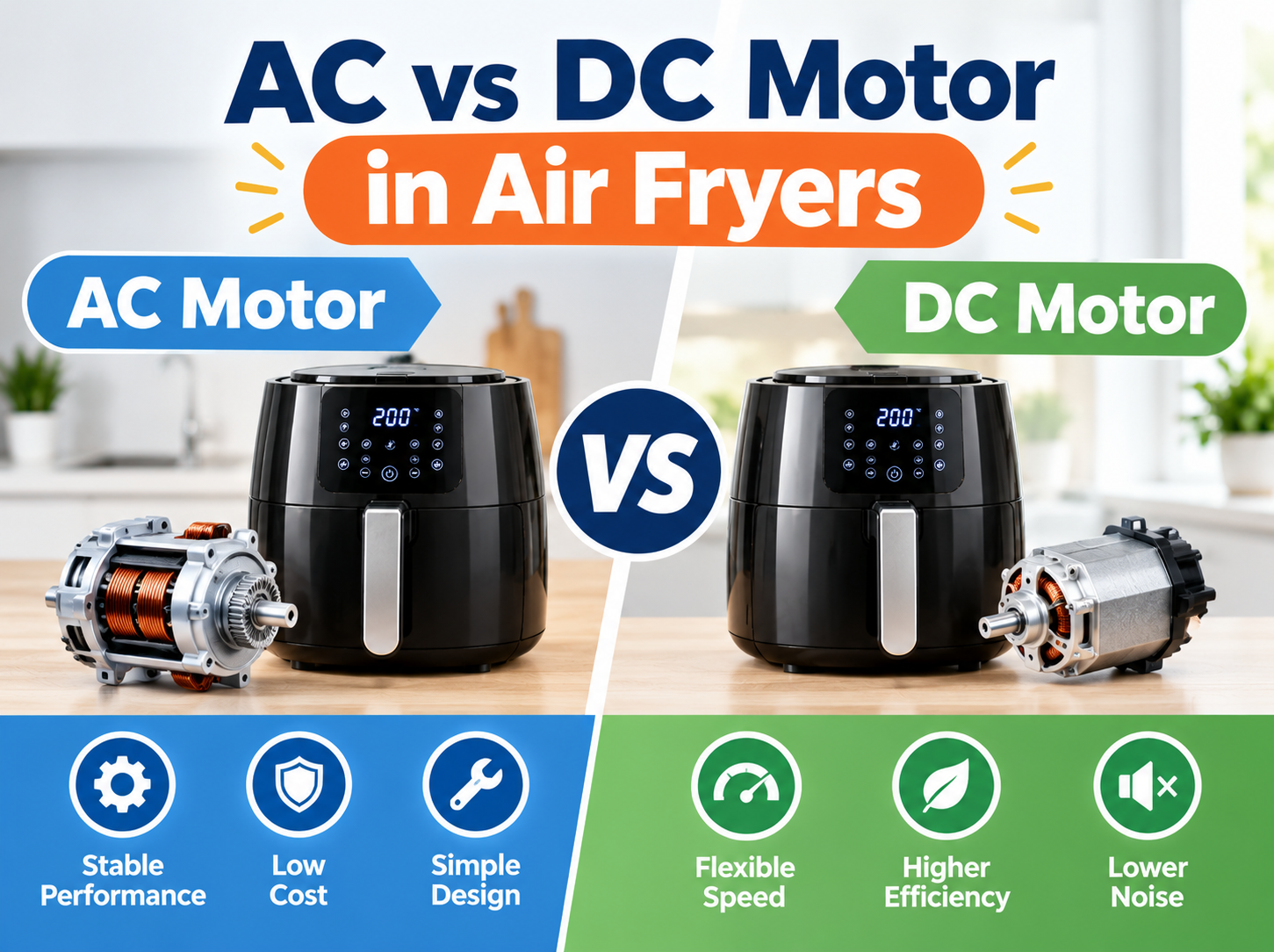
What Is the Difference Between AC and DC Motors in Air Fryers?
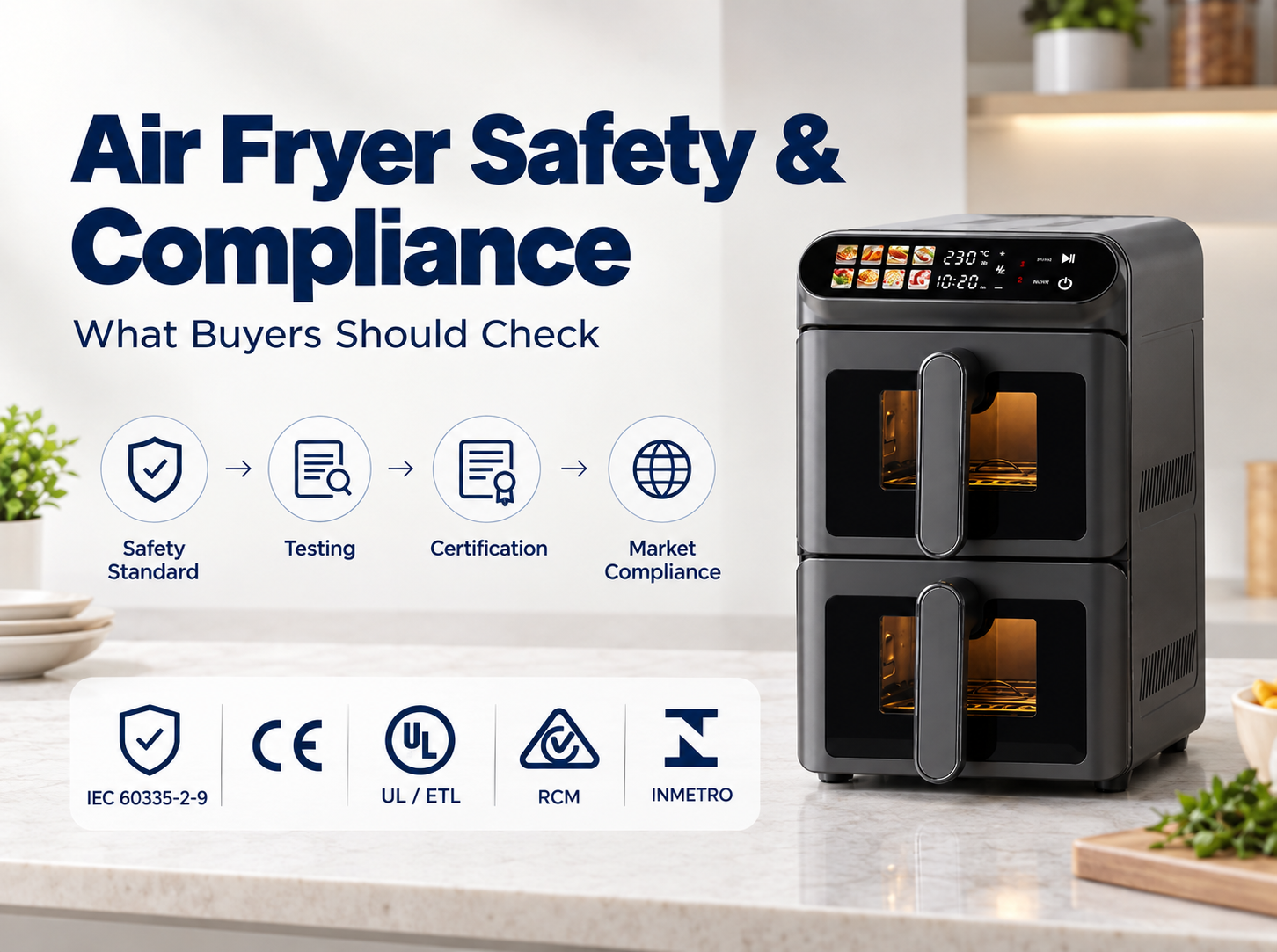
Air Fryer Certifications & Compliance by Market: A Safety Guide for Importers

Why Personal Care Appliances Become Popular Globally?
 + 86 181 3826 8709
 info@funloiv.com
 6/F., Guanglong Building, Pingxin North Road, Longgang, Shenzhen City, Guangdong, China


@ 2009-2026 Shenzhen Funloiv Electric Appliance Co., LtdAll rights reserved


