 Notice:

 search
search
search
Sep 23, 2026


When sourcing an air fryer, one of the first product decisions is whether to develop or purchase a single-basket or dual-basket model.
At first glance, the difference seems simple: one has one basket, while the other has two.
However, for importers, brand owners and retailers, basket configuration affects much more than the number of baskets. It can influence:
l Cooking flexibility
l Usable cooking space
l Basket dimensions
l Temperature and time control
l Heating and airflow architecture
l Countertop footprint
l Cleaning requirements
l BOM and product cost
l Quality-control requirements
l Target consumers
l Retail positioning
The key difference can be summarized as follows:
A single-basket air fryer provides one continuous cooking space, while a dual-basket air fryer divides the cooking space into two cooking zones that can, depending on the design, operate independently.
Therefore, the right question for B2B buyers is not simply “Which one is better?”
A more useful question is:
Which basket configuration best matches the intended consumer, cooking requirements, product architecture and retail positioning?
1. Single-Basket vs. Dual-Basket Air Fryer: Quick Comparison
The following table provides a practical starting point for product evaluation.
Buying Factor | Single-Basket Air Fryer | Dual-Basket Air Fryer |
Cooking zones | One | Two |
Cooking space | One continuous area | Two separate areas |
Independent cooking | Usually one cooking program | Possible on independently controlled models |
Different foods at the same time | Limited | Main advantage |
Different temperatures | Usually not simultaneously | Possible |
Different cooking times | Usually not simultaneously | Possible |
Large single food | Often easier | Depends on individual basket dimensions |
Total capacity | Concentrated in one basket | Divided between two baskets |
Cleaning | Fewer removable parts | More baskets and components |
Controls | Simpler | More complex |
Product architecture | Simpler | More components and control functions |
Retail positioning | Mainstream, compact, straightforward | Family, multifunctional, premium or flexible cooking |
Key value proposition | Continuous cooking space and simplicity | Cooking flexibility and simultaneous preparation |
The important point is that dual-basket does not simply mean “more capacity.”
Its main functional difference is the ability to divide cooking into two separate zones.
2. What Is a Single-Basket Air Fryer?
A single-basket air fryer has one main cooking chamber and one removable basket or drawer.
Food is placed into the basket, while a heating element and fan circulate hot air through the cooking chamber.
The entire cooking area normally follows the same basic cooking program.
For example, if the user is preparing French fries, the whole basket can be used for one batch.
This configuration has several characteristics that can be attractive to both consumers and product developers:
One continuous cooking area
The cooking space is not divided into two smaller compartments.
This can make a single basket suitable for:
l Large batches of the same food
l Wider or irregularly shaped food
l Larger individual items
l Foods that benefit from a broader cooking surface
Simpler operation
There is generally only one cooking zone to manage.
This can make the product easier to position for consumers who prefer straightforward operation.
Simpler product architecture
Compared with a dual-basket product, a single-basket design may require fewer:
l Heating components
l Sensors
l Control channels
l Basket assemblies
l Mechanical interfaces
However, the exact architecture depends on the product design.
3. What Is a Dual-Basket Air Fryer?
A dual-basket air fryer divides the cooking area into two separate baskets or drawers.
The two zones may be controlled independently, depending on the product architecture.
For example:
Basket 1: Chicken — 190°C / 20 minutes
Basket 2: Vegetables — 180°C / 12 minutes
This allows two different foods to be prepared simultaneously without requiring exactly the same cooking settings.
Current dual-basket products from major brands use this type of independent-zone concept, with features such as separate temperature/time settings and synchronized finishing.
This is the fundamental reason why dual-basket air fryers have become an important product category.
The main benefit is not simply “two baskets.”
It is:
Two cooking zones that can provide greater control over different foods.
4. Cooking Flexibility: The Biggest Difference
For many consumers, cooking flexibility is the most visible difference between the two configurations.
Imagine a typical meal:
l Chicken wings
l French fries
l Roasted vegetables
With a single basket, the user may need to:
l Cook one food first;
l Remove or keep it warm;
l Adjust the settings;
l Cook the second food;
l Repeat if necessary.
With a dual-basket air fryer, two foods can potentially be cooked at the same time using different settings.
For example:
Zone A
Chicken wings
190°C
20 minutes
Zone B
French fries
200°C
15 minutes
Some dual-basket models also include a Sync Finish function that coordinates different cooking durations so the two zones finish at approximately the same time. Philips and Ninja currently use synchronization features as part of their dual-basket product positioning.
For B2B buyers, this means that the question is not simply whether the product has two baskets.
The more important question is:
Are the two baskets genuinely independently controlled?
5. Capacity: Why 8L Single Basket Is Not the Same as 8L Dual Basket
This is one of the most important points for air fryer importers.
Suppose two products are both advertised as 8L.
Product A: 8L single basket
The product may provide approximately one continuous 8L cooking chamber.
Product B: 8L dual basket
The capacity could be divided into:
4L + 4L
The total nominal capacity is still 8L.
But the cooking experience is completely different.
An 8L dual-basket product does not necessarily provide the same usable space as one continuous 8L basket.
This is why buyers should not compare air fryers based only on the headline capacity.
Instead, evaluate:
l Total capacity
l Individual basket capacity
l Basket width
l Basket depth
l Basket height
l Usable cooking area
l Maximum food dimensions
l Food loading recommendations
Current market comparisons specifically highlight this issue: two smaller baskets can provide useful simultaneous cooking while still being unable to accommodate an item that requires one large continuous cooking space.
6. Cooking Area Can Matter More Than Total Capacity
For some foods, the shape of the cooking area is more important than the number of litres.
For example, French fries, vegetables and chicken wings often benefit from being spread across a relatively broad surface rather than being packed too deeply.
Therefore, buyers should consider:
How much usable cooking surface does the basket provide?
A single-basket air fryer may provide one larger uninterrupted surface.
A dual-basket air fryer provides two smaller surfaces.
Neither configuration is automatically better.
It depends on what the target consumer needs to cook.
A single basket may be suitable when:
l One large batch is common
l Food needs a wider cooking area
l Larger individual items are important
l Consumers usually cook one type of food at a time
A dual basket may be suitable when:
l Two foods are frequently prepared together
l Different cooking settings are required
l Consumers value simultaneous cooking
l Meal components need to finish together
7. Basket Dimensions: A Critical Specification for B2B Buyers
When evaluating air fryer capacity, litres should not be the only specification on the
RFQ sheet.
For each basket, consider:
Width
How wide is the usable cooking surface?
Depth
How much food can be placed without excessive stacking?
Height
What type of food can fit vertically?
Shape
Is the basket rectangular, square, rounded or another geometry?
Usable cooking area
How much space is available after accounting for the crisper plate and internal structure?
These dimensions can directly influence the types of food that the consumer can prepare.
For example, a large single basket may be more suitable for:
l Larger chicken pieces
l A whole chicken, depending on dimensions
l Pizza-style foods
l Larger portions
l One large batch
A dual-basket configuration may be more suitable for:
l Chicken + vegetables
l Fish + fries
l Meat + side dish
l Two different portions
l Two different cooking preferences
Some current dual-basket models deliberately use different-sized baskets rather than two identical baskets, allowing the larger zone to handle mains while the smaller zone handles sides or snacks.
8. Temperature and Time Control
Another important difference is control flexibility.
A basic single-basket air fryer generally operates with:
l One temperature setting
l One timer
l One cooking zone
A dual-basket model can be designed with:
l Independent temperature control
l Independent time control
l Different cooking programs
l Sync Finish
l Match Cook or Copy functions
For B2B buyers, it is important to distinguish between two physical baskets and two genuinely independent cooking zones.
A product may have two baskets but still share certain elements of its control or heating architecture.
Therefore, ask the supplier:
l Can each basket operate independently?
l Can each basket use a different temperature?
l Can each basket use a different cooking time?
l Can one basket operate while the other is switched off?
l Does the product have Sync Finish?
l Does it have a Copy/Match Cook function?
These questions provide much more information than simply asking whether the product is “dual basket.”
9. Heating and Airflow Architecture
For technical buyers, the basket configuration is only the visible part of the product architecture.
The internal thermal system is equally important.
A single-basket air fryer may use a relatively straightforward system:
Heating Element → Fan → Airflow → Cooking Chamber
A dual-basket air fryer can have different architectures depending on the product design.
For example, it may use:
l Separate heating elements
l Separate fans
l Separate temperature sensors
l Shared components
l Independent thermal zones
l Different airflow channels
Some current dual-basket products explicitly specify separate heating elements and fans for their two zones, while other designs may use different architectures.
Therefore:
Two baskets do not automatically mean two identical thermal systems.
For an importer or brand owner, this should be part of the technical specification review.
10. Does a Dual-Basket Air Fryer Cook More Evenly?
Not necessarily.
Basket configuration alone does not determine cooking consistency.
Cooking performance depends on the complete thermal system, including:
l Heating-element position
l Heating-element power
l Fan performance
l Airflow path
l Basket geometry
l Food loading
l Temperature sensing
l Internal insulation
l Control algorithm
l Heat distribution
A well-designed single-basket air fryer can provide excellent heat distribution.
A well-designed dual-basket air fryer can also provide consistent results across two cooking zones.
The important B2B question is therefore:
Has the complete thermal system been validated under realistic operating conditions?
This is also why sample testing and thermal testing should be completed before mass production.
11. Countertop Footprint: Single, Horizontal Dual or Vertical Dual?
Basket configuration also affects the physical geometry of the appliance.
A traditional single-basket air fryer may have a relatively compact footprint.
A horizontal dual-basket model usually places two cooking zones side by side.
This can increase countertop width.
However, dual basket does not automatically mean a wider appliance.
A vertical dual-drawer configuration can arrange two independent drawers vertically.
This creates a different space-utilization strategy:
Horizontal dual basket
Two baskets side by side
→ More countertop width
Vertical dual basket
Two baskets stacked vertically
→ Potentially less countertop width
→ Greater overall height
For B2B product development, this creates an important product-design question:
Should the product optimize countertop width, overall height, cooking capacity, or basket size?
The answer depends on the target market and intended kitchen environment.
12. Cleaning and Daily Handling
A single-basket air fryer normally has:
l One main basket
l One crisper plate or tray
l Fewer removable components
A dual-basket air fryer may have:
l Two baskets
l Two crisper plates
l More handles
l More interfaces
l More removable components
This does not necessarily make a dual-basket model difficult to clean, but it does increase the number of components that need to be considered during product development.
For B2B buyers, check:
l Dishwasher compatibility
l Non-stick coating
l Basket surface treatment
l Handle durability
l Basket locking mechanism
l Grease accumulation
l Cleaning access
l Crisper plate removal
l Internal cavity design
These details can affect both user experience and after-sales performance.
13. Product Cost and BOM Complexity
From a B2B perspective, the difference between single and dual basket is also a BOM and engineering decision.
A dual-basket design may require additional or more complex:
l Heating elements
l Motors
l Fans
l Temperature sensors
l Control boards
l Wiring
l Basket assemblies
l Handles
l Mechanical structures
l Thermal insulation
l Safety components
However, the actual cost difference depends on the specific architecture.
Therefore, buyers should avoid evaluating suppliers simply by comparing:
Single basket price vs. dual basket price
Instead, compare:
Specification → Architecture → Components → Functions → Testing → Packaging → MOQ → Final FOB price
This is particularly important when comparing quotations from different suppliers.
Two products with the same advertised capacity may have very different internal designs and BOM structures.
14. Electrical Load and Safety Considerations
Dual-basket air fryers may introduce additional considerations for electrical and thermal design, especially when two cooking zones can operate simultaneously.
The supplier should verify factors such as:
l Rated power
l Maximum input power
l Heating-element configuration
l Power distribution
l Temperature control
l Thermal protection
l Wiring
l Electrical insulation
l Over-temperature protection
l Abnormal operation
l Long-duration operation
The exact test plan depends on the product architecture and target market.
For importers, this is one reason why safety testing should be completed at the product-development stage rather than treated only as a certification exercise at the end of the project.
15. Reliability and Quality-Control Considerations
A dual-basket product can introduce more functional components and interfaces than a basic single-basket model.
Therefore, quality control should cover not only the individual components but also how the complete system operates.
For example:
Basket system
l Basket insertion/removal
l Basket locking
l Handle strength
l Mechanical durability
Thermal system
l Temperature control
l Heating performance
l Temperature protection
l Thermal cycling
Electrical system
l Input power
l Insulation
l Grounding where applicable
l Leakage current
l Abnormal operation
Control system
l Independent zone operation
l Sensor response
l Display/control accuracy
l Program switching
l Sync functions
Long-term reliability
l Repeated heating cycles
l Fan operation
l Basket operation
l Control-panel durability
The key question for an importer is:
Can the supplier demonstrate that the complete dual-zone system has been tested, rather than only individual components?
16. Which Is Better for Retail: Single Basket or Dual Basket?
There is no universal answer.
The better configuration depends on the product strategy.
Single-basket positioning may be suitable for:
l Compact households
l Entry and mainstream products
l Simple daily cooking
l Consumers who mainly cook one food at a time
l Large uninterrupted cooking areas
l Price-sensitive product ranges
Dual-basket positioning may be suitable for:
l Family-oriented products
l Consumers who prepare complete meals
l Different foods cooked simultaneously
l Different temperature/time requirements
l Premium multifunctional products
l Consumers who value cooking flexibility
The key is to match the product architecture with the consumer problem.
17. Single Basket vs. Dual Basket: A B2B Decision Framework
For importers and brand owners, the decision can be simplified into seven questions:
Ø What foods will the target consumer cook?
One large food or multiple smaller foods?
Ø Does the consumer need two cooking zones?
If yes, dual basket becomes more relevant.
Ø Does the product need independent temperature and time control?
If yes, the control architecture needs to support genuine zone independence.
Ø How much usable cooking space is required?
Do not look only at total litres.
Ø What countertop footprint is acceptable?
Consider width, depth and height.
Ø What retail price positioning is required?
A more complex architecture may affect BOM and target FOB.
Ø What level of testing is required?
The product should be evaluated according to its specific electrical, thermal, mechanical and functional architecture.
18. What Should Buyers Ask an Air Fryer Supplier?
Before requesting a quotation, B2B buyers can use the following checklist.
Basket & Capacity
l What is the total capacity?
l What is the capacity of each basket?
l What are the internal basket dimensions?
l What is the usable cooking area?
l Can the basket accommodate large individual foods?
Cooking Control
l Can both baskets operate independently?
l Can each basket use a different temperature?
l Can each basket use a different cooking time?
l Does the product support Sync Finish?
l Does it support Match Cook or Copy functions?
Heating & Airflow
l How many heating elements are used?
l How many motors/fans are used?
l Are the heating systems independent?
l Are the airflow systems independent?
l Where are the heating elements located?
l How is temperature measured in each zone?
Safety & Quality
l What thermal protection is used?
l What safety tests have been completed?
l Has the product undergone abnormal-operation testing?
l Has thermal cycling been performed?
l How is temperature consistency verified?
l What quality-control process is used during mass production?
Commercial
l What is the MOQ?
l What is the sample lead time?
l What is the mass-production lead time?
l What packaging options are available?
l What OEM/ODM options are available?
l What certifications are available for the target market?
19. Single-Basket vs. Dual-Basket: Which Configuration Should You Choose?
The answer depends on the intended use.
A single-basket air fryer may be a practical choice when the product needs one continuous cooking area, simpler operation, a compact design or straightforward everyday functionality.
A dual-basket air fryer may be more suitable when the product needs two cooking zones, independent settings and the ability to prepare different foods simultaneously.
For B2B buyers, however, the decision should go beyond basket count.
The most important factors are:
Cooking Requirement
↓
Basket Dimensions
↓
Usable Cooking Area
↓
Independent Control
↓
Heating & Airflow Architecture
↓
Product Footprint
↓
BOM & Cost
↓
Quality & Safety Testing
↓
Target Market & Retail Positioning
This is the framework that can help importers and brand owners select the right product architecture for their market.
FAQ: Single-Basket vs. Dual-Basket Air Fryer
Ø What is the main difference between a single-basket and dual-basket air fryer?
A single-basket air fryer has one continuous cooking area, while a dual-basket air fryer has two separate cooking zones. Depending on the design, the two zones can operate with independent temperature and time settings.
Ø Is a dual-basket air fryer better than a single-basket air fryer?
Not necessarily. The appropriate configuration depends on cooking requirements, basket dimensions, available space, product price positioning and target consumers.
Ø Is an 8L dual-basket air fryer the same as an 8L single-basket air fryer?
No. The total nominal capacity may be the same, but the cooking space is configured differently. An 8L dual-basket product may divide its capacity into two separate zones, while an 8L single basket provides one continuous cooking area.
Ø Can a dual-basket air fryer cook two different foods at the same time?
Yes, if the product has independently controlled cooking zones. Some models also provide synchronization functions so two foods with different cooking times can finish together.
Ø Can a single-basket air fryer cook a larger food item?
Depending on the basket dimensions, a single large basket can provide more uninterrupted cooking space than two smaller baskets with the same combined capacity.
Ø Does a dual-basket air fryer always have two heating elements?
No. The heating architecture varies by product. Buyers should check the supplier's actual technical specification rather than assuming that two baskets automatically mean two independent heating systems.
Ø Is a vertical dual-basket air fryer wider than a horizontal dual-basket model?
Not necessarily. A vertical configuration can stack two drawers vertically, potentially reducing countertop width while increasing overall height.
Ø What should importers compare when sourcing a dual-basket air fryer?
Importers should compare basket dimensions, usable cooking area, independent controls, heating and airflow architecture, rated power, safety protection, testing, MOQ, lead time, FOB cost and OEM/ODM capability.
Final Takeaway
The difference between a single-basket and dual-basket air fryer is more than one basket versus two baskets.
A single-basket design focuses on one continuous cooking space and straightforward operation.
A dual-basket design focuses on separate cooking zones and greater flexibility when preparing different foods simultaneously.
For B2B buyers, the most important point is to look beyond the headline capacity or number of baskets.
The right air fryer configuration is determined by cooking requirements, usable cooking space, thermal architecture, control functions, product footprint, cost structure and target-market positioning.
Before placing an order, buyers should therefore evaluate the complete product architecture, not just the basket configuration.
Related Air Fryer Buyer Guides
For buyers evaluating air fryer suppliers and products, the following topics should also be considered:
Related Articles
l Air Fryer Heating Element: Halogen vs. Stainless Steel Heating Tube.
l Why Does Airflow Matter in an Air Fryer?
l What Is the Difference Between AC and BLDC Motors in Air Fryers?
l What Makes an Air Fryer Cook More Evenly?
l How Can I Test an Air Fryer Sample Before Placing a Bulk Order?
l What Quality-Control Standards Should I Require from an Air Fryer Supplier?
l What Air Fryer Tests Should Be Included in a Pre-Shipment Inspection?
l What Factors Affect the FOB Price of an Air Fryer?
l How to Compare Quotations from Different Air Fryer Suppliers?
l 230°C Air Fryer: What Buyers Should Check Before Importing?
l A Dual Heating vs Single Heating Air Fryer- Which Is Better?
l What Is the Difference Between AC and DC Motors in Air Fryers?
l Air Fryer for the Middle East - A Guide to G-Mark, Specifications and Compliance?
l What Are the Most Common Quality Problems with Air Fryers?
l Air Fryer RFQ Checklist: 20 Specifications Buyers Should Include.
l How To Verify Whether an Air Fryer Supplier Is Reliable?
l How to Choose an OEM-ODM Air Fryer Supplier in China?
l 200°C vs 230°C Air Fryer: Which one is better?
l Metal-body vs plastic-body air fryer: which is better for a premium brand?
l Top Heating vs. Rear Heating Air Fryers: Which one is better for a B2B buyer?
l Is a Vertical Dual-Drawer Air Fryer Better for Saving Kitchen Space?
l Air Fryer Certifications & Compliance by Market- A Safety Guide for Importers.
l Vertical vs. Horizontal Dual-Basket Air Fryer- Which Is Better for Retail?
l What Air Fryer Capacity Is Best for the European Market?
l What Are the Common Warranty and After-Sales Problems with Air Fryers?
l What MOQ, Lead Time and Payment Terms Should I Expect from an Air Fryer Supplier?
l How Can I Prevent Plastic Melting or Deformation in an Air Fryer?
l What Air Fryer Safety Tests Should Be Completed Before Mass Production?
Suggested CTA
Looking for a single-basket or dual-basket air fryer for your market?
FUNLOIV supports air fryer product development, OEM/ODM projects, technical coordination and quality control for international brands and importers.
Contact our team to discuss your target capacity, basket configuration, specifications and market requirements.


Wilko collapse - What Went Wrong With The High Street Retailer?
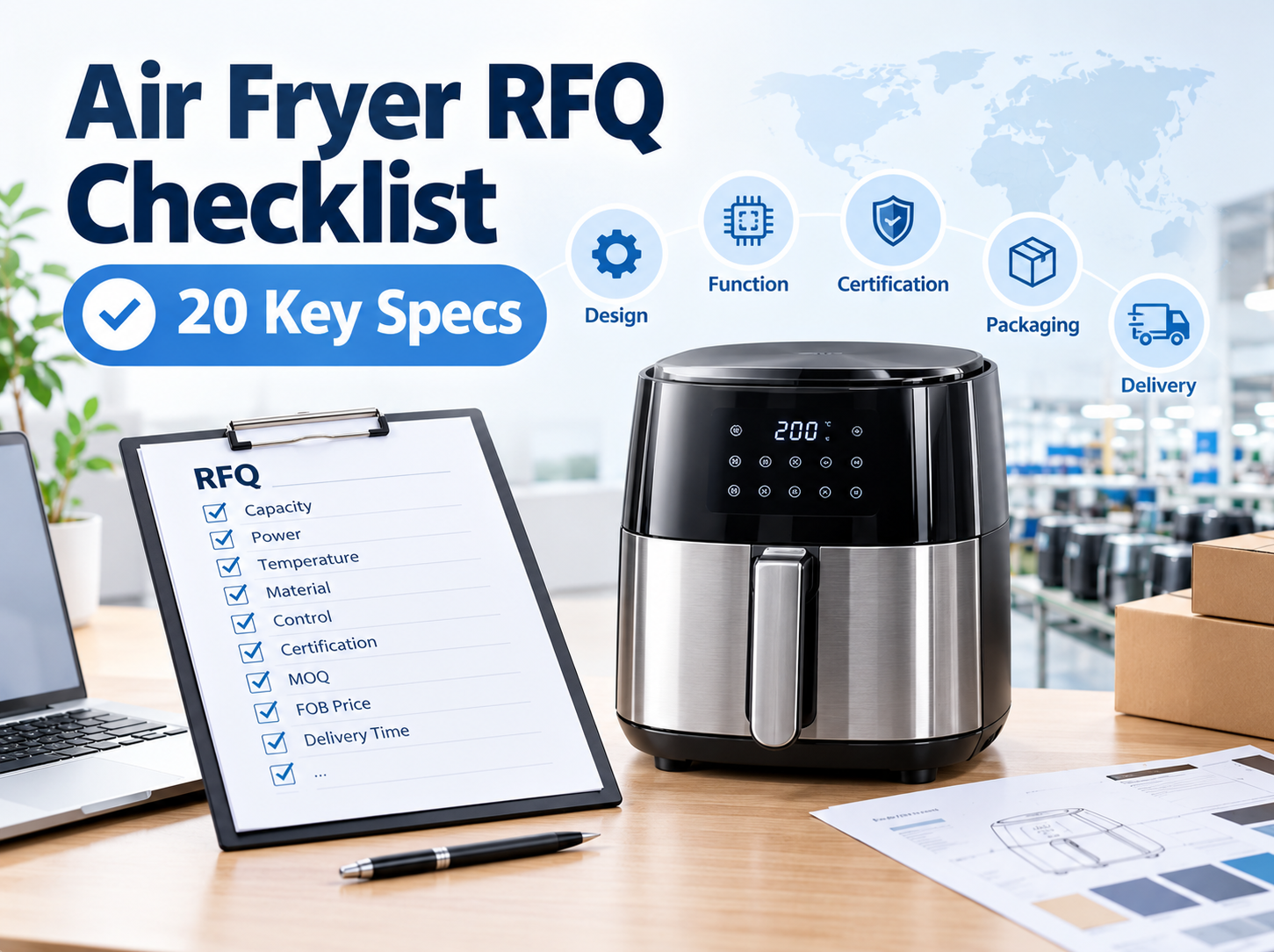
Air Fryer RFQ Checklist: 20 Specifications Buyers Should Include
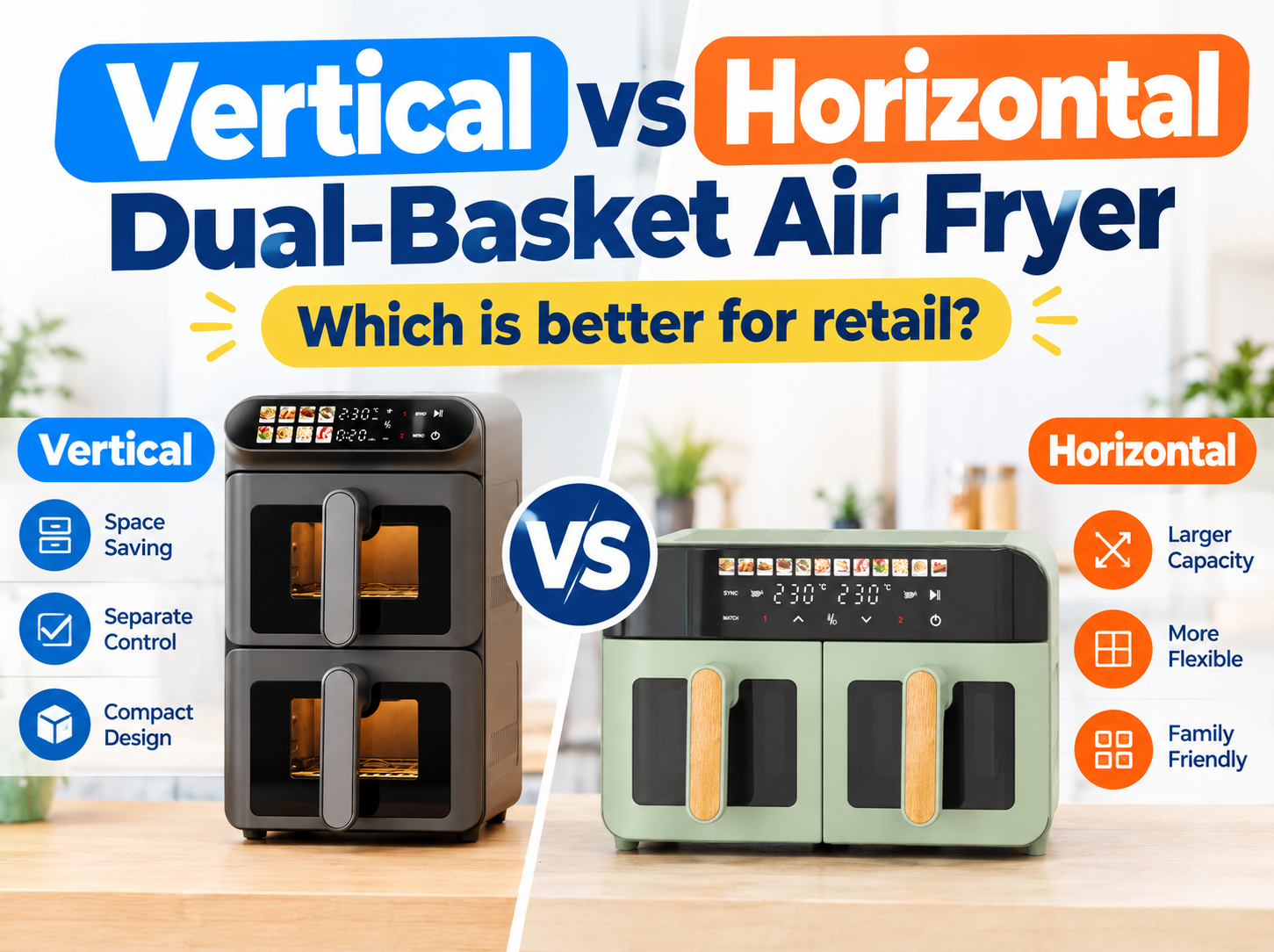
Vertical vs. Horizontal Dual-Basket Air Fryer: Which Is Better for Retail?
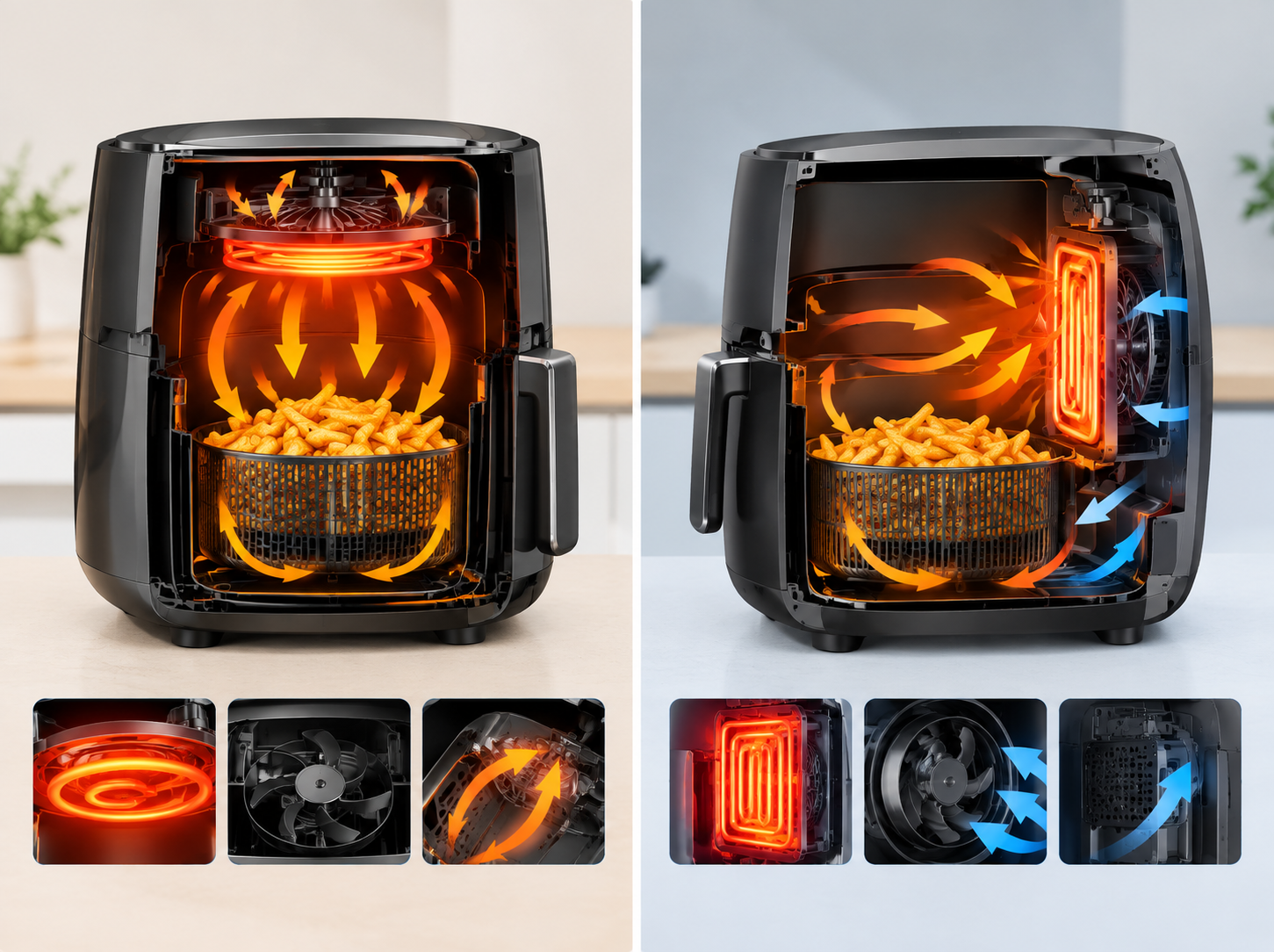
Top Heating vs. Rear Heating Air Fryer: Which one is better for a B2B buyer?
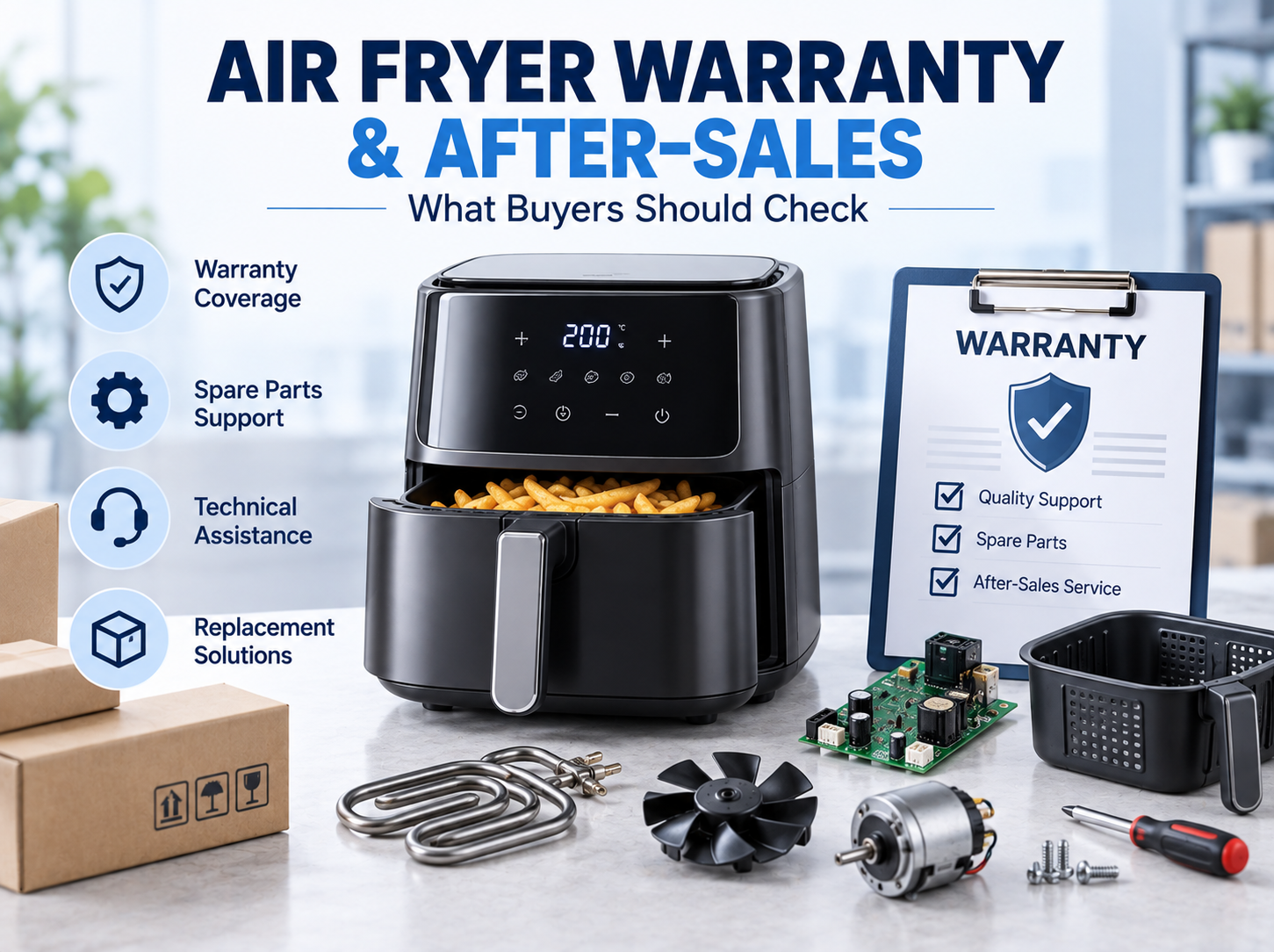
What Are the Common Warranty and After-Sales Problems with Air Fryers?
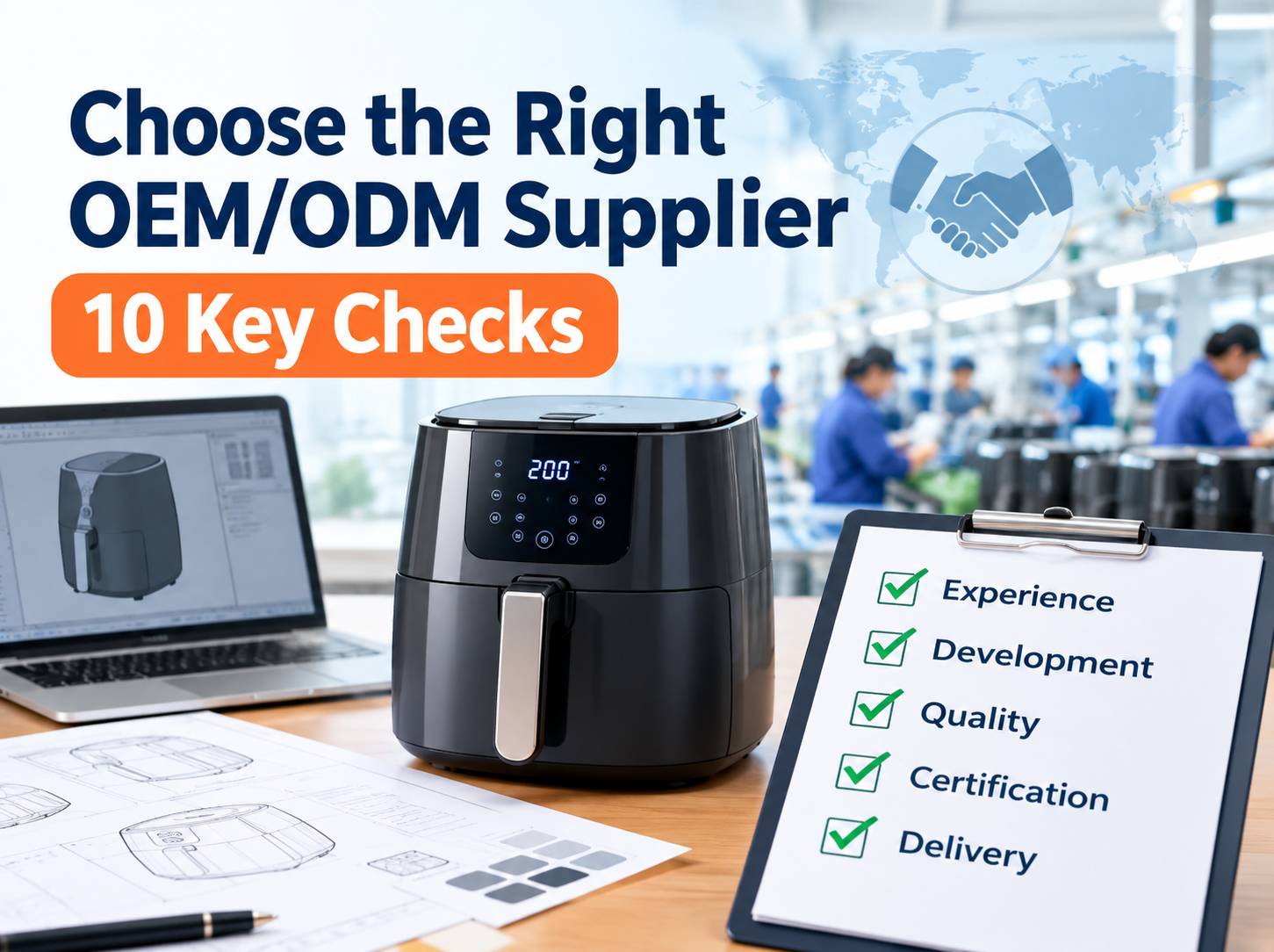
How to Choose an OEM/ODM Air Fryer Supplier in China:
 + 86 181 3826 8709
 info@funloiv.com
 6/F., Guanglong Building, Pingxin North Road, Longgang, Shenzhen City, Guangdong, China


@ 2009-2026 Shenzhen Funloiv Electric Appliance Co., LtdAll rights reserved


