 Notice:

 search
search
search
Sep 24, 2026


Developing a new air fryer with an OEM or ODM supplier involves much more than providing a logo, capacity and target price.
Before product development begins, the supplier needs to understand what the brand wants to achieve, who the product is designed for, where it will be sold, what performance is expected, and how the product should be positioned in the market.
For example, telling a supplier:
“We need a new 8L air fryer.”
provides only a starting point.
A more useful development brief might explain:
“We want to develop an 8L premium air fryer for the European market, targeting families and design-conscious consumers. The product should have a compact footprint, a metal exterior, a viewing window and improved cooking uniformity. Our target retail price is around €129, and the product will be sold through our own brand website and selected retailers.”
The second brief gives an OEM supplier much more information to work with.
It helps the supplier evaluate the appropriate product architecture, heating system, airflow design, materials, controls, tooling, testing, certification, packaging and manufacturing process.
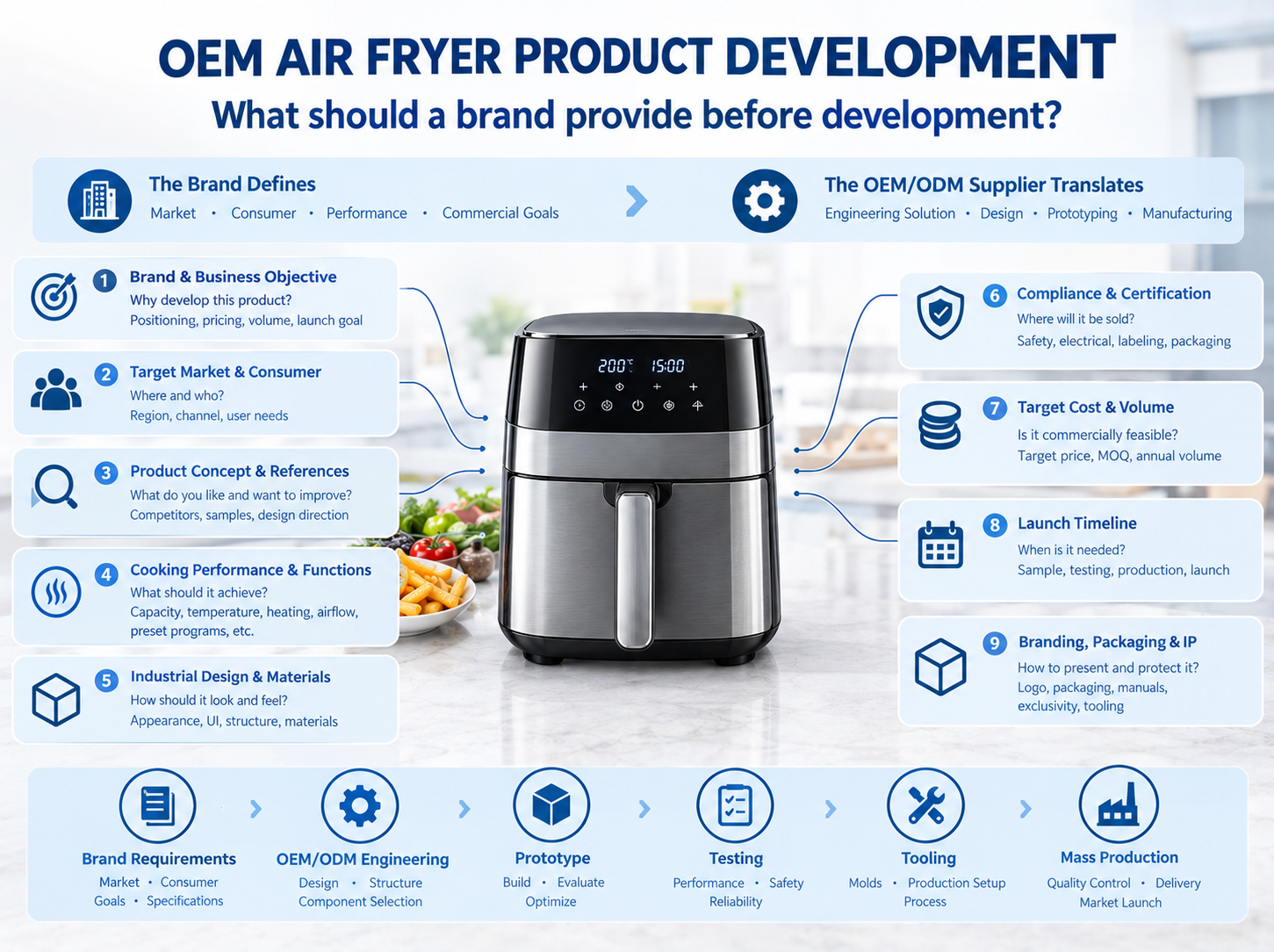
This article explains the key information a brand should provide before starting an OEM air fryer development project.
1. Start With the Brand's Business Objective
The first information an OEM supplier needs is not necessarily a technical specification.
It is the business objective behind the product.
A brand should explain why it wants to develop the new air fryer.
For example:
l Launching a new air fryer category
l Replacing an existing model
l Upgrading an older product
l Moving into a higher price segment
l Reducing product cost
l Differentiating from competitors
l Entering a new geographical market
l Developing a product for a specific retailer
l Creating a new flagship model
These objectives can lead to very different development strategies.
Example
A brand may want:
Project A:
An affordable 6L air fryer for mass retail.
Project B:
A premium 8L metal-body air fryer for a design-oriented kitchen appliance brand.
Both products are air fryers, but their development priorities may be very different.
The first may prioritize:
l BOM cost
l manufacturing efficiency
l competitive retail pricing
l simplified functions
The second may prioritize:
l materials
l appearance
l cooking performance
l user experience
l perceived value
l product differentiation
Therefore, the first question a brand should answer is:
What business problem is this new air fryer supposed to solve?
2. Define the Target Market and Sales Channel
The OEM supplier should know where the product will be sold before engineering decisions are finalized.
A brand should provide:
Target market
For example:
l Germany
l France
l UK
l USA
l Australia
l Middle East
l Multiple markets
Sales channel
For example:
l Amazon
l Brand website
l Supermarkets
l Department stores
l Specialty retailers
l Distributors
l Wholesalers
l Private-label retail
Target price positioning
For example:
l Entry-level
l Mid-range
l Premium
l High-end
The sales channel can influence product requirements.
An air fryer designed primarily for Amazon may require a different packaging strategy and feature set from a product designed for a premium retail chain.
The target market also matters for compliance and documentation. For example, products placed on the EU market may be subject to applicable EU product legislation and conformity-assessment requirements, while the specific requirements depend on the product and intended market.
Information to provide
Information | Example |
Target market | Germany / EU |
Sales channel | Specialty retail + online |
Target consumer | Families |
Price segment | Mid-to-premium |
Target retail price | €129–149 |
Launch market | Germany first |
The more clearly the supplier understands the commercial environment, the easier it is to develop a product that fits that market.
3. Describe the Target Consumer
A brand should also explain who will actually use the air fryer.
This is often overlooked during product development.
Consider:
l Singles
l Couples
l Families
l Large families
l Young consumers
l Older consumers
l Small-kitchen users
l Premium kitchen users
l Health-conscious consumers
l Convenience-oriented consumers
More importantly, describe the consumer's problems.
For example:
“Consumers like dual-basket air fryers but think horizontal models occupy too much counter space.”
Or:
“Consumers want a premium appearance but are concerned about plastic odor at high cooking temperatures.”
Or:
“Consumers want to cook two foods independently but do not want a large countertop footprint.”
These statements are more valuable than simply saying:
“We want a vertical air fryer.”
Why?
Because the first statement explains the problem, while the second only proposes a possible solution.
A capable OEM/ODM supplier can then help evaluate different engineering solutions.
4. Provide Competitor and Reference Products
If the brand has existing products or competitors it likes, provide them to the supplier.
Useful reference materials include:
l Competitor product links
l Product photos
l Product videos
l Existing product samples
l Amazon listings
l Customer reviews
l Product manuals
l Technical specifications
l Packaging examples
l Product drawings
l 3D files
l Screenshots
l Customer complaints
However, simply saying:
“Make something like this.”
is not enough.
Instead, explain what you like and what you want to change.
Example
Reference | Brand Requirement |
Product A | We like the appearance |
Product B | We like the basket structure |
Product C | We like the control panel |
Product D | We dislike the cleaning experience |
Product E | We want better cooking uniformity |
This gives the OEM supplier a much clearer development direction.
Reference Product ≠ Final Specification
A competitor product should be treated as a reference, not automatically as the final engineering solution.
The supplier should evaluate:
l Function
l Structure
l Materials
l Manufacturing feasibility
l Cost
l Certification
l Reliability
l Intellectual-property considerations
before proposing the final design.
5. Define the Product Concept
The next step is to explain what type of air fryer the brand wants to develop.
At this stage, the brand should provide the basic product concept.
For example:
Product type
l Single-basket air fryer
l Dual-basket air fryer
l Dual-drawer air fryer
l Vertical air fryer
l Air fryer oven
l Compact air fryer
l Large-capacity family air fryer
Capacity
For example:
l 4L
l 6L
l 8L
l 10L
l 11L
l 12L+
Product architecture
Where relevant:
l Single cooking zone
l Dual independent cooking zones
l Horizontal configuration
l Vertical configuration
l Viewing window
l Removable basket
l Multiple cooking levels
The brand does not necessarily need to determine every internal engineering detail.
The purpose at this stage is to communicate the product concept and intended user experience.
6. Define Required Cooking Performance
This is one of the most important sections of the development brief.
A brand should describe what the air fryer needs to achieve, rather than simply specifying individual components.
Possible requirements include:
Temperature
l Target maximum temperature
l Temperature range
l Temperature stability
l Temperature recovery after opening
Cooking performance
l Heating speed
l Cooking consistency
l Cooking uniformity
l Crisping performance
l Performance at full load
l Performance with different food types
Airflow
l Air circulation
l Airflow distribution
l Noise expectations
l Airflow consistency
Heating system
Depending on the project:
l Single heating element
l Dual heating
l Upper heating
l Lower heating
l Halogen heating
l Stainless-steel heating tube
For example, instead of saying:
“Use a 1500W heating element.”
a brand could say:
“The product should reach the target cooking temperature quickly and maintain stable temperature during full-load cooking.”
The supplier can then evaluate the appropriate combination of:
Heating Element → Motor → Fan → Airflow → Cooking Chamber → Basket → Temperature Control
This is particularly important because a single specification, such as wattage, does not fully describe cooking performance.
IEC 60335-2-9:2019, for example, addresses safety requirements for household and similar portable cooking appliances, including appliances with cooking functions such as baking, roasting and grilling. The exact standards and conformity requirements for a particular product should be confirmed for its target market and product configuration.
7. Define the Key Functions
The brand should distinguish between must-have functions and nice-to-have functions.
Possible functions include:
l Digital display
l Touch controls
l Mechanical controls
l Preset programs
l Manual temperature/time control
l Shake reminder
l Preheat
l Reheat
l Keep warm
l Dehydrate
l Bake
l Roast
l Viewing window
l Interior light
l Sync cooking
l Independent basket control
A useful way to communicate this is:
Must Have
l 8L capacity
l Digital control
l Viewing window
l 230°C maximum temperature
Preferred
l Interior light
l More automatic programs
l Improved display
Optional
l App connectivity
l Smart functions
l Advanced cooking presets
This allows the supplier to understand which features are essential and which can be adjusted according to cost or technical feasibility.
8. Provide Industrial Design and User Experience Requirements
An OEM air fryer project is not only an engineering project.
For a consumer brand, appearance and user experience can be equally important.
The brand should provide information about:
Appearance
l Overall shape
l Product proportions
l Color
l Surface finish
l Metal or plastic appearance
l Premium or mass-market styling
User interface
l Display type
l Button arrangement
l Touch interface
l Icons
l Digital display
l Language requirements
User experience
l Basket opening
l Handle design
l Viewing experience
l Cleaning access
l Basket removal
l Access to internal components
l Storage of accessories
If the brand has an existing design language, provide:
l Brand guidelines
l Product references
l Color references
l Logo files
l Previous product designs
This helps the OEM supplier understand the brand identity before creating engineering samples.
9. Define Material and Structural Requirements
Material decisions can affect many aspects of an air fryer simultaneously.
For example:
Material → Thermal Behavior → Appearance → Weight → Durability → Cleaning → Cost → Manufacturing
The brand should communicate any specific requirements for:
Housing
l Plastic
l Metal
l Stainless steel
l Mixed construction
Cooking cavity
l Metal
l Stainless steel
l Coated surface
Basket
l Non-stick coating
l Stainless steel
l Dishwasher compatibility
l Removable parts
Structure
l Compact footprint
l Vertical structure
l Horizontal structure
l Basket dimensions
l Viewing window
l Insulation requirements
If the brand wants a metal-body product, for example, it should communicate whether
this is:
l a performance requirement,
l a premium design requirement,
l a durability requirement,
l or simply a visual preference.
That distinction helps the OEM supplier propose the appropriate construction.
10. Explain Cleaning and Maintenance Expectations
Cleaning is sometimes treated as a secondary issue, but it should be considered during product development.
A brand should communicate expectations regarding:
l Dishwasher-safe components
l Removable baskets
l Crisper plates
l Access to the heating element
l Grease accumulation
l Internal surface accessibility
l Cleaning instructions
l Food-contact surfaces
l Coating durability
For example:
“The basket and crisper plate should be removable and easy to clean, and users should have reasonable access to areas where grease may accumulate.”
This requirement can influence the internal structure from the beginning.
It is much harder to redesign cleaning accessibility after tooling has already been completed.
11. Provide Target Cost, Volume and Commercial Expectations
The OEM supplier also needs to understand whether the proposed product is commercially viable.
The brand should provide, where possible:
Target cost
l Target FOB price
l Target landed cost
l Target retail price
Volume
l Initial order quantity
l Annual forecast
l Expected growth
l Estimated repeat orders
MOQ expectations
l Initial MOQ
l Annual volume
l Mixed-model requirements
Development budget
Where applicable:
l Tooling budget
l Engineering cost
l Certification budget
l Sample budget
A useful principle is:
Target retail price and target FOB price should be considered together with the required product specifications.
For example, a brand cannot reasonably expect:
l premium metal construction,
l sophisticated electronics,
l high-end display,
l dual heating,
l complex tooling,
l multiple certifications
while simultaneously requiring the cost structure of an entry-level product.
The supplier needs to understand these commercial boundaries early.
12. Define the Target Launch Date and Development Schedule
Time requirements should be communicated before development starts.
The brand should provide:
l Target sample date
l Prototype deadline
l Certification deadline
l Pilot production date
l Mass-production date
l Market launch date
A typical development process may include:
Product Concept
↓
Industrial Design
↓
Engineering Design
↓
Prototype
↓
Sample Testing
↓
Tooling
↓
Certification
↓
Pilot Production
↓
Mass Production
The exact process varies by project.
If a product needs to launch before a specific retail season, such as Christmas, Black Friday or a major annual buying cycle, the supplier needs to know this at the beginning.
Otherwise, the development schedule may not leave enough time for:
l Design revisions
l Tooling modifications
l Certification
l Sample testing
l Packaging development
l Pilot production
13. Provide Market-Specific Compliance Requirements
Compliance should not be treated as something to consider only after the product has been designed.
The brand should tell the supplier:
l Target countries
l Voltage
l Frequency
l Plug type
l Applicable certification requirements
l Labeling requirements
l User manual languages
l Packaging language
l Required test reports
l Retailer compliance requirements
For EU-bound electrical products, the applicable conformity requirements depend on the product and legislation involved. EU guidance states that manufacturers need to identify applicable legislation and harmonised standards, carry out the relevant conformity assessment, prepare technical documentation and, where required, issue the EU Declaration of Conformity and affix CE marking.
There is also an important point for brands selling under their own name.
Under EU product rules, a business that has a product made for it and places that product on the market under its own name or trademark can be considered the manufacturer for relevant obligations.
Therefore, a brand should clarify its role in the supply chain and compliance responsibilities with the supplier and relevant compliance professionals before commercialization.
14. Provide Branding, Packaging and Documentation Requirements
Once the product direction is clear, the supplier also needs information about how the product will be presented to the market.
Branding
Provide:
l Logo
l Logo files
l Brand colors
l Product naming
l Logo position
l Control-panel branding
l Brand design guidelines
Packaging
Provide:
l Retail packaging requirements
l Box dimensions, if already defined
l Packaging artwork
l Barcode
l Shipping marks
l Carton requirements
l Protective packaging requirements
Documentation
Consider:
l User manual
l Quick-start guide
l Safety instructions
l Warranty information
l Recipe guide
l Product labels
l Rating label
For EU electrical equipment, product instructions and safety information must be provided in a language understandable to consumers and other end users in the relevant Member State.
15. Clarify Intellectual Property and Exclusivity Requirements
For a genuine OEM/ODM development project, IP should be discussed early.
The brand should clarify:
l Who owns the industrial design?
l Who owns custom tooling?
l Who owns customized molds?
l Is the design exclusive?
l Can the supplier sell the same product to other customers?
l Are there confidentiality requirements?
l Does the brand have existing patents or registered designs?
l Are there third-party IP risks that need to be considered?
This does not mean every project requires complete exclusivity.
But both sides should understand what is standard, what is customized, and what is commercially restricted before substantial development investment is made.
16. Tell the Supplier What You Already Know—and What You Don't
This is an important point for brands working with an OEM/ODM supplier for the first time.
A brand does not necessarily need to know every engineering detail before contacting a supplier.
A brand may know:
l Target market
l Consumer
l Product concept
l Target capacity
l Target price
l Appearance
l Required functions
l Competitor references
l Launch date
But it may not know:
l Exact motor specification
l Fan blade geometry
l Heating-element configuration
l Internal airflow structure
l Thermal protection design
l PCB architecture
l Detailed BOM
l Tooling structure
That is where an experienced OEM/ODM supplier can contribute.
The Brand Defines
Market → Consumer → Product Objective → Performance Target → Design Direction → Commercial Requirements
The Supplier Helps Develop
Engineering Architecture → Component Selection → Airflow → Heating System → Thermal Design → Prototype → Testing → Tooling → Manufacturing
This distinction is important.
A good OEM/ODM development project is not simply:
Brand gives specification → Factory manufactures product.
It is often:
Brand defines the market and product objective → OEM/ODM supplier translates the requirements into an engineering and manufacturing solution.
A Practical OEM Air Fryer Product Development Brief
Before contacting an OEM air fryer supplier, a brand can prepare the following one-page brief.
Category | Information to Provide |
Brand | Brand name and positioning |
Target market | Countries / regions |
Sales channel | Amazon / retail / distributor / DTC |
Target consumer | Main user group |
Product objective | New product / upgrade / replacement |
Product type | Single / dual / vertical / oven |
Capacity | Target capacity |
Cooking performance | Key performance targets |
Key functions | Must-have / preferred |
Design | Appearance and UX direction |
Materials | Plastic / metal / stainless steel |
Reference products | Competitors / samples / links |
Target retail price | Approximate retail positioning |
Target FOB | If available |
Volume | Initial and annual forecast |
Compliance | Market-specific requirements |
Packaging | Retail and shipping requirements |
Branding | Logo / color / UI requirements |
IP | Exclusivity / tooling / design ownership |
Timeline | Sample and launch dates |
Special requirements | Other project-specific needs |
What Should a Brand Define and What Can the OEM Supplier Develop?
This is perhaps the most important distinction to understand.
Brand Should Define | OEM/ODM Supplier Can Help Develop |
Target market | Engineering architecture |
Target consumer | Heating system |
Product positioning | Motor and fan solution |
Target price | Airflow design |
Required performance | Thermal design |
Key functions | Component selection |
Design direction | Internal structure |
Brand identity | Prototype development |
Volume forecast | Tooling solution |
Launch schedule | Manufacturing process |
Compliance target market | Testing plan |
The boundary is not absolute.
Some experienced brands may already have detailed engineering specifications, while others may only have a product concept.
The supplier's role should therefore be adjusted to the brand's technical capability and the type of OEM/ODM project.
Common Mistakes Brands Make Before Air Fryer Development
1. Only Providing a Product Photo
A photo can communicate appearance, but it does not explain:
l Performance
l Materials
l Internal structure
l Target cost
l Certification
l Consumer requirements
2. Focusing Only on Capacity
“8L” or “10L” does not define an entire product.
Two air fryers with the same nominal capacity can have different:
l Basket dimensions
l Usable cooking space
l Heating systems
l Airflow structures
l Footprints
l Cooking performance
l Cleaning experience
3. Giving a Target Price Without Defining the Product
A target FOB price becomes meaningful only when the supplier understands the expected:
l Materials
l Functions
l Capacity
l Electronics
l Packaging
l Certification
l Volume
4. Copying a Competitor Without Defining the Objective
A competitor product can be a useful reference.
But the brand should explain:
What do you want to keep, what do you want to change, and what problem do you want to solve?
5. Considering Certification Too Late
Changing the design after certification testing can create additional cost and delay.
The target market should therefore be communicated before the engineering design is finalized.
6. Ignoring Cleaning and Maintenance During Design
A product may perform well during cooking tests but still create poor user experience if:
l Grease accumulates in difficult-to-access areas
l Components are difficult to remove
l Cleaning access is limited
l Coatings are difficult to maintain
Cleaning should therefore be considered during product development, not only after the first sample is completed.
FAQ: OEM Air Fryer Product Development
Ø What information does an OEM air fryer supplier need before development?
At minimum, the supplier should understand the target market, consumer, product concept, capacity, required functions, performance expectations, design direction, target cost, expected volume, compliance requirements and development timeline.
Ø Does a brand need to provide complete technical specifications?
No. The level of technical detail depends on the brand's engineering capability and the type of project. A brand may provide performance and product requirements while the OEM/ODM supplier develops the detailed engineering solution.
Ø What is the difference between an RFQ and a product development brief?
An RFQ focuses on information needed to prepare a quotation and compare suppliers.
A product development brief provides broader information about the product concept, target consumer, market positioning, performance, design, commercial objectives and development requirements.
The two documents can overlap, but they serve different purposes.
Ø Should a brand provide competitor air fryer samples?
If available, competitor samples can be very useful. They allow the supplier to evaluate physical structure, materials, user experience and product details that may not be visible from online information.
However, a reference product should not automatically be treated as the final design specification.
Ø Should the brand provide a target FOB price?
If the brand has a realistic target, providing it can help the supplier evaluate the feasibility of the proposed configuration.
The target price should be considered together with capacity, materials, functions, performance, packaging, certification and expected volume.
Ø When should certification requirements be discussed?
Preferably before engineering design is finalized. The target market and applicable compliance requirements can influence electrical design, components, labeling, documentation and testing.
Ø Can an OEM supplier help develop the product concept?
Yes, depending on the supplier's capabilities and the agreed project scope. In an ODM or development-oriented OEM project, the supplier may contribute to product architecture, engineering, industrial design, prototyping, testing and manufacturing preparation.
Conclusion
A successful OEM air fryer development project usually starts with clear information—not necessarily a complete technical drawing.
The brand should first communicate:
l Who is the product for?
l Where will it be sold?
l What problem should it solve?
l How should it perform?
l How should it look and feel?
l What price position should it occupy?
l How many units are expected?
l When does it need to launch?
The OEM/ODM supplier can then help translate these requirements into:
Product Architecture → Engineering Design → Heating & Airflow → Materials → Prototype → Testing → Tooling → Mass Production
The more clearly these requirements are communicated before development starts, the fewer assumptions both sides need to make later.
For brands that already have a detailed specification, the next step is usually an RFQ. For brands that have a product concept but do not yet have a complete technical specification, an experienced OEM/ODM supplier can help turn the concept into a practical development plan.
Looking for an OEM Air Fryer Development Partner?
If you have an air fryer product concept but do not yet have a complete technical specification, you can start with the information you already have:
l Target market
l Product concept
l Reference products
l Target capacity
l Key functions
l Target price
l Expected volume
l Launch schedule
A development discussion can then determine which requirements need to be defined further and which technical decisions can be developed by the OEM/ODM engineering team.
FUNLOIV supports air fryer OEM/ODM projects from product concept and engineering development through prototyping, testing, tooling and mass production.
Have an air fryer concept in mind? Send us your product brief or reference product, and we can discuss the technical and commercial requirements for the next development stage.
Related Air Fryer Buyer Guides
For buyers evaluating air fryer products and suppliers, the following topics may also be useful:
Related Articles
l Air Fryer Heating Element: Halogen vs. Stainless Steel Heating Tube.
l Why Does Airflow Matter in an Air Fryer?
l What Is the Difference Between AC and BLDC Motors in Air Fryers?
l What Makes an Air Fryer Cook More Evenly?
l How Can I Test an Air Fryer Sample Before Placing a Bulk Order?
l What Quality-Control Standards Should I Require from an Air Fryer Supplier?
l What Air Fryer Tests Should Be Included in a Pre-Shipment Inspection?
l What Factors Affect the FOB Price of an Air Fryer?
l How to Compare Quotations from Different Air Fryer Suppliers?
l 230°C Air Fryer: What Buyers Should Check Before Importing?
l A Dual Heating vs Single Heating Air Fryer- Which Is Better?
l What Is the Difference Between AC and DC Motors in Air Fryers?
l Air Fryer for the Middle East - A Guide to G-Mark, Specifications and Compliance?
l What Are the Most Common Quality Problems with Air Fryers?
l Air Fryer RFQ Checklist: 20 Specifications Buyers Should Include.
l How To Verify Whether an Air Fryer Supplier Is Reliable?
l How to Choose an OEM-ODM Air Fryer Supplier in China?
l 200°C vs 230°C Air Fryer: Which one is better?
l Metal-body vs plastic-body air fryer: which is better for a premium brand?
l Top Heating vs. Rear Heating Air Fryers: Which one is better for a B2B buyer?
l Is a Vertical Dual-Drawer Air Fryer Better for Saving Kitchen Space?
l Air Fryer Certifications & Compliance by Market- A Safety Guide for Importers.
l Vertical vs. Horizontal Dual-Basket Air Fryer- Which Is Better for Retail?
l What Air Fryer Capacity Is Best for the European Market?
l What Are the Common Warranty and After-Sales Problems with Air Fryers?
l What MOQ, Lead Time and Payment Terms Should I Expect from an Air Fryer Supplier?
l How Can I Prevent Plastic Melting or Deformation in an Air Fryer?
l What Air Fryer Safety Tests Should Be Completed Before Mass Production?
l What Is the Difference Between a Single-Basket and Dual-Basket Air Fryer?

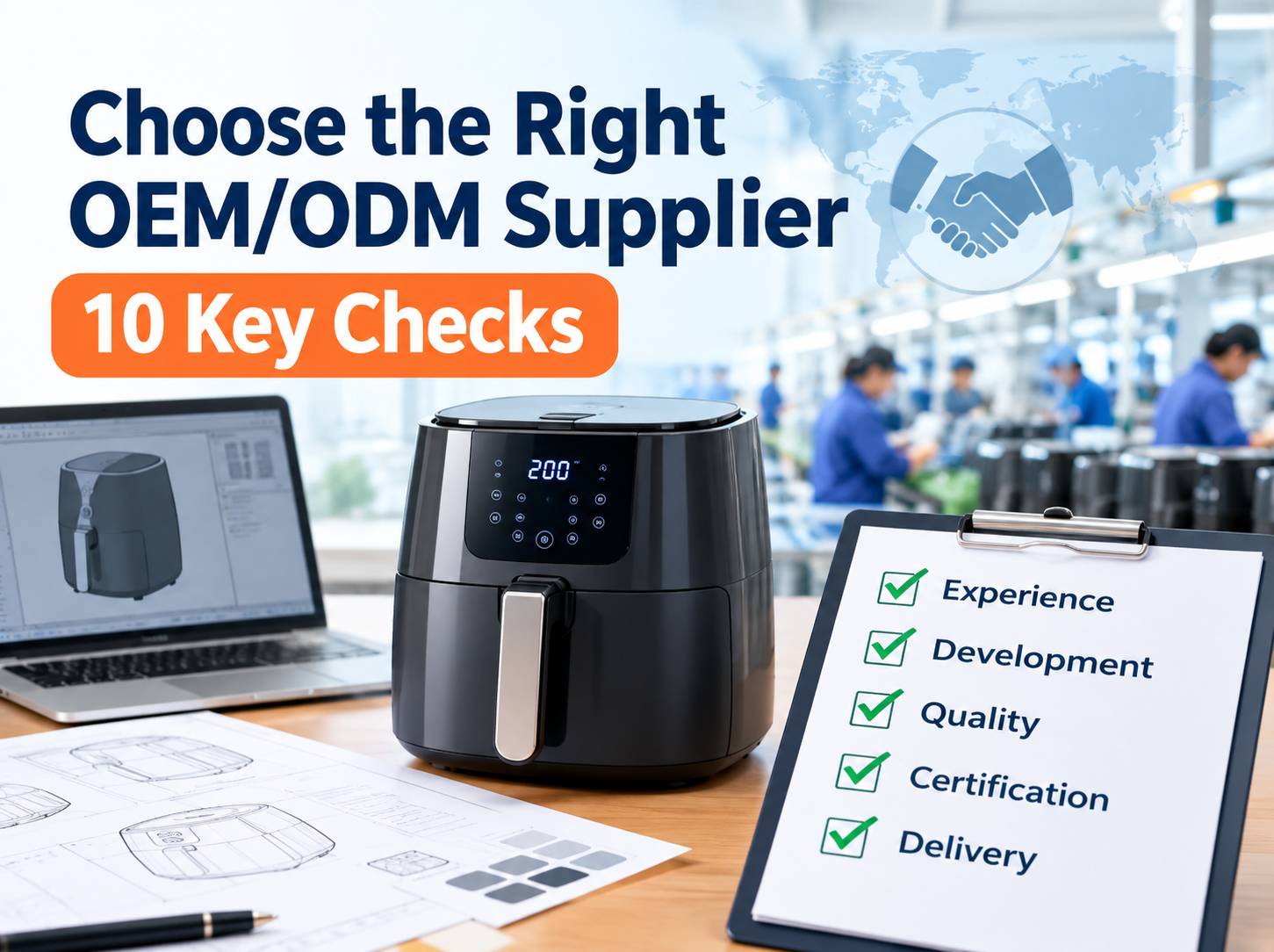
How to Choose an OEM/ODM Air Fryer Supplier in China:
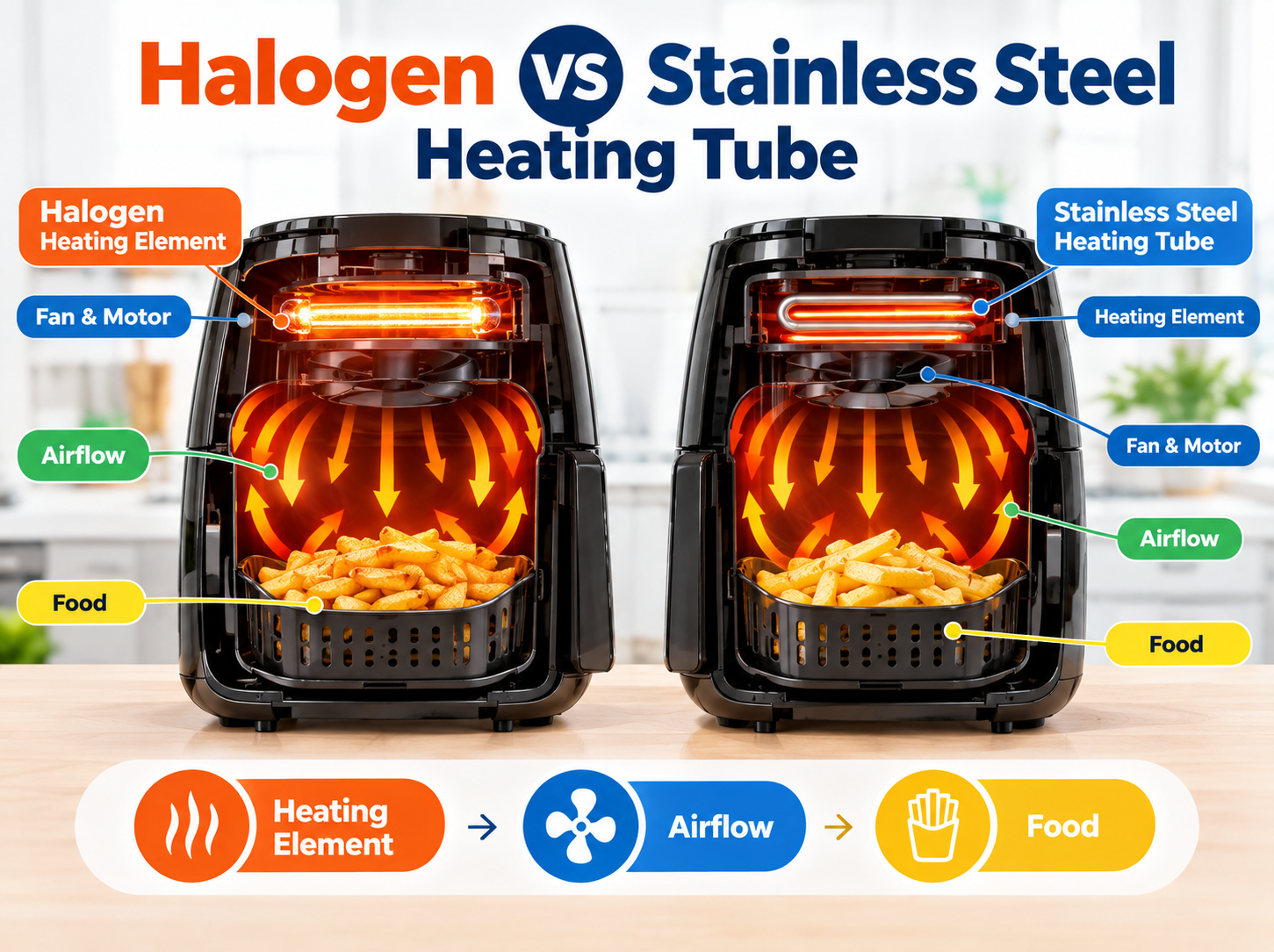
Air Fryer Heating Element: Halogen vs Stainless Steel Tube
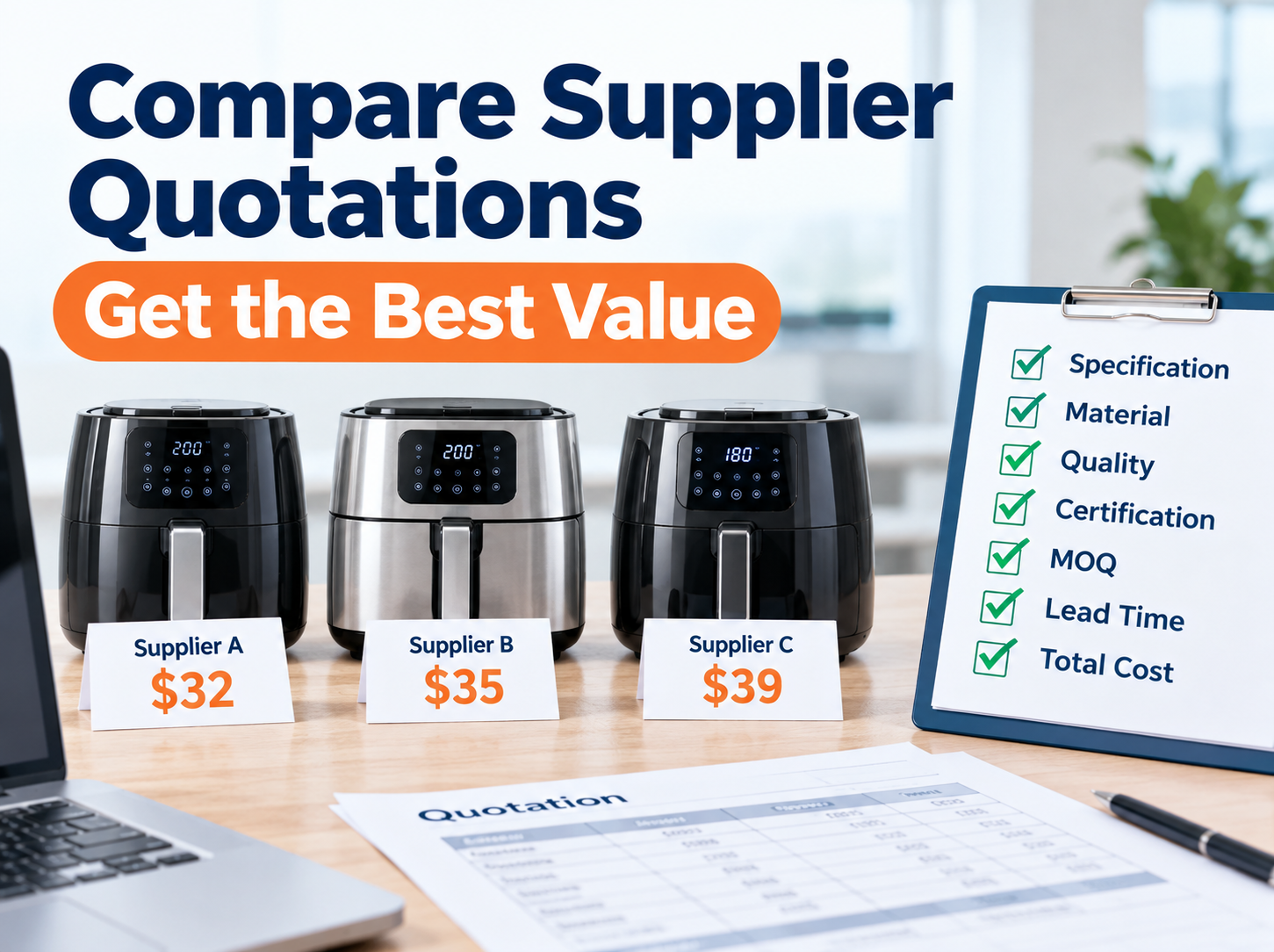
How to Compare Quotations from Different Air Fryer Suppliers?
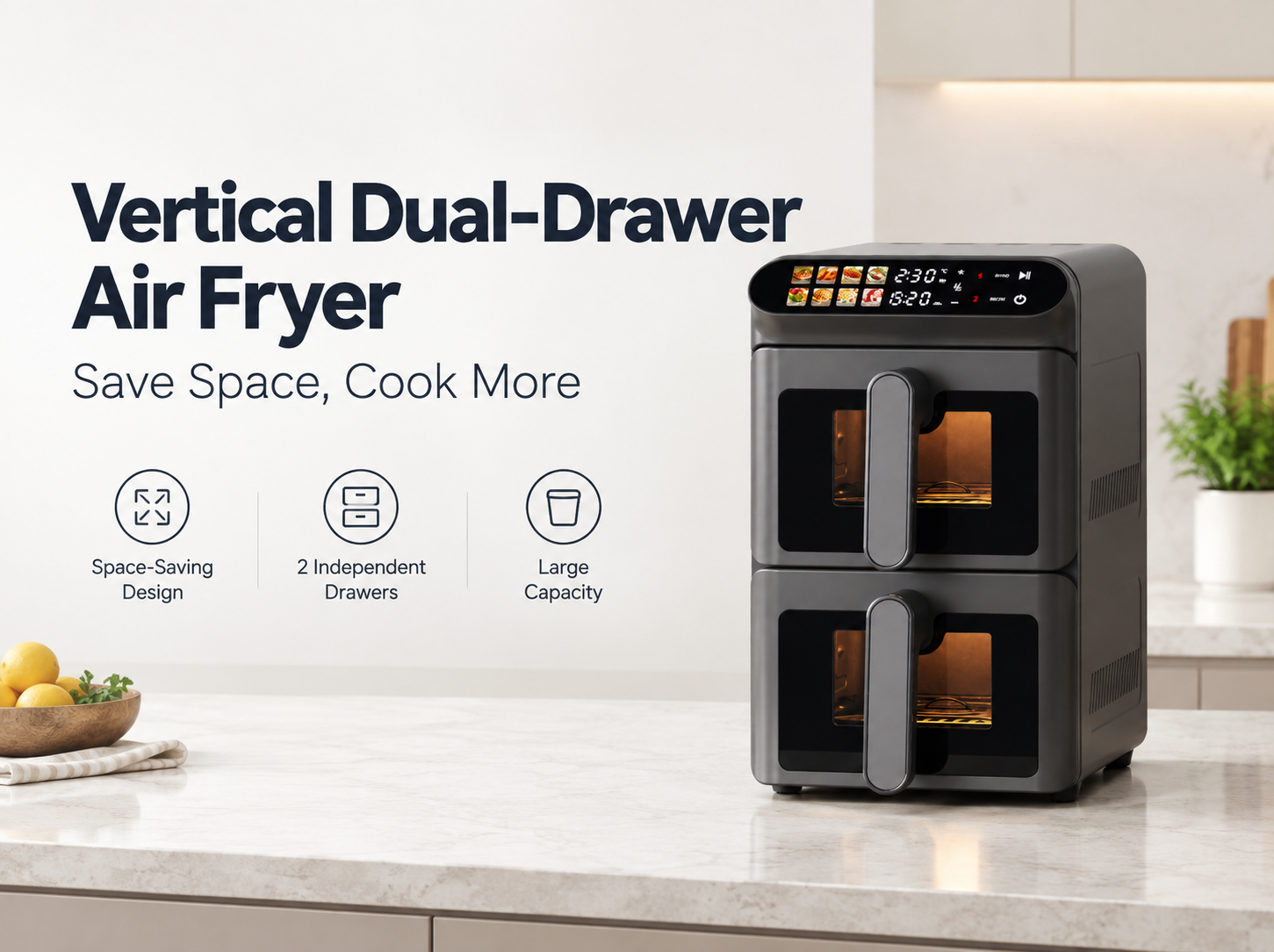
Is a Vertical Dual-Drawer Air Fryer Better for Saving Kitchen Space?
What Information Should a Brand Provide to an OEM Air Fryer Supplier Before Product Development?

Why Personal Care Appliances Become Popular Globally?
 + 86 181 3826 8709
 info@funloiv.com
 6/F., Guanglong Building, Pingxin North Road, Longgang, Shenzhen City, Guangdong, China


@ 2009-2026 Shenzhen Funloiv Electric Appliance Co., LtdAll rights reserved


