 Notice:

 search
search
search
Oct 05, 2026


When sourcing air fryers from China, one of the first technical questions importers and brand owners should ask is:
Can the supplier produce an air fryer compatible with my country's voltage and electrical requirements?
In many cases, the answer is yes.
OEM/ODM air fryer suppliers can often develop different electrical configurations for different markets, such as 100–120V / 60Hz and 220–240V / 50Hz versions.
However, voltage compatibility is not simply a matter of changing the number printed on the product label.
The supplier may need to evaluate the:
l Heating element
l Motor and fan
l Control board
l Wiring
l Thermal protection
l Power cord
l Plug
l Rated power
l Electrical safety
l Applicable certification
The exact requirements also depend on the destination market and final product configuration. FUNLOIV's existing RFQ guide recommends specifying voltage, frequency, plug type, power cord requirements and country of sale when requesting an air fryer quotation.
So, how should an importer or brand owner evaluate voltage compatibility before placing an order?
1. Voltage Is Only One Part of the Electrical Specification
A common mistake is to tell a supplier:
“I need a 120V air fryer.”
This is useful, but it is not a complete electrical specification.
For an air fryer project, buyers should normally define:
l Rated voltage
l Voltage range
l Frequency
l Rated power
l Plug type
l Power cord
l Earthing/grounding requirements where applicable
l Target country
l Applicable market requirements
For example, an RFQ could specify:
Target Market: Germany
Voltage: 220–240V
Frequency: 50Hz
Plug: EU
Rated Power: 1,700–2,000W
Or:
Target Market: USA
Voltage: 120V
Frequency: 60Hz
Plug: US type
The exact specification should be confirmed for the destination country and final product.
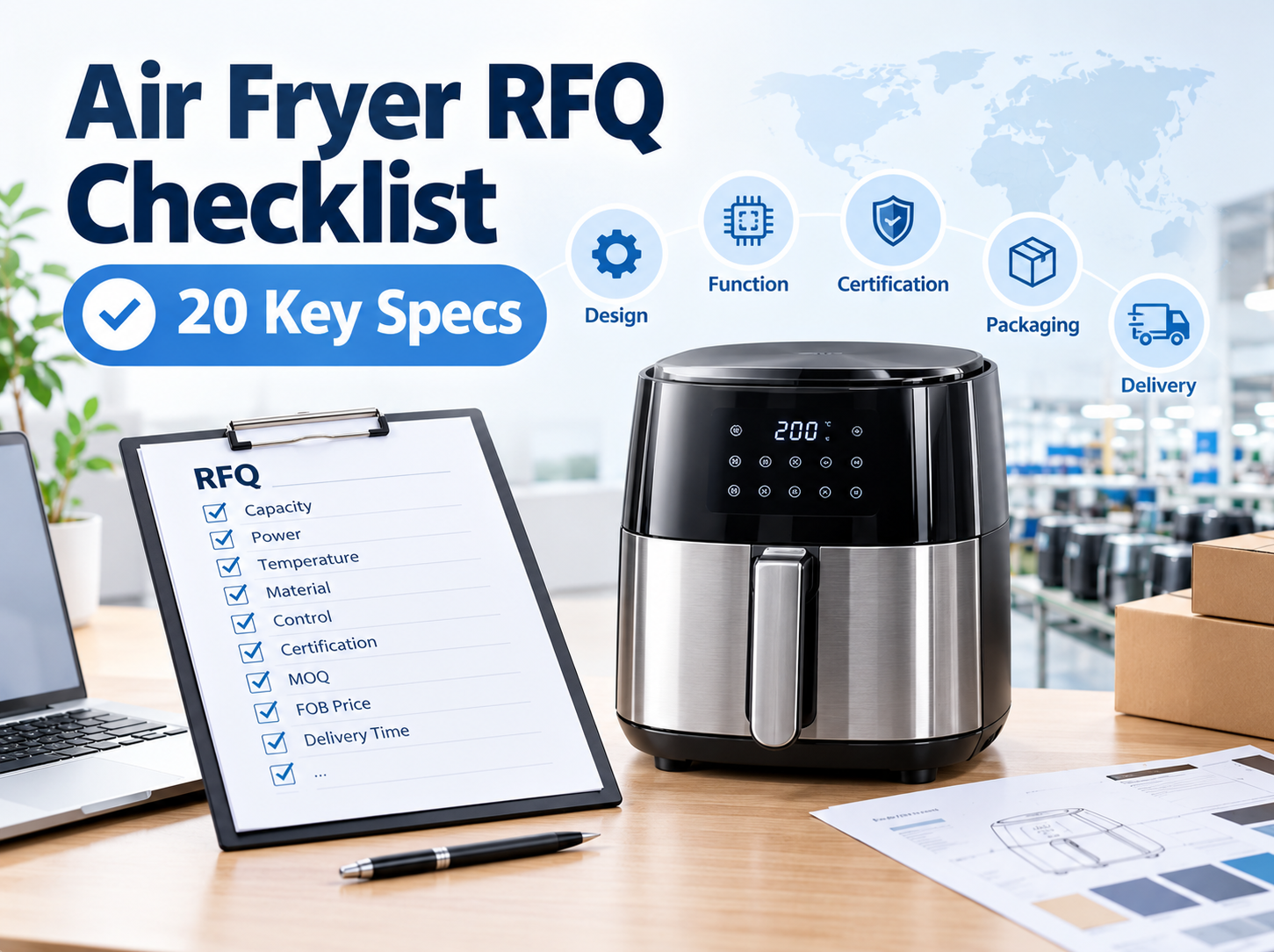
Your existing Air Fryer RFQ Checklist: 20 Specifications Buyers Should Include is useful here because voltage and frequency are specifically included as key RFQ information.
2. What Voltage Do Air Fryers Commonly Use?
For international sourcing, buyers will commonly encounter configurations such as:
Electrical Configuration | Typical Application |
100–120V / 60Hz | USA, Canada and some other markets |
220–240V / 50Hz | Many European and other international markets |
220–240V / 50/60Hz | Some products designed for broader compatibility |
These are general product configurations, not a substitute for checking the requirements of a specific country.
For example, many GCC markets use approximately 220–240V / 50Hz, but the exact destination-country requirements should still be confirmed before production.
For this reason, the buyer should tell the supplier the exact country or countries where the product will be sold, rather than simply saying:
“This is for Europe.”
or:
“This is for the Middle East.”
3. Does Changing the Voltage Mean Changing the Whole Air Fryer?
Not necessarily.
A supplier may be able to use the same basic mechanical platform while developing different electrical versions.
However, the electrical system needs to be evaluated.
Important components can include:
Heating Element
The heating element must be suitable for the intended electrical configuration and required cooking performance.
Motor and Fan
The motor and fan system must operate correctly under the target voltage and frequency.
Control Board
Electronic controls and the power-supply section need to be appropriate for the intended electrical input.
Wiring
Wiring, insulation and terminals must meet the applicable requirements.
Thermal Protection
Thermal fuses, protectors and other safety components need to be appropriate for the product design.
Power Cord and Plug
The cable and plug must match the destination market's requirements.
This is why a supplier should not simply change:
“220V” → “120V”
on a specification sheet.
The internal electrical configuration must also be evaluated.
FUNLOIV's GCC buyer guide makes the same point: suppliers should confirm that the heating element, motor, control board and safety components are suitable for the intended electrical rating rather than simply changing the product label.
4. Why Does Frequency Matter?
Voltage is not the only electrical parameter that buyers need to communicate.
Frequency can also be important, particularly for products containing motors or other frequency-dependent components.
Therefore, an RFQ should ideally specify:
Voltage + Frequency + Rated Power
rather than:
Voltage only
For example:
220–240V / 50Hz / 2000W
is a much more useful specification than:
220V
This also makes quotation comparison easier because all suppliers are working from the same electrical target.
Your existing quotation-comparison guide recommends comparing the exact product specification—including rated power, voltage and frequency—before comparing supplier prices.
5. What Happens to Air Fryer Performance When the Electrical Configuration Changes?
For buyers, electrical compatibility ultimately matters because it can affect cooking performance.
The electrical system influences:
l Heating speed
l Heating stability
l Temperature recovery
l Maximum temperature
l Cooking time
l Power consumption
l Motor/fan performance
For example, if the heating system is not properly matched to the electrical configuration, the product may not deliver the expected cooking performance.
This is particularly important for air fryers marketed around higher temperatures such as 230°C.
A buyer should therefore test the final electrical version rather than assuming that the 120V and 220–240V versions will perform identically.
FUNLOIV's existing 230°C Air Fryer: What Buyers Should Check Before Importing discusses the relationship between high-temperature performance, heating systems, electrical configuration and safety.
6. Can One Air Fryer Support Both 120V and 220–240V?
Sometimes, but buyers should not assume that it can.
There are several possible product-development approaches.
Option 1: Dedicated 120V Version
The product is specifically designed for markets using approximately 100–120V.
Option 2: Dedicated 220–240V Version
The product is designed for markets using approximately 220–240V.
Option 3: Multi-Voltage Design
Some products can be engineered for a wider voltage range, depending on the electrical architecture.
For an importer, the important question is not:
“Can you put 120V and 220V on the same product?”
Instead ask:
“What electrical configuration does this model actually support, and which components are different between the voltage versions?”
This question encourages the supplier to explain the actual engineering solution.
7. Rated Power Is Also Important
Voltage should not be considered separately from power.
For example:
220–240V / 2000W
and
120V / 1700W
are different electrical configurations.
The supplier should evaluate the relationship between:
Voltage → Current → Heating Power → Heating Performance → Thermal Protection
This becomes particularly important for:
l Large-capacity air fryers
l High-power models
l Dual-basket air fryers
l Dual-heating designs
l Products with electronic controls
l Products with additional electrical functions
FUNLOIV's safety-testing guide recommends verifying rated voltage, frequency, input current, input power and different operating conditions as part of the pre-production safety evaluation.
8. Don't Forget the Plug
Voltage compatibility does not automatically mean plug compatibility.
Different markets can use different plug configurations.
Therefore, your RFQ should specify:
l Plug type
l Power cord
l Cable length
l Earthing/grounding requirements
l Applicable plug requirements
For example:
Voltage: 220–240V
Frequency: 50Hz
Plug: EU
is much more useful than:
Voltage: 220V
For products sold across several markets, the supplier may need to provide different plug and cord configurations while keeping the same basic product platform.
This is one reason why country of sale should be included in the initial RFQ, rather than being discussed after the quotation has already been prepared.
9. Does the Voltage Version Need Different Safety Testing?
This is an important question for importers and brand owners.
The answer depends on:
l Product design
l Electrical configuration
l Target market
l Applicable standards
l Nature of the modification
l Certification route
Potential safety-related evaluations can include:
l Input power
l Input current
l Temperature rise
l Surface temperature
l Electrical insulation
l Leakage current
l Dielectric strength
l Grounding
l Thermal protection
l Abnormal operation
l Motor operation
l Heating-element operation
The exact testing plan should be confirmed with the appropriate testing laboratory or certification body.
FUNLOIV's What Air Fryer Safety Tests Should Be Completed Before Mass Production? explains that the applicable testing depends on the product design, target market and relevant safety standards, and that safety testing should be treated as a design-verification step before mass production.
10. Does the Existing Certification Cover My Voltage Version?
This is one of the most important questions for buyers.
Suppose a supplier tells you:
“This air fryer already has CE.”
You should ask:
l Which model?
l Which voltage?
l Which frequency?
l Which rated power?
l Which factory?
l Which manufacturer?
l Which configuration?
l Which standard?
l Which test report?
l Does the report match the version you are ordering?
A certification or test report for one product configuration should not automatically be assumed to cover another configuration.
FUNLOIV's Air Fryer Certifications & Compliance by Market makes this product-level distinction particularly clear: compliance needs to be evaluated according to the exact model, manufacturer, factory, configuration and target market.
Instead of asking:
“Do you have CE?”
ask:
“Does the applicable compliance documentation cover the exact air fryer model, voltage, power rating and configuration that I am purchasing?”
That's a much more useful procurement question.
11. What About Different Markets?
If you sell air fryers internationally, your supplier should understand that electrical and compliance requirements can differ between markets.
A practical starting point is:
Market | Key Electrical / Compliance Information to Confirm |
USA | 120V/60Hz configuration, plug and applicable US requirements |
Canada | 120V/60Hz configuration, plug and applicable Canadian requirements |
EU | 220–240V/50Hz, plug and applicable EU requirements |
UK | Local voltage/frequency, UK plug and applicable UK requirements |
Australia | Local electrical configuration, plug and applicable requirements |
New Zealand | Local electrical configuration, plug and applicable requirements |
GCC | Country-specific voltage/frequency, plug and applicable Gulf requirements |
Brazil | Country-specific electrical configuration and applicable conformity requirements |
This table is deliberately a starting point, not a compliance specification.
Your existing compliance article provides a more detailed market-by-market framework covering Europe, Great Britain, USA, Canada, Australia, New Zealand, Brazil and GCC markets.
12. What Information Should You Give an Air Fryer Supplier?
If you are an importer or brand owner, don't send an RFQ saying only:
“Please quote your 8L air fryer for my country.”
Instead, provide something like:
Example RFQ
Product: 8L Digital Air Fryer
Target Market: USA
Voltage: 120V
Frequency: 60Hz
Rated Power: 1700W
Plug: US type
Temperature: 60–230°C
Control: Digital
Capacity: 8L
Body Material: Metal
Certification: Applicable US requirements
Brand: Private label
Estimated Quantity: 2,000 pcs
This allows the supplier to quote a much more clearly defined product.
Your existing Air Fryer RFQ Checklist covers this broader RFQ structure, including capacity, power, voltage/frequency, heating system, target market, certification, packaging and customization.
13. Ask Which Components Change Between Voltage Versions
This is one of the questions I would particularly recommend for professional buyers.
Ask the supplier:
“Which components are different between your 120V and 220–240V versions?”
The answer may involve:
l Heating element
l Motor
l PCB
l Power supply
l Wiring
l Fuse
l Thermal protector
l Power cord
l Plug
You do not necessarily need the supplier to change every component.
The point is to understand what has actually been engineered for the target electrical configuration.
This also helps you compare suppliers more intelligently.
For example:
Supplier A
“We simply change the plug.”
Supplier B
“The heating element, PCB, motor and safety components are configured for the target voltage and the final version is tested accordingly.”
Those are very different technical answers.
14. Test the Final Voltage Version Before Mass Production
This should be a mandatory checkpoint for an OEM/ODM project.
A practical development process is:
Electrical Requirements
↓
Engineering Sample
↓
Electrical & Safety Testing
↓
Cooking Performance Testing
↓
Compliance Verification
↓
Golden Sample
↓
Mass Production
The important principle is:
The sample you approve should use the same electrical configuration that will be used in mass production.
Your existing sample-testing guide explains why buyers should test the actual sample for temperature accuracy, heating performance, cooking consistency, electrical safety, continuous operation and other performance factors before placing a bulk order.
15. Voltage Compatibility Should Be Part of Your Quality-Control Process
Voltage should not be treated as something checked only by the engineering department.
It should become part of the production quality specification.
For example, the agreed product specification can include:
l Model number
l Voltage
l Frequency
l Rated power
l Heating system
l Motor
l PCB
l Power cord
l Plug
l Thermal protection
l Certification
l Target market
Then the supplier's QC team can use this information as a production reference.
FUNLOIV's quality-control guide recommends defining a complete product specification covering voltage, frequency, rated power, heating system, motor/fan, certification and target-market requirements before production.
This helps prevent a situation where:
The sample is correct, but the mass-production configuration is different.
16. What If I Want to Sell the Same Air Fryer in Multiple Countries?
This is especially relevant to international brands and wholesalers.
Suppose you want to sell a similar product in:
l Germany
l UK
l USA
l Australia
You may want to use the same basic industrial design while creating different market versions.
A supplier can potentially evaluate a common product platform with different:
l Electrical configurations
l Heating elements
l Motors
l PCBs
l Power cords
l Plugs
l Labels
l Manuals
l Packaging
l Compliance documentation
This can help a brand maintain a consistent product identity while adapting the electrical configuration to different markets.
However, the supplier should evaluate the product and compliance implications of each version rather than assuming that one certification or one electrical design automatically covers every country.
17. The Biggest Mistake: Treating Voltage as a Label
Perhaps the most important takeaway from this article is:
Voltage is not just a label on the air fryer.
For an electrical cooking appliance, the relationship is more like:
Voltage
↓
Current
↓
Rated Power
↓
Heating System
↓
Motor & Fan
↓
Control System
↓
Thermal Protection
↓
Safety Testing
↓
Market Compliance
Changing one part of the electrical configuration can therefore require evaluation of other parts of the product.
This is why a professional OEM/ODM supplier should discuss the complete electrical configuration, not simply confirm whether they can print “120V” or “220–240V” on the rating label.
18. Air Fryer Voltage Compatibility Checklist for Importers
Before placing an order, buyers can use this checklist:
Electrical Specification
l Target country confirmed
l Rated voltage confirmed
l Voltage range confirmed
l Frequency confirmed
l Rated power confirmed
l Plug type confirmed
l Power cord confirmed
Product Engineering
l Heating element verified
l Motor verified
l Fan verified
l PCB/control system verified
l Wiring verified
l Thermal protection verified
Compliance
l Applicable market requirements identified
l Safety testing completed
l Exact model verified
l Voltage version verified
l Test report checked
l Certification status checked
Production
l Final electrical configuration approved
l Engineering sample tested
l Golden sample approved
l Production specification locked
l Critical component changes controlled
l Pre-shipment inspection completed
This checklist is particularly useful for importers managing multiple air fryer suppliers.
19. Questions to Ask Your Air Fryer Supplier
Before placing an order, consider asking:
Electrical
l Can you produce this model for my country's voltage?
l What voltage and frequency does the model support?
l What is the rated power?
l Which plug and power cord will be used?
Engineering
l Which components change between voltage versions?
l Does the heating element change?
l Does the motor change?
l Does the PCB change?
l What thermal protection is used?
Testing
l Has the final voltage version been safety tested?
l Has cooking performance been tested at the target voltage?
l Can you provide the relevant test reports?
Compliance
l Does the certification cover the exact model and voltage version?
l Which market requirements does the product meet?
l Are additional tests required for my market?
Production
l Can you provide a sample in the final electrical configuration?
l Will mass production use the same electrical components as the approved sample?
l How are component changes controlled?
These questions can reveal much more about a supplier's technical capability than simply asking:
“Can you make 120V?”
20. Final Takeaway: Ask for the Right Electrical Configuration, Not Just the Right Voltage
So, can air fryer suppliers produce products compatible with the voltage in your country?
In many OEM/ODM projects, yes.
But the professional sourcing approach is not simply:
“Can you make 120V?”
It is:
“Can you develop and supply this exact air fryer configuration for my target market, including the correct voltage, frequency, rated power, plug, internal electrical components, safety testing and applicable compliance documentation?”
That distinction matters.
For importers, brand owners, wholesalers and retailers, the safest sourcing process is:
Target Market
l Electrical Requirements
l Product Specification
l Engineering Sample
l Safety & Performance Testing
l Compliance Verification
l Golden Sample
l Mass Production
l Pre-Shipment Inspection
This approach helps reduce the risk of receiving a product that is electrically incompatible, performs differently from the approved sample or requires unexpected compliance work after production has already started.
Frequently Asked Questions
l Can Chinese air fryer suppliers make 120V products?
Yes, many OEM/ODM suppliers can develop 120V versions, but the supplier should confirm the complete electrical configuration, including frequency, rated power, heating system, motor, control system, plug and applicable safety requirements.
l Can the same air fryer be made in 120V and 220–240V versions?
Often the same basic product platform can be adapted, but the electrical components and compliance requirements may differ. Buyers should ask the supplier which components change between versions.
l Can I simply change the plug to make an air fryer compatible with my country?
No. A compatible plug does not necessarily mean that the air fryer has the correct internal electrical configuration. Voltage, frequency, power, heating element, motor, control system and safety components also need to be evaluated.
l Does changing the voltage require new certification?
It depends on the product, modification, target market, applicable standards and certification route. Buyers should confirm the impact with the relevant testing laboratory or certification body rather than assuming that an existing certification automatically covers the modified version.
l What information should I provide when asking an air fryer supplier for a quotation?
At minimum, provide the target country, capacity, voltage, frequency, rated power, plug type, product functions, target market, certification requirements, quantity and customization requirements.
l How can I make sure the production air fryer uses the correct voltage?
Specify the electrical configuration in the product specification, test the final electrical version before mass production, approve a reference/golden sample and control critical component changes during production.
Need an Air Fryer for Your Market?
If you are sourcing an air fryer for a specific country, send us your:
Target Market + Voltage + Frequency + Capacity + Key Functions + Estimated Quantity
We can discuss the appropriate product configuration, OEM/ODM requirements, plug, electrical specifications and applicable compliance considerations for your project.
Looking for an air fryer supplier that can develop the right version for your market? Send us your requirements and let's discuss your project.
Related Articles
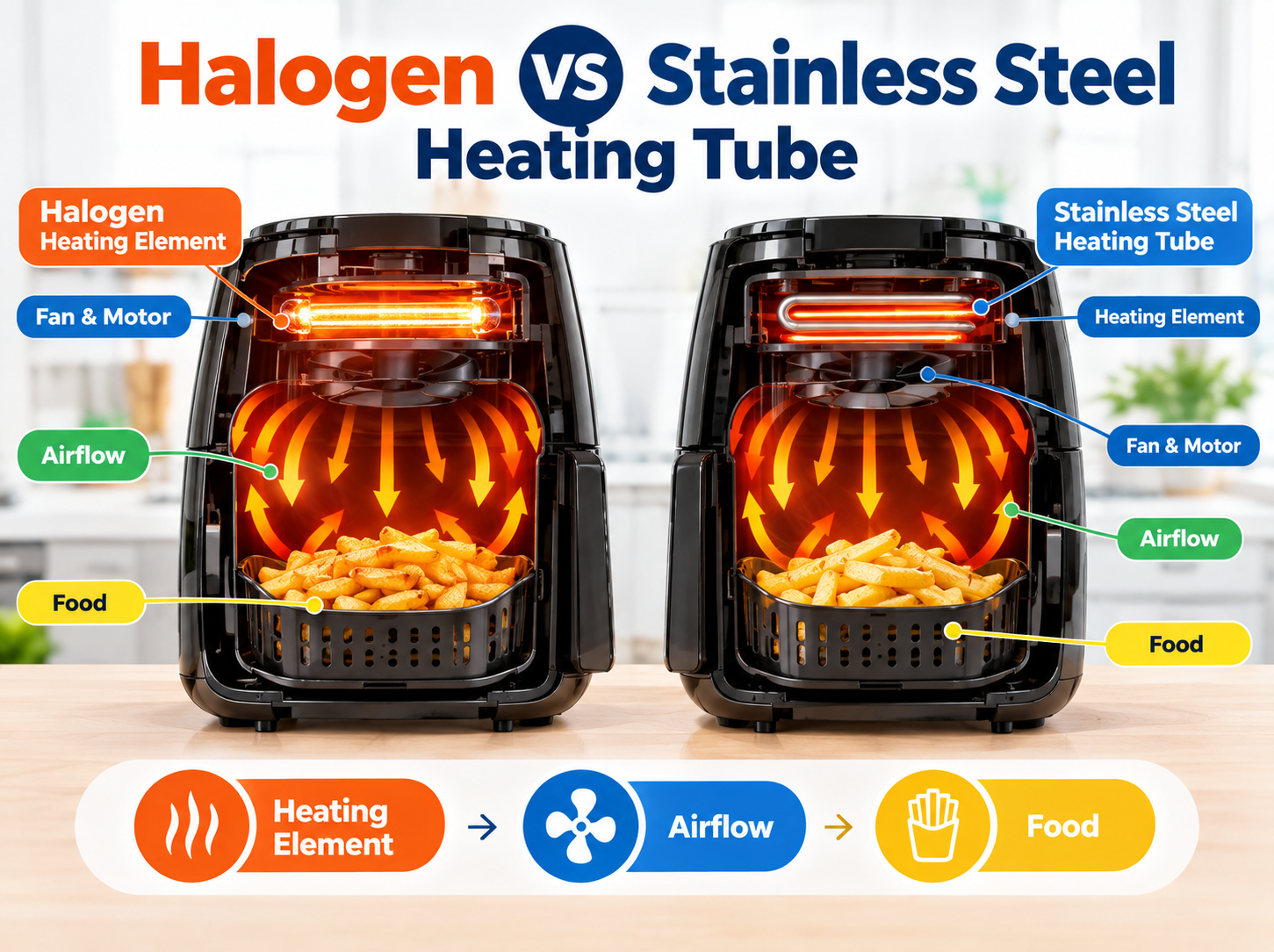
l Air Fryer Heating Element: Halogen vs. Stainless Steel Heating Tube.
l Why Does Airflow Matter in an Air Fryer?
l What Is the Difference Between AC and BLDC Motors in Air Fryers?
l What Makes an Air Fryer Cook More Evenly?
l How Can I Test an Air Fryer Sample Before Placing a Bulk Order?
l What Quality-Control Standards Should I Require from an Air Fryer Supplier?
l What Air Fryer Tests Should Be Included in a Pre-Shipment Inspection?
l What Factors Affect the FOB Price of an Air Fryer?
l How to Compare Quotations from Different Air Fryer Suppliers?
l 230°C Air Fryer: What Buyers Should Check Before Importing?
l A Dual Heating vs Single Heating Air Fryer- Which Is Better?
l What Is the Difference Between AC and DC Motors in Air Fryers?
l Air Fryer for the Middle East - A Guide to G-Mark, Specifications and Compliance?
l What Are the Most Common Quality Problems with Air Fryers?
l Air Fryer RFQ Checklist: 20 Specifications Buyers Should Include.
l How To Verify Whether an Air Fryer Supplier Is Reliable?
l How to Choose an OEM-ODM Air Fryer Supplier in China?
l 200°C vs 230°C Air Fryer: Which one is better?
l Metal-body vs plastic-body air fryer: which is better for a premium brand?
l Top Heating vs. Rear Heating Air Fryers: Which one is better for a B2B buyer?
l Is a Vertical Dual-Drawer Air Fryer Better for Saving Kitchen Space?
l Air Fryer Certifications & Compliance by Market- A Safety Guide for Importers.
l Vertical vs. Horizontal Dual-Basket Air Fryer- Which Is Better for Retail?
l What Air Fryer Capacity Is Best for the European Market?
l What Are the Common Warranty and After-Sales Problems with Air Fryers?
l What MOQ, Lead Time and Payment Terms Should I Expect from an Air Fryer Supplier?
l How Can I Prevent Plastic Melting or Deformation in an Air Fryer?
l What Air Fryer Safety Tests Should Be Completed Before Mass Production?
l What Is the Difference Between a Single-Basket and Dual-Basket Air Fryer?
l How Do Different Air Fryer Designs Affect Cooking Performance and Cleaning?
l How Much Does an OEM Air Fryer Cost from China?
l What Are the Most Important Features to Consider When Sourcing an Air Fryer?
l What MOQ Do Chinese Air Fryer Suppliers Usually Require?
l How Can I Import Air Fryers from China?
l Can an Air Fryer Supplier in China Help Design New Products?
l How Can Air Fryer Suppliers in China Support Small Businesses?

Air Fryer RFQ Checklist: 20 Specifications Buyers Should Include

How Can I Find Competitive Prices from Air Fryer Suppliers?
Air Fryer Heating Element: Halogen vs Stainless Steel Tube
What MOQ, Lead Time and Payment Terms Should I Expect from an Air Fryer Supplier?
How Can I Import Air Fryers from China? A Step-by-Step Guide for Importers and Brands
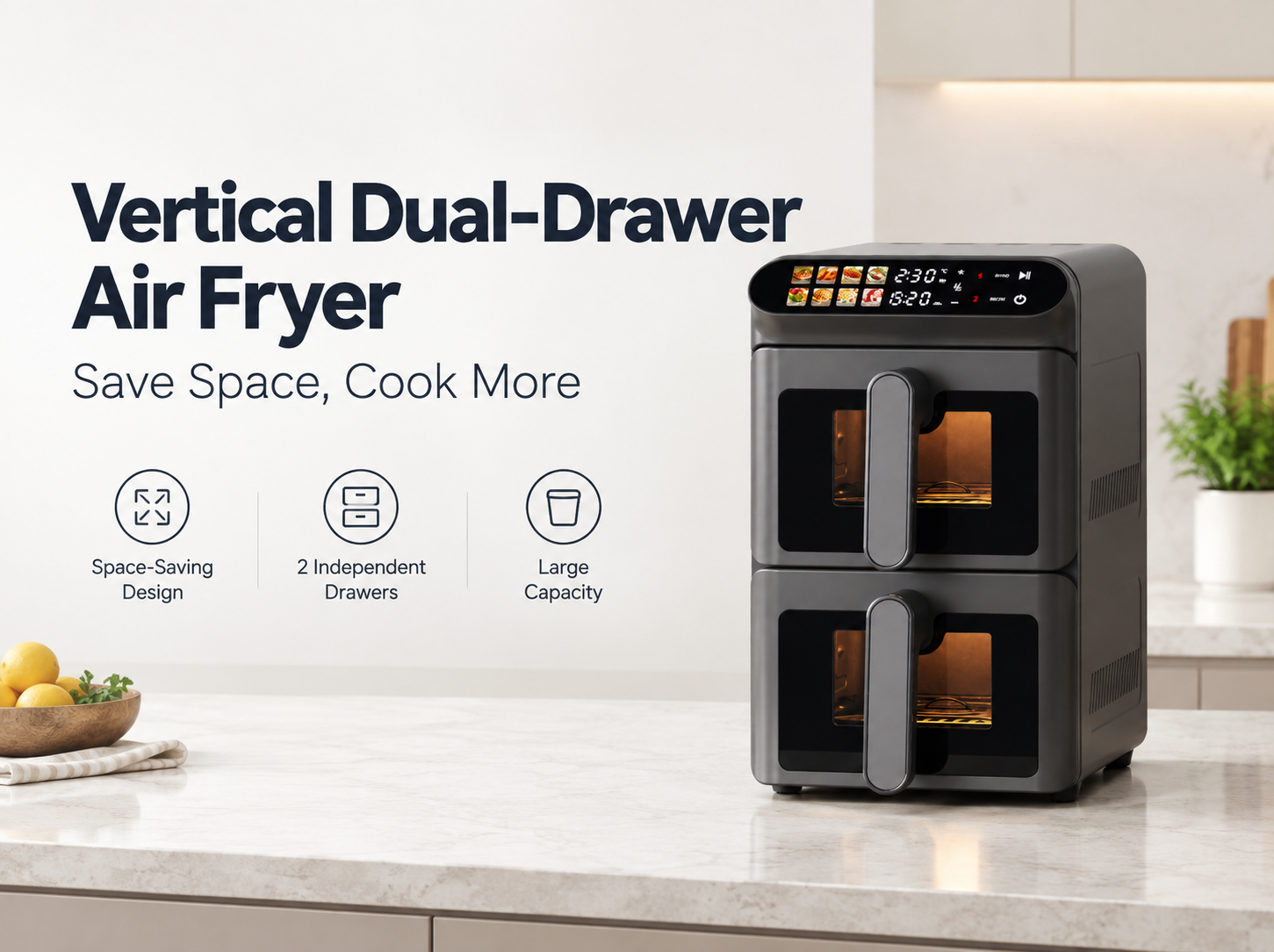
Is a Vertical Dual-Drawer Air Fryer Better for Saving Kitchen Space?
 + 86 181 3826 8709
 info@funloiv.com
 6/F., Guanglong Building, Pingxin North Road, Longgang, Shenzhen City, Guangdong, China


@ 2009-2026 Shenzhen Funloiv Electric Appliance Co., LtdAll rights reserved


