 Notice:

 search
search
search
Oct 07, 2026


For an air fryer importer, private-label brand, wholesaler or retailer, approving a product sample is an important milestone.
But there is another question that should be answered before mass production:
Will the supplier use the same approved components in mass production?
An air fryer may look almost identical to the approved sample while containing different internal components.
For example, a supplier may replace:
l Heating elements
l Motor
l Fan
l PCB
l Temperature sensor
l Thermal protector
l Power cord
l Wiring
l Plastic materials
l Coating
l Mechanical components
Sometimes these changes are made because of component shortages, supplier discontinuation, cost changes or engineering improvements.
The problem is not necessarily that a supplier makes a change.
The real risk is:
A critical component is changed without the buyer knowing, evaluating or approving the change.
A professional OEM/ODM supplier should therefore have a clear component change-control process.
This article explains how overseas buyers can reduce this risk before and during air fryer mass production.
1. Why Do Air Fryer Suppliers Change Components After Approval?
Component changes can happen for legitimate business or engineering reasons.
For example:
Supply-chain changes
A component manufacturer may:
l Stop producing a component
l Change its production capacity
l Increase MOQ
l Extend lead time
l Have temporary supply shortages
Cost changes
The original component may become significantly more expensive.
The supplier may therefore identify another component with a similar specification.
Engineering improvements
A supplier may identify a component with:
l Better reliability
l Better thermal performance
l Lower noise
l Better availability
l Improved production consistency
Quality problems
If the original component shows a recurring quality problem, the supplier may need to replace it.
Certification or market requirements
A component may need to be changed to meet a particular market's requirements.
Therefore, component substitution is not automatically a quality problem.
The important issue is whether the change is:
Identified → Evaluated → Tested → Documented → Approved
before it enters mass production.
2. Which Air Fryer Components Should Be Strictly Controlled?
Not every component has the same risk level.
A useful approach is to classify components according to their potential impact on product performance, safety and compliance.
Critical Components
These normally deserve the strongest change-control requirements:
l Heating element
l Motor
l Fan
l PCB
l Temperature sensor
l Thermal protector
l Thermal fuse
l Power cord
l Plug
l Important wiring
l Safety-related electrical components
A change to these components could potentially affect:
l Heating performance
l Temperature accuracy
l Airflow
l Noise
l Electrical safety
l Thermal protection
l Energy consumption
l Certification
Functional Components
These may include:
l Basket
l Drawer
l Handle
l Control panel
l Display
l Switch
l Mechanical components
Changes may affect usability, durability or product performance.
Appearance Components
Examples include:
l Housing
l Decorative parts
l Surface finish
l Color
l Logo area
These may be less critical from a safety perspective but can still be important for a private-label brand.
Packaging Components
These include:
l Retail box
l User manual
l Labels
l Accessories
l Inner protection
Packaging changes may not affect the appliance itself but can affect the buyer's retail presentation and compliance requirements.
The key principle is:
The higher the potential impact of a component change, the stronger the approval process should be.
Our existing QC guide follows the same principle by identifying heating elements, motors, fans, sensors, wiring, PCB and other components as important incoming and production QC items.
What Quality-Control Standards Should I Require from an Air Fryer Supplier?
3. Create a Complete Approved Product Specification
One of the simplest ways to reduce component-change risk is to define exactly what has been approved.
Before mass production, the buyer and supplier should establish a controlled product specification.
For example:
Component / Requirement | Approved Specification |
Heating element | Approved type and rating |
Motor | Approved specification |
Fan | Approved design/specification |
PCB | Approved version |
Temperature sensor | Approved specification |
Thermal protection | Approved type |
Power cord | Approved specification |
Plug | Target-market configuration |
Basket | Approved material |
Housing | Approved material/color |
Coating | Approved specification |
The important point is:
If a component is not documented, it becomes difficult to control later.
Your product specification should therefore become a production-control document, not simply a quotation document.
Our existing article:
What Quality-Control Standards Should I Require from an Air Fryer Supplier?
explains why a complete product specification should include capacity, power, voltage, temperature range, heating system, motor, fan, materials, controls, packaging, certification and target-market requirements.
4. Use an Approved BOM to Control Components
For OEM and ODM projects, the BOM (Bill of Materials) is one of the most useful tools for controlling component changes.
The BOM should identify important components and their approved specifications.
For example:
Item | Component | Approved Requirement |
01 | Heating element | Approved model/spec |
02 | Motor | Approved model/spec |
03 | Fan | Approved design |
04 | PCB | Approved version |
05 | Temperature sensor | Approved specification |
06 | Thermal protector | Approved type |
07 | Power cord | Approved specification |
The BOM should also have a revision number.
For example:
BOM Rev. A
If a component is later changed:
BOM Rev. B
should be issued after the change has been evaluated and approved.
This creates a clear record of:
What was originally approved?
and
What is currently approved?
5. Make the Approved Sample the Mass-Production Reference
The approved sample should not simply be a product that the buyer liked.
It should become a controlled reference for mass production.
Our existing article:
How Can I Test an Air Fryer Sample Before Placing a Bulk Order?
already recommends linking the approved sample to:
l Supplier model number
l Buyer project number
l Product specifications
l Approved components
l Material requirements
l Packaging
l Artwork
l Labels
l Accessories
l Certification requirements
l Test reports
l Quality requirements
It also recommends establishing a golden sample or approved reference sample for production control.
This is particularly important because the external appearance of an air fryer may remain unchanged even when internal components have been replaced.
For example:
Same housing + different motor
or:
Same appearance + different heating element
may produce a different product performance.
Therefore:
Sample approval should be connected to component control, not only appearance approval.
6. Establish a Formal Engineering Change Approval Process
This should be one of the most important parts of your purchasing agreement and production process.
A professional process could look like this:
Step 1 — Supplier identifies the required change
For example:
Original motor is no longer available.
Step 2 — Supplier submits a Change Request
The request should explain:
l Original component
l Proposed component
l Reason for change
l Manufacturer
l Model number
l Technical specifications
l Performance comparison
l Cost impact
l Lead-time impact
l Certification impact
Step 3 — Supplier provides samples
The replacement component should be evaluated.
Step 4 — Testing
Depending on the component, testing may include:
l Functional testing
l Temperature testing
l Noise testing
l Durability testing
l Safety testing
l Electrical testing
Step 5 — Buyer approval
The buyer decides whether the proposed replacement is acceptable.
Step 6 — Documentation update
If approved:
l BOM updated
l Specification updated
l Sample updated if necessary
l Test records updated
Step 7 — Mass production
Only then should the approved replacement enter production.
This process turns:
“We changed a component.”
into:
“We submitted and approved an engineering change.”
That is a much safer way to manage OEM/ODM production.
7. Define Which Changes Require Buyer Approval
It is not practical to require buyer approval for every minor production adjustment.
Instead, define different levels of change.
Level 1 — Buyer Approval Required
For example:
l Heating element
l Motor
l Fan
l PCB
l Temperature sensor
l Thermal protection
l Power cord
l Plug
l Safety-related components
These can potentially affect safety, performance or compliance.
Level 2 — Technical Review / Notification
Examples may include:
l Minor mechanical components
l Certain internal materials
l Packaging materials
l Non-critical accessories
The exact requirements should be agreed between buyer and supplier.
Level 3 — Routine Manufacturing Adjustments
Some manufacturing-process adjustments may not require individual buyer approval if they do not change:
l Product specification
l Approved components
l Performance
l Safety
l Appearance
l Certification configuration
The objective is to create a system that is strict where necessary without making normal production management unnecessarily slow.
8. Evaluate Whether a Component Change Affects Safety or Certification
This is particularly important for air fryers.
A supplier may say:
“The replacement component has the same function.”
That does not automatically mean:
“The existing safety or certification evaluation remains unaffected.”
For example, changes to:
l Heating elements
l PCB
l Motor
l Thermal protector
l Wiring
l Power cord
l Electrical insulation
l Temperature-control components
may require technical assessment.
Our existing article:
What Air Fryer Safety Tests Should Be Completed Before Mass Production?
explains that safety-related changes should be reviewed to determine whether additional testing or certification assessment is necessary. It also emphasizes that the final mass-produced configuration should be consistent with the product that was tested and approved.
Similarly, our article:
Air Fryer Certifications & Compliance by Market: A Safety Guide for Importers
explains that compliance depends on the product configuration, target market and applicable requirements rather than simply having one generic certificate.
Therefore, a component change should trigger a simple question:
Could this change affect safety, performance or the applicable compliance requirements?
If yes, further evaluation may be necessary.
9. Connect Component Control With Incoming QC
Supplier change control should not exist only on paper.
The factory's incoming QC process should verify important components before they enter production.
For example:
Heating Element
Check:
l Model
l Electrical characteristics
l Resistance
l Appearance
l Insulation requirements
Motor
Check:
l Model
l Voltage
l Rotation
l Noise
l Vibration
l Electrical performance
PCB
Check:
l Version
l Model
l Function
l Key components
Temperature Sensor
Check:
l Model/specification
l Resistance or electrical characteristics where applicable
l Installation requirements
Power Cord
Check:
l Specification
l Plug
l Cable type
l Length
l Applicable requirements
Our existing QC article explains that incoming quality control is designed to prevent non-conforming components from entering mass production.
What Quality-Control Standards Should I Require from an Air Fryer Supplier?
This is an important point:
The supplier should not only approve the BOM. The factory should also verify that the components arriving at production match the approved BOM.
10. Verify the Approved Components During Production
Incoming QC is only the first checkpoint.
A component may be correct when received but incorrectly installed during assembly.
Production QC should therefore verify:
l Correct component
l Correct installation
l Correct wiring
l Correct connection
l Correct positioning
l Correct assembly
For an air fryer, this is particularly important for:
l Heating element
l Motor
l Fan
l Temperature sensor
l Thermal protection
l Wiring
l PCB
l Grounding
Our existing QC process follows:
Incoming QC → Production QC → Assembly QC → Finished Product QC → Aging Testing → Pre-Shipment Inspection.
What Quality-Control Standards Should I Require from an Air Fryer Supplier?
This provides a useful framework for component-change control as well.
11. Use Pre-Shipment Inspection as the Final Check
Before shipment, buyers should verify that the finished products still match the agreed requirements.
Depending on the product and inspection scope, this may include:
Product specification
l Model
l Voltage
l Frequency
l Power
l Capacity
l Temperature range
l Timer
Appearance
l Housing
l Color
l Logo
l Control panel
l Basket
l Handle
Function
l Heating
l Fan
l Motor
l Temperature
l Timer
l Controls
Critical components
Where practical and contractually agreed, verify the identity/specification of important components.
Packaging
l Retail box
l Manual
l Labels
l Accessories
l Carton markings
This creates a final control point before the products leave China.
12. What Should You Do If an Unauthorized Component Change Is Found?
Suppose the buyer discovers:
The approved motor is different from the motor used in production.
Do not immediately assume the supplier intentionally violated the agreement.
First establish the facts.
Step 1 — Identify the difference
Compare:
Approved component vs. production component
Step 2 — Identify the reason
Ask:
l Why was it changed?
l When was it changed?
l Who approved the change internally?
l How many units are affected?
Step 3 — Evaluate the technical impact
Check:
l Performance
l Safety
l Reliability
l Certification
l Warranty implications
Step 4 — Decide whether the replacement is acceptable
There are several possible outcomes:
Accept after evaluation
or
Require the original component
or
Require further testing before acceptance
Step 5 — Update documentation if accepted
If the replacement becomes the new approved component:
l Update BOM
l Update specification
l Update production records
l Update inspection requirements
Step 6 — Establish corrective action
If the change was unauthorized, determine how to prevent the same issue from happening again.
The objective is not simply to find someone responsible.
The objective is:
Find the cause → evaluate the risk → correct the product → prevent recurrence.
13. Why Supplier Selection Matters
Component-change control starts before the purchase order.
When evaluating an OEM/ODM air fryer supplier, ask:
R&D
Do you have your own engineering team?
BOM
How do you control the approved BOM?
Components
How do you manage critical component changes?
Engineering
Do you have an engineering change procedure?
Testing
How do you test replacement components?
Certification
How do you evaluate the certification impact of component changes?
Production
How do you ensure mass production matches the approved sample?
QC
Can you provide inspection records?
Inspection
Can we conduct pre-shipment inspection?
Our existing article:
How to Choose an OEM/ODM Air Fryer Supplier in China
already recommends asking suppliers how they control mass production against the approved sample and evaluating their R&D, testing, QC, certification and production capabilities.
This is why supplier selection should be based on process capability, not only FOB price.
14. Don't Treat Every Component Change as a Negative Thing
This is an important point for both buyers and suppliers.
A component change can sometimes improve the product.
For example, a replacement motor might provide:
l Lower noise
l Better reliability
l Better availability
A new heating element might provide:
l More stable temperature
l Better production consistency
l Improved supply continuity
A different component may also be necessary because the original manufacturer has discontinued the part.
Therefore, the correct B2B approach is not:
“Suppliers must never change components.”
It is:
“Critical component changes should not enter mass production without appropriate technical evaluation, documentation and approval.”
This is a much more realistic approach to long-term OEM/ODM cooperation.
15. Build Component Change Control Into the OEM/ODM Agreement
For customized air fryer projects, buyers should consider addressing component changes in the commercial agreement or technical specification.
The project documentation can define:
Approved components
Which components are considered critical?
Change notification
When must the supplier notify the buyer?
Approval
Which changes require written buyer approval?
Testing
When is a replacement component required to be tested?
Certification
Who evaluates potential compliance impact?
Documentation
What documents must be updated?
Production
Can the supplier start using the replacement before approval?
Traceability
How will affected production batches be identified?
The exact contractual wording should be reviewed by qualified legal counsel where appropriate, but the commercial principle is straightforward:
The buyer and supplier should agree on the change-control process before mass production begins.
16. A Practical Air Fryer Component Change-Control Workflow
For overseas buyers, the entire process can be simplified into:
Approved Product Specification
↓
Approved BOM
↓
Golden Sample
↓
Mass Production
↓
Supplier Identifies Required Change
↓
Engineering Change Request
↓
Technical Evaluation
↓
Sample / Testing
↓
Buyer Approval
↓
BOM & Specification Update
↓
Production Release
↓
QC Verification
↓
Pre-Shipment Inspection
This creates a traceable connection between:
Approved Sample → Approved Components → Mass Production
That is the core of effective component-change control.
Air Fryer Component Change Control Checklist
Before placing a bulk order, ask your supplier:
l Is there an approved product specification?
l Is there an approved BOM?
l Are critical components clearly identified?
l Is there a golden sample?
l Is the golden sample linked to the BOM?
l Can the supplier change critical components without approval?
l Which components require buyer approval?
l Does the supplier have an engineering change procedure?
l Will replacement components be tested?
l Will safety impact be evaluated?
l Will certification impact be evaluated?
l Will the BOM be updated after an approved change?
l Does incoming QC verify critical components?
l Does production QC verify component installation?
l Can pre-shipment inspection be arranged?
l What happens if an unauthorized component change is discovered?
If a supplier can clearly answer these questions, the buyer has a much better basis for evaluating the supplier's production-control system.
FAQ: Air Fryer Supplier Component Changes
Ø Can an air fryer supplier change components after sample approval?
A supplier may sometimes need to propose a component change because of supply, engineering, quality or production reasons. However, critical changes should be evaluated and handled through an agreed change-control process before being introduced into mass production.
Ø Should I approve every component change?
Not necessarily. Buyers and suppliers can classify components according to risk. Critical safety and performance-related components normally require stricter approval than low-risk manufacturing or packaging changes.
Ø What is an approved BOM?
An approved BOM, or Bill of Materials, is the controlled list of components and materials that have been agreed for the production version of the product.
Ø What is a golden sample?
A golden sample is an approved reference product used to help control mass production. It can be linked to the product specification, BOM, packaging, components and other approved requirements. Your existing sample-testing guide recommends using a golden sample for production control.
Ø Can changing the heating element affect air fryer safety?
Potentially, yes. A heating-element change can affect thermal performance, temperature control and safety characteristics. The impact should be evaluated based on the actual product design and applicable requirements.
Ø Can changing the motor affect air fryer performance?
Yes. Motor characteristics can affect airflow, noise, thermal conditions and cooking performance. A replacement motor should therefore be evaluated against the approved requirements.
Ø How can I make sure mass production uses the approved components?
Use a combination of an approved BOM, golden sample, incoming QC, production QC, engineering change control and pre-shipment inspection.
Ø What should I do if my supplier changes a component without telling me?
First identify the difference and the reason for the change. Then evaluate performance, safety, reliability and compliance implications. If necessary, require corrective action and prevent further production using the unapproved component until the issue has been resolved.
Related Air Fryer Sourcing Guides
The following existing FUNLOIV articles can be naturally linked from this article:
How to Choose an OEM/ODM Air Fryer Supplier in China
Useful for evaluating supplier R&D, engineering, testing, QC and mass-production capabilities.
How Can I Test an Air Fryer Sample Before Placing a Bulk Order?
Useful for approved samples, golden samples and sample-to-mass-production consistency.
What Quality-Control Standards Should I Require from an Air Fryer Supplier?
Useful for incoming QC, production QC, functional testing, aging testing and pre-shipment inspection.
What Are the Most Common Quality Problems with Air Fryers?
Useful for explaining how component and production problems can become performance, durability, warranty or safety issues.
What Air Fryer Safety Tests Should Be Completed Before Mass Production?
Useful when a component change may affect thermal, electrical or other safety-related characteristics.
Air Fryer Certifications & Compliance by Market: A Safety Guide for Importers
Useful for explaining why changes to certain components may require a compliance or certification review.
Final Takeaway
For an overseas buyer, the objective should not be to prevent every supplier component change.
The more practical objective is to prevent uncontrolled component changes.
A professional air fryer OEM/ODM process should connect:
Approved Specification
l → Approved BOM
l → Golden Sample
l → Engineering Change Control
l → Component Testing
l → Incoming QC
l → Production QC
l → Pre-Shipment Inspection
This gives both the buyer and supplier a clear process when a component becomes unavailable, a technical improvement is identified or a supply-chain problem occurs.
For buyers, the most useful question is therefore not:
“Can you promise that you will never change any component?”
A better question is:
“What is your process for evaluating, testing and obtaining approval for critical component changes after the product has been approved?”
That question can tell you much more about an air fryer supplier's actual engineering, QC and production-control capability.
Related Articles
l Air Fryer Heating Element: Halogen vs. Stainless Steel Heating Tube.
l Why Does Airflow Matter in an Air Fryer?
l What Is the Difference Between AC and BLDC Motors in Air Fryers?
l What Makes an Air Fryer Cook More Evenly?
l How Can I Test an Air Fryer Sample Before Placing a Bulk Order?
l What Quality-Control Standards Should I Require from an Air Fryer Supplier?
l What Air Fryer Tests Should Be Included in a Pre-Shipment Inspection?
l What Factors Affect the FOB Price of an Air Fryer?
l How to Compare Quotations from Different Air Fryer Suppliers?
l 230°C Air Fryer: What Buyers Should Check Before Importing?
l A Dual Heating vs Single Heating Air Fryer- Which Is Better?
l What Is the Difference Between AC and DC Motors in Air Fryers?
l Air Fryer for the Middle East - A Guide to G-Mark, Specifications and Compliance?
l What Are the Most Common Quality Problems with Air Fryers?
l Air Fryer RFQ Checklist: 20 Specifications Buyers Should Include.
l How To Verify Whether an Air Fryer Supplier Is Reliable?
l How to Choose an OEM-ODM Air Fryer Supplier in China?
l 200°C vs 230°C Air Fryer: Which one is better?
l Metal-body vs plastic-body air fryer: which is better for a premium brand?
l Top Heating vs. Rear Heating Air Fryers: Which one is better for a B2B buyer?
l Is a Vertical Dual-Drawer Air Fryer Better for Saving Kitchen Space?
l Air Fryer Certifications & Compliance by Market- A Safety Guide for Importers.
l Vertical vs. Horizontal Dual-Basket Air Fryer- Which Is Better for Retail?
l What Air Fryer Capacity Is Best for the European Market?
l What Are the Common Warranty and After-Sales Problems with Air Fryers?
l What MOQ, Lead Time and Payment Terms Should I Expect from an Air Fryer Supplier?
l How Can I Prevent Plastic Melting or Deformation in an Air Fryer?
l What Air Fryer Safety Tests Should Be Completed Before Mass Production?
l What Is the Difference Between a Single-Basket and Dual-Basket Air Fryer?
l How Do Different Air Fryer Designs Affect Cooking Performance and Cleaning?
l How Much Does an OEM Air Fryer Cost from China?
l What Are the Most Important Features to Consider When Sourcing an Air Fryer?
l What MOQ Do Chinese Air Fryer Suppliers Usually Require?
l How Can I Import Air Fryers from China?
l Can an Air Fryer Supplier in China Help Design New Products?
l How Can Air Fryer Suppliers in China Support Small Businesses?

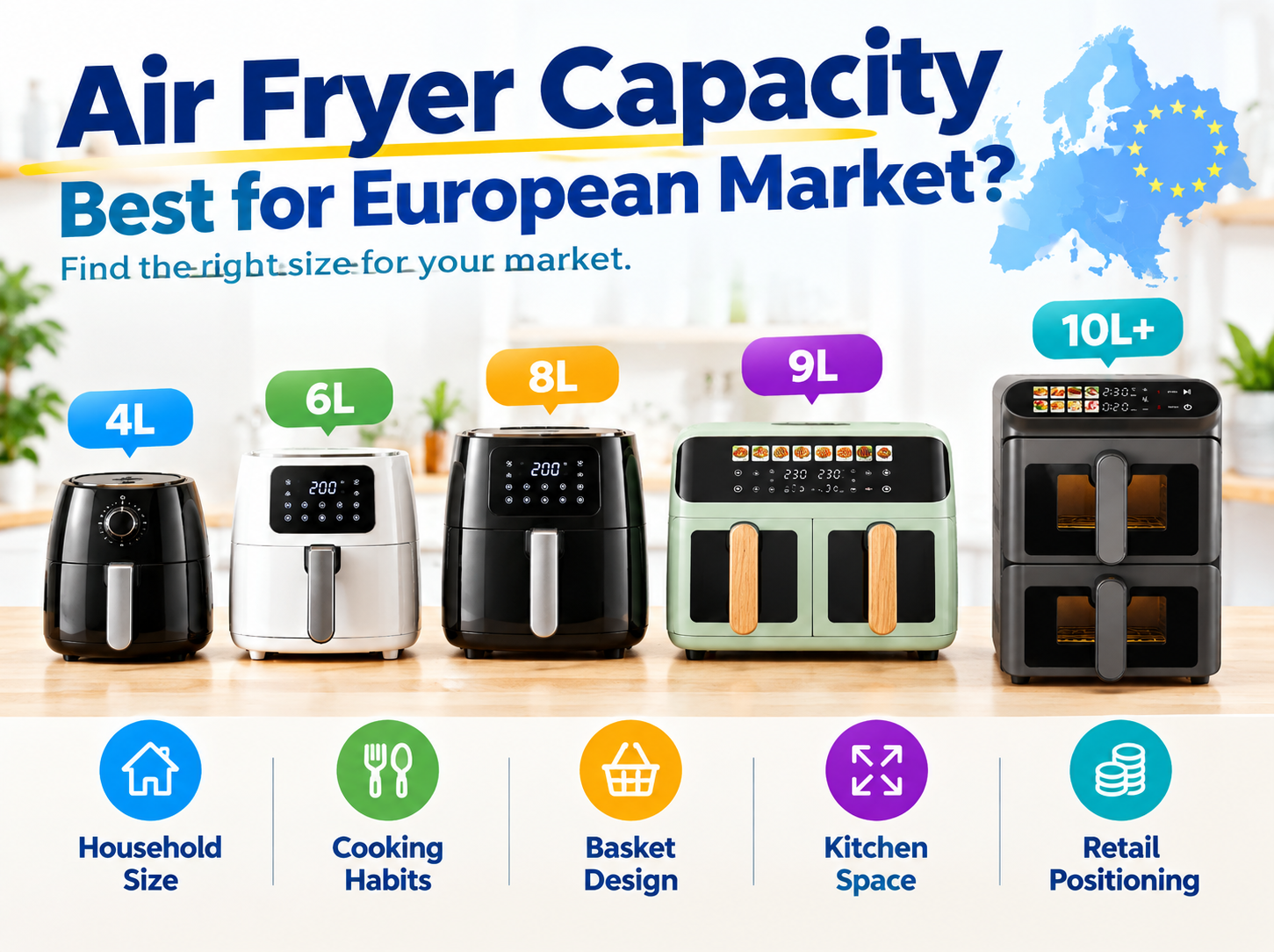
What Air Fryer Capacity Is Best for the European Market? A Buyer’s Guide
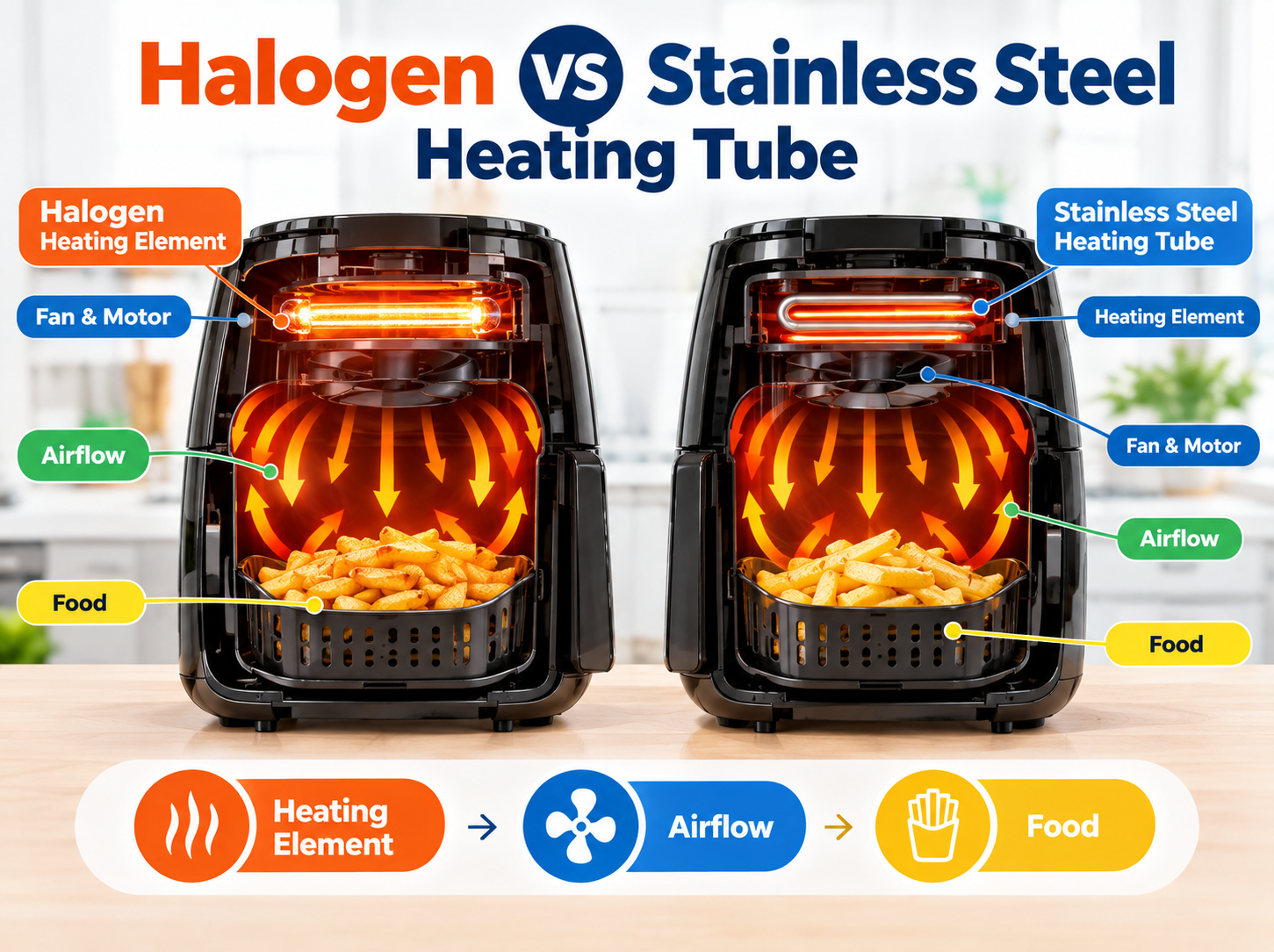
Air Fryer Heating Element: Halogen vs Stainless Steel Tube
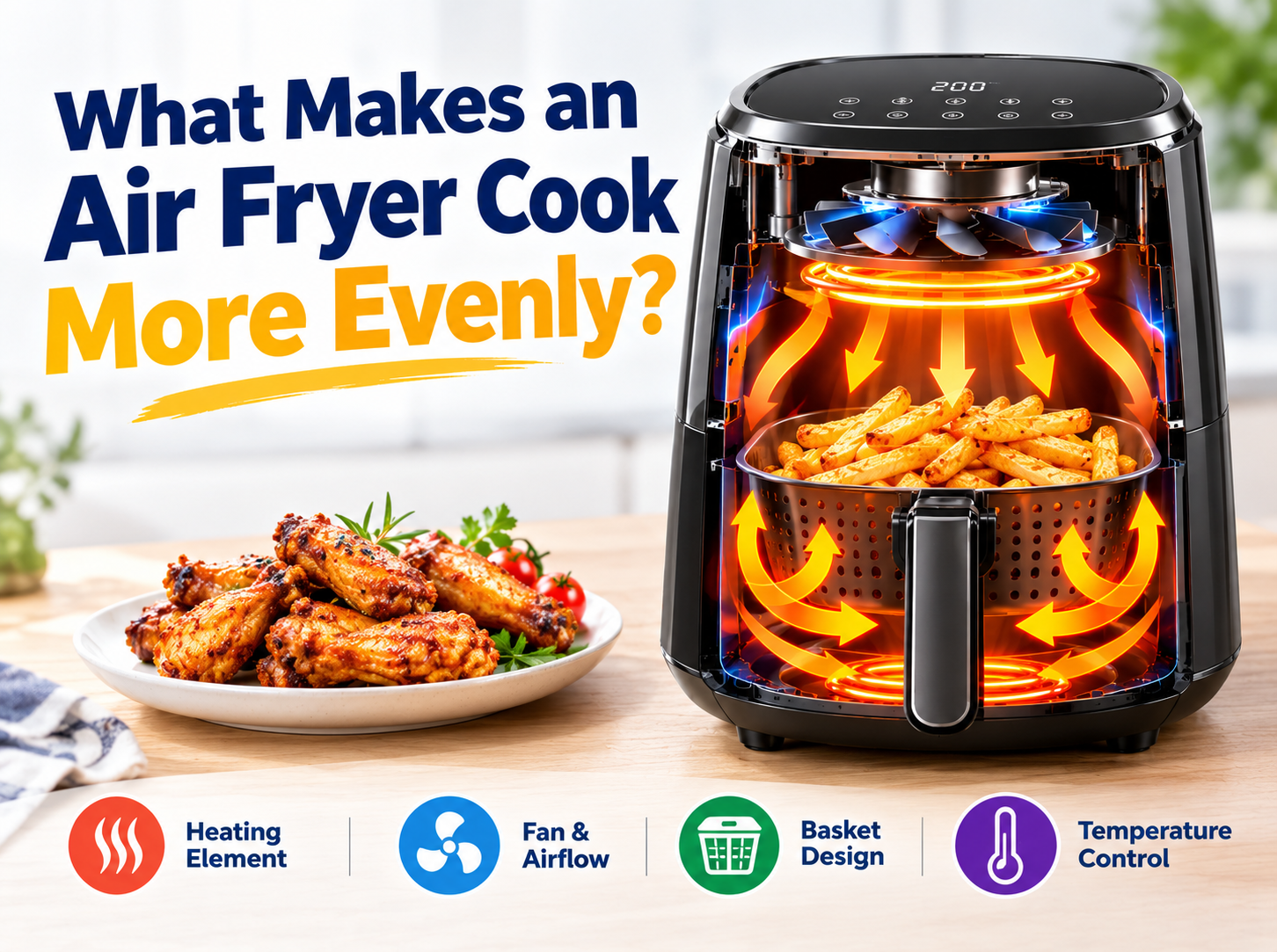
What Makes an Air Fryer Cook More Evenly?
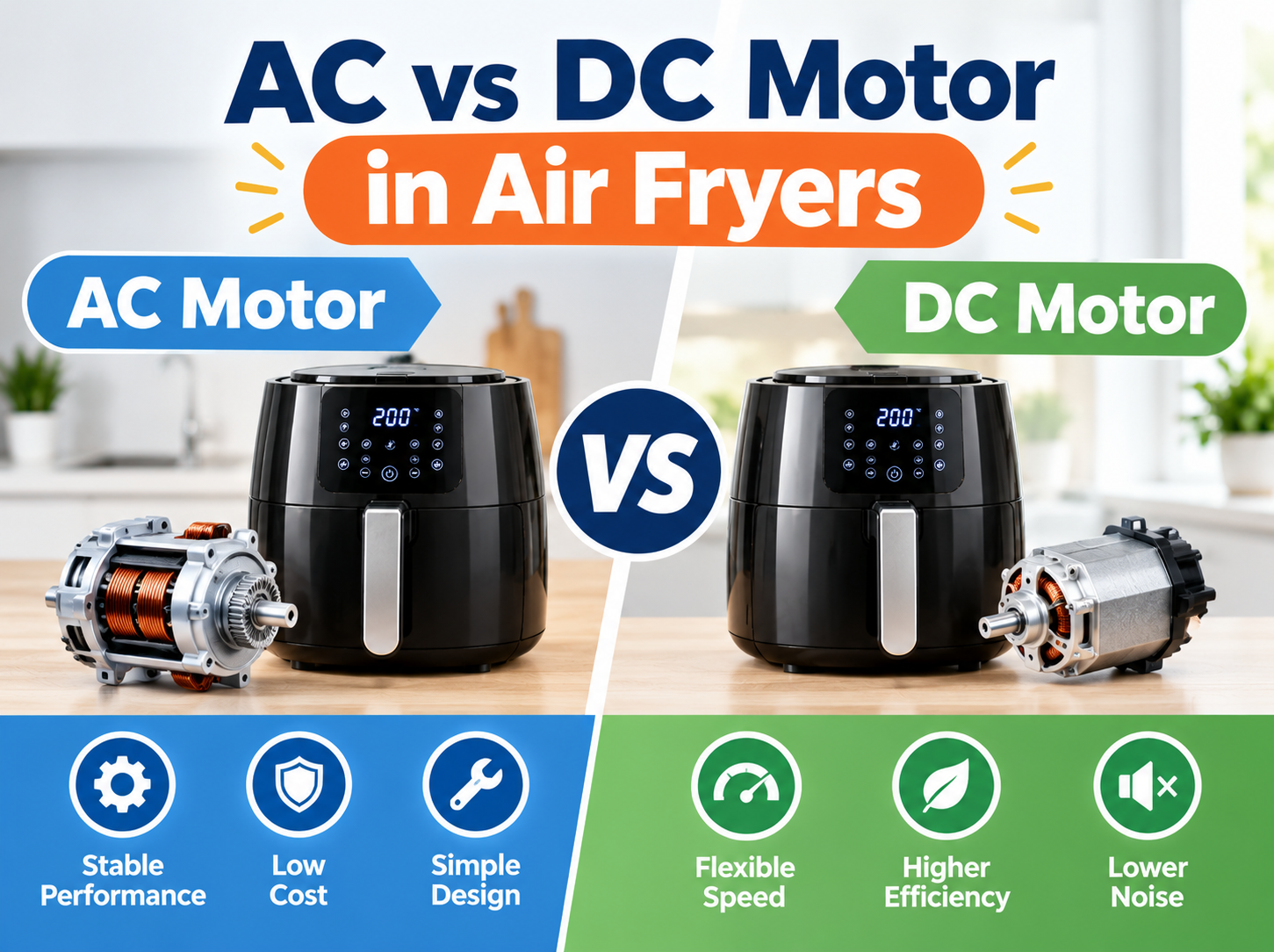
What Is the Difference Between AC and DC Motors in Air Fryers?

How Can I Find Competitive Prices from Air Fryer Suppliers?
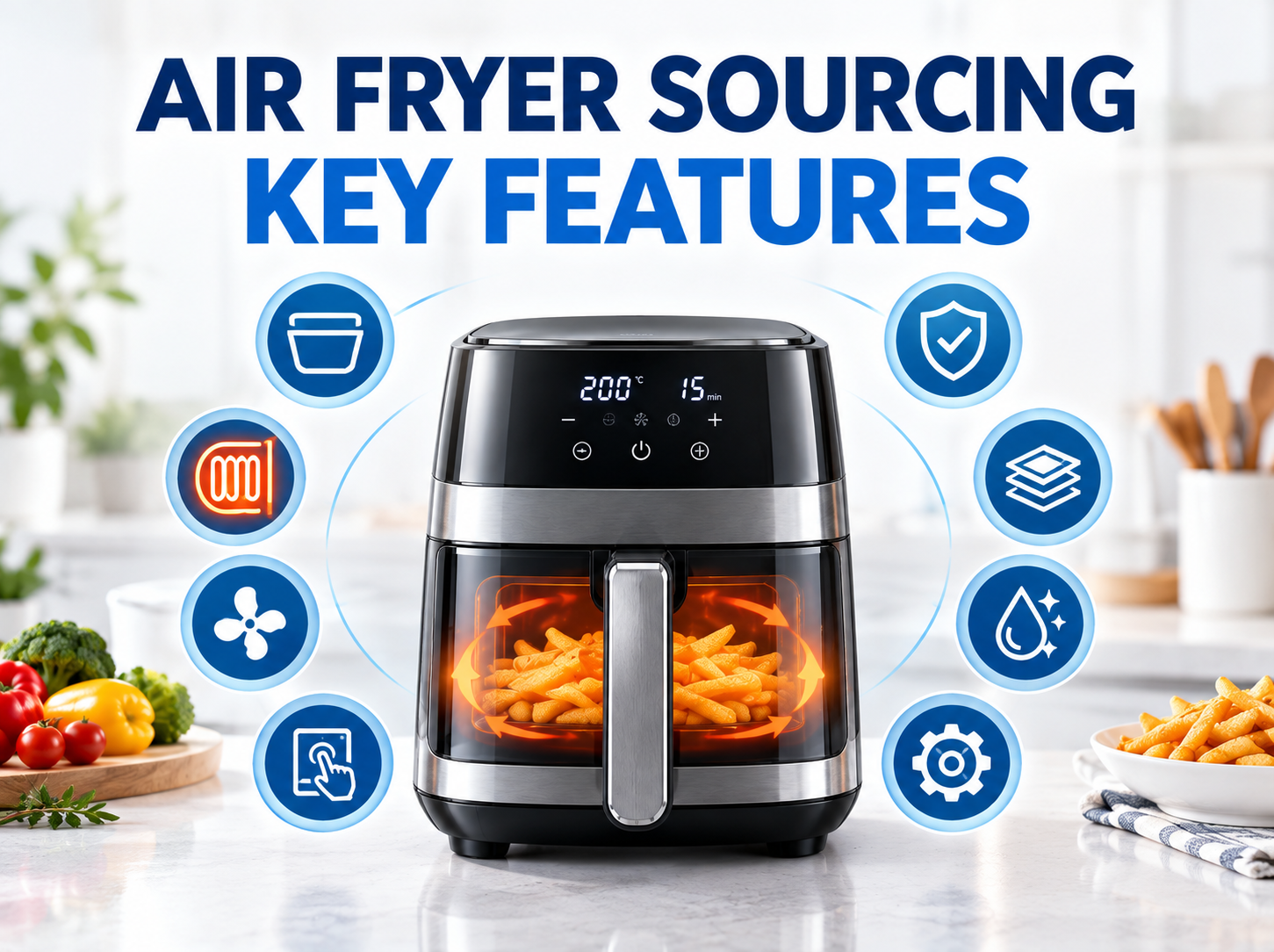
What Are the Most Important Features to Consider When Sourcing an Air Fryer?
 + 86 181 3826 8709
 info@funloiv.com
 6/F., Guanglong Building, Pingxin North Road, Longgang, Shenzhen City, Guangdong, China


@ 2009-2026 Shenzhen Funloiv Electric Appliance Co., LtdAll rights reserved


