 Notice:

 search
search
search
Oct 07, 2026


For an importer, private-label brand, wholesaler or retailer developing a new air fryer, the product design can be one of the company's most valuable assets.
You may have invested significantly in:
l Product design
l Industrial design
l Engineering
l Prototypes
l Tooling
l Testing
l Branding
l Packaging
l Market research
So a common question is:
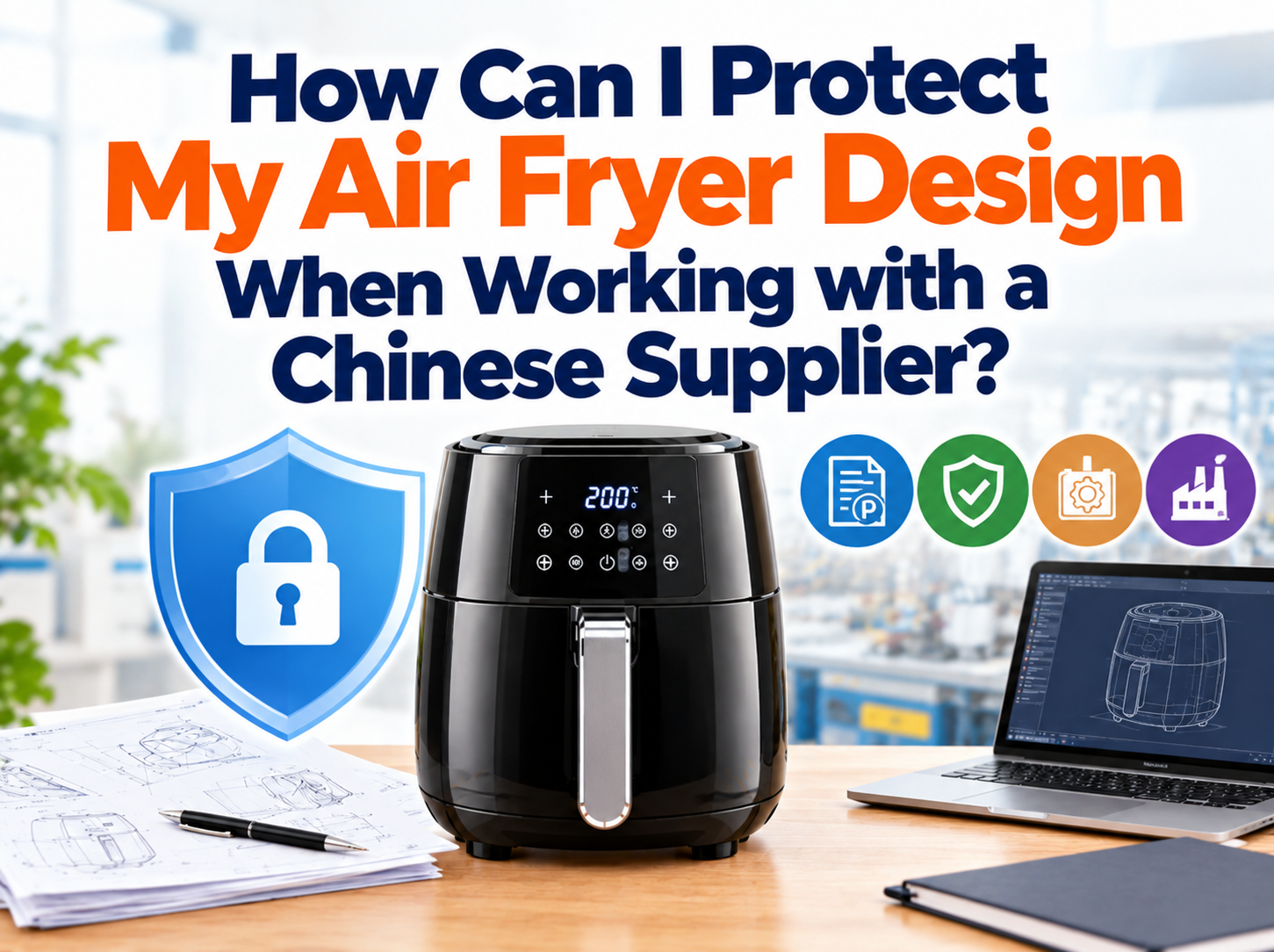
How can I protect my air fryer design when working with a Chinese supplier?
The answer is not simply:
“Sign an NDA.”
A stronger approach is to establish a complete IP and design-control process covering:
IP ownership → Confidentiality → Design files → Tooling → Sample approval → Engineering changes → Mass production → QC → Supplier management
For overseas buyers, the goal is not to avoid working with Chinese suppliers.
The goal is to make sure that both sides clearly understand who owns what, who can use what, and how the approved product should be manufactured.
1. What Exactly Should You Protect?
Before discussing IP protection, define what you actually want to protect.
An air fryer project may contain several different types of intellectual property and confidential information.
Product appearance
This may include:
l Housing shape
l Handle design
l Control panel
l Display layout
l Decorative elements
l Product proportions
l Color combination
l Surface finish
For a private-label brand, the external appearance may be an important part of product differentiation.
Product structure
This may include:
l Basket structure
l Drawer mechanism
l Internal layout
l Airflow structure
l Heating-element arrangement
l Fan structure
l Thermal protection
l Component positioning
These elements may involve engineering know-how as well as potentially protectable IP, depending on the circumstances.
Technical information
Examples include:
l Engineering drawings
l 2D drawings
l 3D files
l BOM
l PCB specifications
l Testing data
l Technical parameters
l Manufacturing information
Commercial information
You may also need to protect:
l Target cost
l Target retail price
l Product launch plans
l Customer information
l Sales channels
l Market strategy
l Forecast quantities
Not all of these items are protected by the same type of IP right.
That is why buyers should first identify what information is confidential and what type of protection is appropriate.
WIPO notes that trade secrets can cover confidential technical and commercial information when it has commercial value because it is secret, is known only to a limited group and is subject to reasonable measures to keep it confidential.
2. Understand the Difference Between OEM and ODM
One of the first questions to clarify is:
Who actually created the design?
This becomes particularly important when working with an OEM/ODM air fryer supplier.
OEM
In a typical OEM project, the buyer may provide:
l Product concept
l Product design
l Technical specifications
l Brand requirements
l Packaging requirements
The supplier primarily manufactures according to the buyer's requirements.
ODM
In an ODM project, the supplier may contribute:
l Product architecture
l Industrial design
l Engineering
l Internal structure
l Tooling
l Prototype development
l Technical solutions
Therefore, the ownership question can become more complicated.
For example:
You provide the product concept.
The supplier develops:
The engineering structure.
Who owns the resulting design?
This should be clarified before development begins, rather than after the product has already been developed.
WIPO recommends clearly distinguishing background IP—what each party brings into the relationship—from foreground IP—the results created during the project. It also recommends defining ownership, permitted use, confidentiality, termination and assignment terms in supplier agreements.
3. Clearly Define IP Ownership Before Product Development
A practical OEM/ODM project should identify at least three categories.
Buyer-owned IP
For example:
l Existing product design
l Existing patents
l Existing trademarks
l Brand assets
l Existing drawings
l Existing technology
Supplier background IP
For example:
l Existing air fryer platform
l Existing tooling
l Existing engineering technology
l Existing manufacturing processes
l Existing product architecture
Newly developed IP
For example:
l New housing design
l New mechanism
l New airflow structure
l New control system
l New tooling
l New engineering solution
The agreement should explain:
Who owns each category?
and:
Who has the right to use it after the project ends?
This is especially important when the buyer and supplier jointly develop a completely new air fryer.
4. Use an NDA — But Don't Stop There
A Non-Disclosure Agreement can be an important first layer of protection.
An NDA can define:
l What information is confidential
l Who can access it
l How it can be used
l Whether it can be disclosed to third parties
l How confidential materials should be handled
WIPO describes an NDA as a contract that controls access to proprietary know-how and defines how that know-how may be used, and specifically identifies outsourcing R&D, prototyping and manufacturing as situations where NDAs can be useful.
However, an NDA may not answer every question in an OEM/ODM project.
For example:
Can the supplier manufacture the same design for another customer?
An NDA focused only on confidentiality may not fully address that issue.
So buyers may also need contractual provisions covering non-use, permitted use, IP ownership, assignment and other project-specific restrictions.
WIPO specifically identifies supplier agreements covering Non-Use, Non-Disclosure and Non-Circumvention, as well as IP assignment and licensing arrangements, depending on the commercial relationship.
5. Limit Access to Your Most Sensitive Design Information
Not every supplier needs access to every piece of information on day one.
For example, during the initial supplier evaluation stage, you may only need to provide:
l Product concept
l Reference images
l Basic specifications
l Target capacity
l Target market
l General design direction
After selecting a supplier and establishing the appropriate contractual framework, you may provide:
l Detailed drawings
l Internal structure
l BOM
l Critical dimensions
l Technical requirements
l Testing information
This creates a practical:
Need-to-know approach
WIPO recommends limiting access to confidential information and identifying which people actually need access to trade-secret information.
For a new air fryer development project, this can be a simple but effective operational control.
6. Control Your Engineering Drawings and Product Files
Design protection is not only about contracts.
You also need to control the actual information being shared.
For example, use clear document versions:
Air Fryer Model ABC
Housing Drawing — Rev. A
BOM — Rev. B
Control Panel — Rev. C
When a design changes, make sure the latest version is clearly identified.
Your supplier should know:
Which drawing is the approved version?
This becomes especially important when several people are involved in:
l Industrial design
l Engineering
l Tooling
l Procurement
l QC
l Production
WIPO's trade-secret guidance includes measures such as marking confidential information and controlling physical and electronic access.
7. Clearly Define Air Fryer Tooling Ownership
Tooling is one of the most frequently overlooked areas in OEM/ODM projects.
Suppose a buyer pays:
USD 20,000 for new tooling.
The buyer may naturally assume:
“The mold belongs to me.”
But the commercial relationship should explicitly define:
l Who owns the tooling?
l Who paid for it?
l Where is it stored?
l Who controls access?
l Can the supplier use it for other customers?
l Who pays for maintenance?
l Who pays for modifications?
l Can the tooling be transferred?
l What happens when the project ends?
This is particularly important for a proprietary air fryer design.
A tooling agreement should not simply rely on an assumption based on who paid the tooling invoice.
It should be documented clearly.
Related article
How to Choose an OEM/ODM Air Fryer Supplier in China
Our existing article specifically discusses OEM/ODM development, tooling, product development, engineering, samples and production, making it a natural next step for buyers evaluating supplier capability.
8. Use an Approved Sample as the Production Reference
Once the product has been developed, the next challenge is:
Can the supplier reproduce exactly what was approved?
This is where the approved sample becomes important.
The buyer and supplier should establish a clear reference for:
l Product appearance
l Dimensions
l Materials
l Color
l Power
l Heating system
l Temperature range
l Control functions
l Basket structure
l Accessories
l Packaging
The approved sample can become the physical reference for mass production.
Related article
How Can I Test an Air Fryer Sample Before Placing a Bulk Order?
Our existing article explains that sample approval should not only confirm appearance; buyers should also evaluate temperature accuracy, heating performance, cooking consistency, motor noise, basket durability, electrical safety and other factors.
9. Control Engineering Changes After Sample Approval
One of the practical risks in OEM/ODM manufacturing is not necessarily intentional copying.
Sometimes a supplier may need to change a component because of:
l Component availability
l Cost changes
l Production requirements
l Supplier changes
l Engineering improvements
But a critical change can affect the product you approved.
For example:
The supplier changes the motor.
Or:
The supplier changes the heating element.
Or:
The supplier changes the internal airflow structure.
These changes may affect:
l Cooking performance
l Noise
l Temperature
l Energy consumption
l Safety
l Certification
l User experience
Therefore, a buyer should establish an:
Engineering Change Approval Process
For critical changes:
Supplier proposes change
↓
Buyer reviews change
↓
Testing / verification
↓
Buyer approval
↓
Updated specification
↓
Mass production
This is particularly important for proprietary products.
10. Use QC to Make Sure Mass Production Matches Your Approved Design
IP protection and quality control are closely connected.
Imagine you have developed a distinctive air fryer design.
You sign the necessary agreements.
You approve the sample.
But during mass production, the supplier changes:
l Housing material
l Color
l Handle
l Control panel
l Basket
l Heating system
l Accessories
You may still have a contractual IP framework, but you now have a product
consistency problem.
Therefore, the buyer should control:
Approved Design + Approved Specification + Approved Sample + Production QC
Related article
What Quality-Control Standards Should I Require from an Air Fryer Supplier?
Our existing QC article recommends a process covering:
Incoming QC → Production QC → Assembly QC → Finished Product QC → Aging Testing → Pre-Shipment Inspection
and includes specific checks for housing, heating elements, motor, fan, wiring, sensors, basket and other components.
11. Conduct Pre-Shipment Inspection Before the Product Leaves the Factory
For a proprietary air fryer, pre-shipment inspection can serve another purpose beyond normal quality control.
It can help confirm:
The products being shipped are the products that were approved.
Inspection can compare the finished products against the approved specification.
For example:
Appearance
l Housing shape
l Color
l Surface finish
l Logo
l Control panel
Structure
l Basket
l Drawer
l Handle
l Housing
l Internal components where inspection is practical
Function
l Heating
l Temperature
l Timer
l Controls
l Fan
l Motor
Electrical
l Voltage
l Power
l Plug
l Power cord
Packaging
l Retail box
l Manual
l Barcode
l Labels
l Accessories
This is particularly useful when the product has undergone multiple engineering changes during development.
12. Don't Assume That Every Air Fryer Design Can Be Protected in the Same Way
This is an important point for overseas buyers.
There is a difference between:
Product appearance
and:
Technical invention
and:
Confidential know-how
and:
Brand identity
Depending on the jurisdiction and circumstances, different forms of IP protection may be relevant, including:
l Design rights / design patents
l Patents
l Trademarks
l Copyright
l Trade secrets
l Contractual rights
WIPO explains that different IP rights can address different aspects of a product: patents can protect technical features, industrial designs can protect aesthetic appearance, trademarks can protect branding, and trade secrets can protect qualifying confidential information.
Therefore, buyers should not assume that:
“An NDA protects my entire air fryer.”
It does not.
The appropriate protection depends on what you are trying to protect and where you plan to sell the product.
For significant proprietary designs, buyers should obtain advice from qualified IP counsel in the relevant jurisdictions.
13. Should You Register Your Air Fryer Design in China?
This is a question many overseas brands ask.
There is no single answer for every project.
Consider:
l How unique is the design?
l How commercially important is it?
l Where will the product be sold?
l Is the appearance commercially distinctive?
l Does the product contain a potentially patentable technical solution?
l Is the product already public?
l What countries are important to your business?
For a product with significant long-term commercial value, it may be worth discussing an IP registration strategy with professional counsel before publicly launching the product.
This is especially important because some IP rights can be affected by disclosure and filing timing.
The practical lesson for buyers is:
Do not wait until the product is already on the market to ask whether the design should have been protected.
14. Choose a Supplier That Understands Product Development
IP protection is not only about legal documents.
Supplier selection also matters.
Before starting an important air fryer development project, ask:
R&D
Do you have your own R&D or engineering team?
Product development
Can you develop a new air fryer appearance?
Structure
Can you modify the internal structure?
Tooling
Can you develop and manage new tooling?
Documentation
Can you provide engineering drawings and specifications?
Sample
How do you manage sample approval?
Mass production
How do you ensure production matches the approved sample?
Engineering changes
How are component or design changes approved?
QC
How do you control product quality during mass production?
Export
Can you support the complete process through shipment?
These questions help determine whether you are dealing with a supplier that can genuinely support an OEM/ODM project rather than simply adding your logo to an existing model.
Related article
How to Choose an OEM/ODM Air Fryer Supplier in China
Our existing guide covers R&D, OEM versus ODM, product development, tooling, samples, testing, QC, production and export capability.
15. Build Design Protection Into the Entire OEM/ODM Process
A practical air fryer development process can look like this:
Stage 1 — Product Concept
Buyer defines:
l Target market
l Consumer
l Product positioning
l Target price
l Product concept
↓
Stage 2 — Supplier Evaluation
Supplier capability is evaluated.
↓
Stage 3 — Confidentiality & IP Terms
Define:
l Confidential information
l IP ownership
l Permitted use
l Tooling ownership
l Development responsibilities
↓
Stage 4 — Product Development
Supplier develops:
l Industrial design
l Structure
l Engineering
l Prototype
l Tooling
↓
Stage 5 — Sample Testing
Buyer evaluates:
l Performance
l Safety
l Appearance
l Materials
l User experience
↓
Stage 6 — Final Approval
Freeze:
l Drawing
l BOM
l Specification
l Packaging
l Golden sample
↓
Stage 7 — Mass Production
Use agreed QC procedures.
↓
Stage 8 — Pre-Shipment Inspection
Verify:
Mass production = approved product
↓
Stage 9 — Shipment
Release the order after final confirmation.
This process connects IP protection with actual product development and manufacturing control.
16. What Should Be Included in an Air Fryer OEM/ODM Agreement?
The exact agreement should be prepared or reviewed by qualified legal counsel, but from a commercial project-management perspective, buyers should consider addressing:
Product
l Product model
l Product specification
l Approved sample
IP
l Background IP
l Newly developed IP
l Ownership
l License rights
l Permitted use
Confidentiality
l Confidential information
l Access restrictions
l Disclosure restrictions
l Use restrictions
Tooling
l Tooling ownership
l Storage
l Maintenance
l Transfer
Engineering
l Design changes
l Component changes
l Approval procedures
Production
l Approved specification
l QC standards
l Inspection
Termination
l Return of documents
l Return or transfer of tooling
l Continued confidentiality
l Rights to developed IP
WIPO specifically recommends that supplier agreements address ownership and rights, supplier responsibilities and milestones, access and use, confidentiality, termination and return of materials, dispute resolution and IP assignment.
17. What If the Supplier Already Has a Similar Air Fryer?
This is another situation buyers should clarify early.
Suppose you show the supplier a new design.
The supplier says:
“We already have a similar model.”
Ask:
Which parts are already owned by the supplier, and which parts will be newly developed for my project?
This distinction is important.
You may be able to customize:
l Housing
l Control panel
l Basket
l Capacity
l Heating system
l Functions
l Accessories
l Color
l Packaging
But you should know which elements are:
Supplier's existing platform
and which are:
Your proprietary development.
This is one reason a detailed RFQ and development specification are useful.
Related article
Air Fryer RFQ Checklist: 20 Specifications Buyers Should Include
Our existing RFQ guide covers capacity, configuration, power, voltage, heating system, materials, control type, customization, packaging, certification, MOQ, target market and delivery requirements.
18. Don't Protect the Design at the Expense of the Supplier's Existing Technology
IP protection should also be fair to the supplier.
For example, a supplier may already have:
l Existing airflow technology
l Existing heating technology
l Existing motor system
l Existing PCB platform
l Existing manufacturing process
l Existing tooling
The buyer should not automatically assume that every technical element used in the final product becomes buyer-owned IP.
This is why background IP vs. newly developed IP should be clearly separated.
A good OEM/ODM relationship should protect both sides:
Buyer-owned IP stays under buyer control.
and:
Supplier-owned background technology remains supplier-owned unless otherwise agreed.
This clarity can reduce disputes later.
19. Air Fryer Design Protection Checklist for Buyers
Before starting an OEM/ODM project, ask yourself:
IP
l Have I identified what I actually need to protect?
l Do I know which IP is mine?
l Do I know which IP belongs to the supplier?
l Have we defined ownership of newly developed IP?
Confidentiality
l Is confidential information clearly defined?
l Is there an appropriate NDA or confidentiality agreement?
l Are access and permitted use clearly defined?
Tooling
l Who owns the molds?
l Who controls the molds?
l What happens if the supplier relationship ends?
Product Development
l Are drawings version-controlled?
l Is the BOM controlled?
l Is there an approved sample?
l Is there an engineering-change procedure?
Mass Production
l Does production have to match the approved sample?
l Are critical components controlled?
l Are design changes subject to approval?
l Is pre-shipment inspection available?
Legal
l Have I considered whether design registration or other IP protection is appropriate?
l Have I obtained professional legal/IP advice where necessary?
20. The Best Protection Is a Combination of Contract + Process + Supplier Selection
For an air fryer OEM/ODM project, I would not recommend relying on one single measure.
A stronger framework is:
1. Choose the right supplier
↓
2. Define IP ownership
↓
3. Sign appropriate confidentiality/IP agreements
↓
4. Control access to design information
↓
5. Define tooling ownership
↓
6. Approve drawings and samples
↓
7. Control engineering changes
↓
8. Control mass production
↓
9. Conduct QC and pre-shipment inspection
↓
10. Maintain documentation
This creates several layers of protection rather than depending on one document.
Related Air Fryer Sourcing Guides
For buyers developing a new air fryer with a Chinese OEM/ODM supplier, these articles on our website provide additional information:
1. How to Choose an OEM/ODM Air Fryer Supplier in China
Covers R&D capability, OEM vs. ODM, product development, tooling, sample development, testing, QC and production capability.
2. Air Fryer RFQ Checklist: 20 Specifications Buyers Should Include
Useful when preparing your first technical RFQ for an OEM/ODM air fryer supplier.
3. How Can I Test an Air Fryer Sample Before Placing a Bulk Order?
Explains how buyers can evaluate the sample before committing to mass production.
4. What Quality-Control Standards Should I Require from an Air Fryer Supplier?
Covers incoming QC, production QC, functional testing, aging testing and pre-shipment inspection.
5. What Are the Most Common Quality Problems with Air Fryers?
Useful for identifying potential product and production risks before approving an air fryer design.
6. Air Fryer Certifications & Compliance by Market: A Safety Guide for Importers
Useful when the proprietary air fryer is being developed for a specific target market and compliance requirements need to be considered early.
FAQ: Protecting an Air Fryer Design in China
Ø Can I protect my air fryer design when manufacturing in China?
Yes, buyers can use a combination of contractual, operational and IP measures. The appropriate strategy depends on what is being protected, the development arrangement and the markets involved.
Ø Should I sign an NDA with a Chinese air fryer supplier?
An NDA can be an important part of protecting confidential information during supplier evaluation, product development and manufacturing. However, an NDA should be drafted to match the information and risks involved in the project.
Ø Does an NDA give me ownership of the air fryer design?
Not necessarily. Confidentiality and ownership are different issues. A project agreement should clearly address who owns existing IP and who owns newly developed IP.
Ø Who owns the air fryer tooling?
The answer should be clearly established in the commercial agreement. Buyers should not rely solely on who paid for the mold.
Ø Can my Chinese supplier use my air fryer design for another customer?
This depends on the contractual rights, IP ownership, permitted-use provisions and the nature of the supplier's pre-existing technology. These issues should be addressed before development begins.
Ø Should I register my air fryer design in China?
That depends on the nature of the design, your commercial plans and the jurisdictions that matter to your business. For an important proprietary product, consult qualified IP counsel before public disclosure or filing decisions.
Ø How can I make sure mass-produced air fryers match my design?
Use controlled drawings and specifications, an approved sample or golden sample, an engineering-change procedure, production QC and pre-shipment inspection.
Final Thoughts: Protect the Product, Not Just the Paperwork
For overseas air fryer buyers, protecting a new product design when working with a Chinese supplier does not need to mean treating the supplier relationship as a legal battle.
A better approach is to build protection into the development process from the beginning.
The key elements are:
Clear IP Ownership
Confidentiality
Controlled Design Files
Tooling Ownership
Approved Sample
Engineering Change Control
Production QC
Pre-Shipment Inspection
Reliable Supplier Selection
The most important question is therefore not simply:
“How can I stop my Chinese supplier from copying my design?”
A better question is:
“How can I build an OEM/ODM development process where both the buyer's IP and the supplier's existing technology are clearly defined and properly controlled?”
That approach creates a clearer foundation for a long-term manufacturing relationship.
Looking for an Air Fryer OEM/ODM Supplier for Your New Product?
If you are an air fryer importer, private-label brand, wholesaler, retailer or supermarket and already have a product concept, reference model or new design, FUNLOIV can discuss the project from:
Product Concept → Engineering → Tooling → Prototype → Sample Testing → Mass Production → QC → Packaging → Export
To help us evaluate your project, send us:
l Product design or reference
l Target capacity
l Target market
l Required functions
l Product positioning
l Estimated quantity
l Target development schedule
Have a new air fryer design that you want to develop with a Chinese supplier?
Send us your product requirements and let us discuss the OEM/ODM development process.
Related Articles
l Air Fryer Heating Element: Halogen vs. Stainless Steel Heating Tube.
l Why Does Airflow Matter in an Air Fryer?
l What Is the Difference Between AC and BLDC Motors in Air Fryers?
l What Makes an Air Fryer Cook More Evenly?
l How Can I Test an Air Fryer Sample Before Placing a Bulk Order?
l What Quality-Control Standards Should I Require from an Air Fryer Supplier?
l What Air Fryer Tests Should Be Included in a Pre-Shipment Inspection?
l What Factors Affect the FOB Price of an Air Fryer?
l How to Compare Quotations from Different Air Fryer Suppliers?
l 230°C Air Fryer: What Buyers Should Check Before Importing?
l A Dual Heating vs Single Heating Air Fryer- Which Is Better?
l What Is the Difference Between AC and DC Motors in Air Fryers?
l Air Fryer for the Middle East - A Guide to G-Mark, Specifications and Compliance?
l What Are the Most Common Quality Problems with Air Fryers?
l Air Fryer RFQ Checklist: 20 Specifications Buyers Should Include.
l How To Verify Whether an Air Fryer Supplier Is Reliable?
l How to Choose an OEM-ODM Air Fryer Supplier in China?
l 200°C vs 230°C Air Fryer: Which one is better?
l Metal-body vs plastic-body air fryer: which is better for a premium brand?
l Top Heating vs. Rear Heating Air Fryers: Which one is better for a B2B buyer?
l Is a Vertical Dual-Drawer Air Fryer Better for Saving Kitchen Space?
l Air Fryer Certifications & Compliance by Market- A Safety Guide for Importers.
l Vertical vs. Horizontal Dual-Basket Air Fryer- Which Is Better for Retail?
l What Air Fryer Capacity Is Best for the European Market?
l What Are the Common Warranty and After-Sales Problems with Air Fryers?
l What MOQ, Lead Time and Payment Terms Should I Expect from an Air Fryer Supplier?
l How Can I Prevent Plastic Melting or Deformation in an Air Fryer?
l What Air Fryer Safety Tests Should Be Completed Before Mass Production?
l What Is the Difference Between a Single-Basket and Dual-Basket Air Fryer?
l How Do Different Air Fryer Designs Affect Cooking Performance and Cleaning?
l How Much Does an OEM Air Fryer Cost from China?
l What Are the Most Important Features to Consider When Sourcing an Air Fryer?
l What MOQ Do Chinese Air Fryer Suppliers Usually Require?
l How Can I Import Air Fryers from China?
l Can an Air Fryer Supplier in China Help Design New Products?
l How Can Air Fryer Suppliers in China Support Small Businesses?

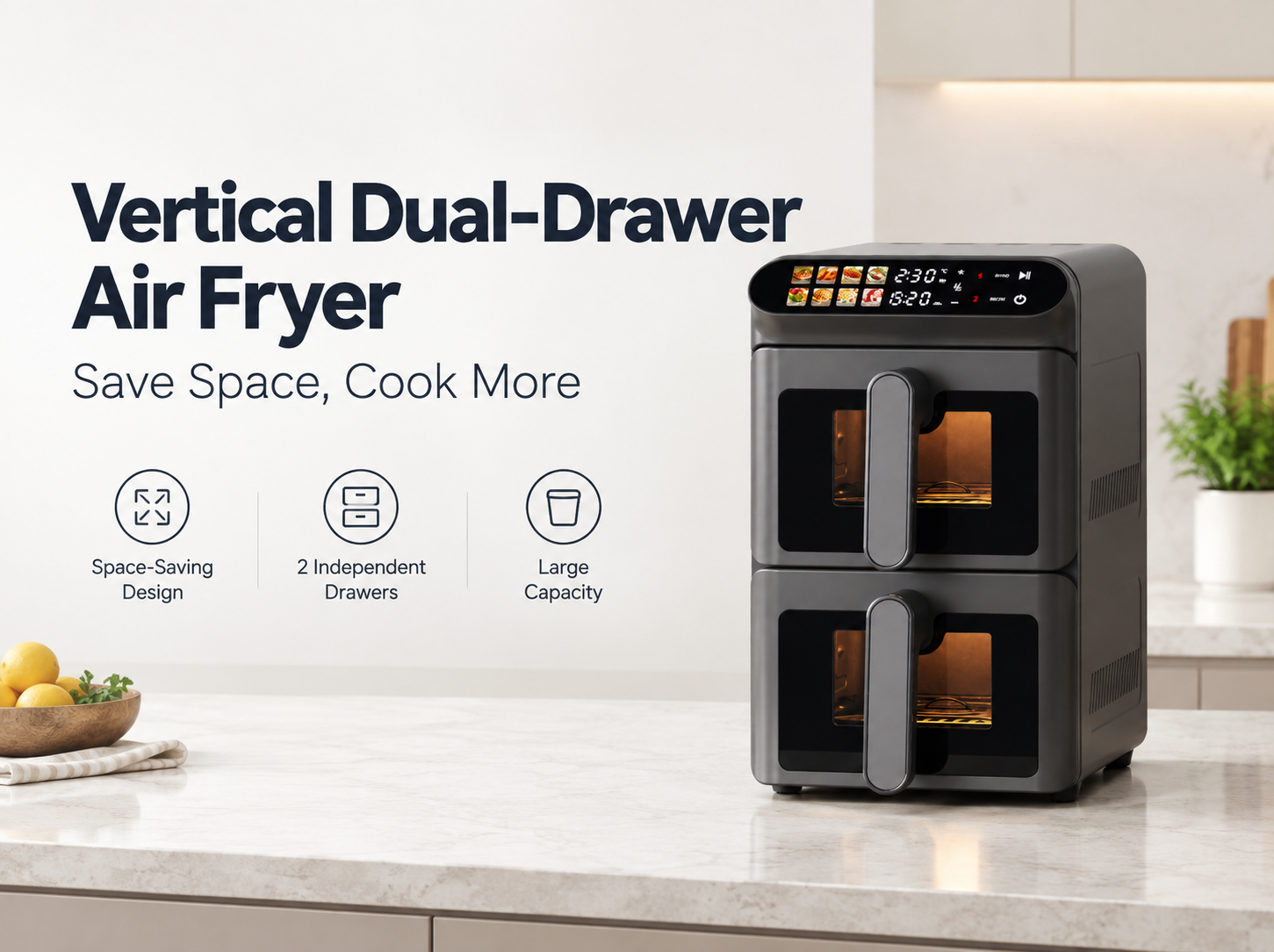
Is a Vertical Dual-Drawer Air Fryer Better for Saving Kitchen Space?
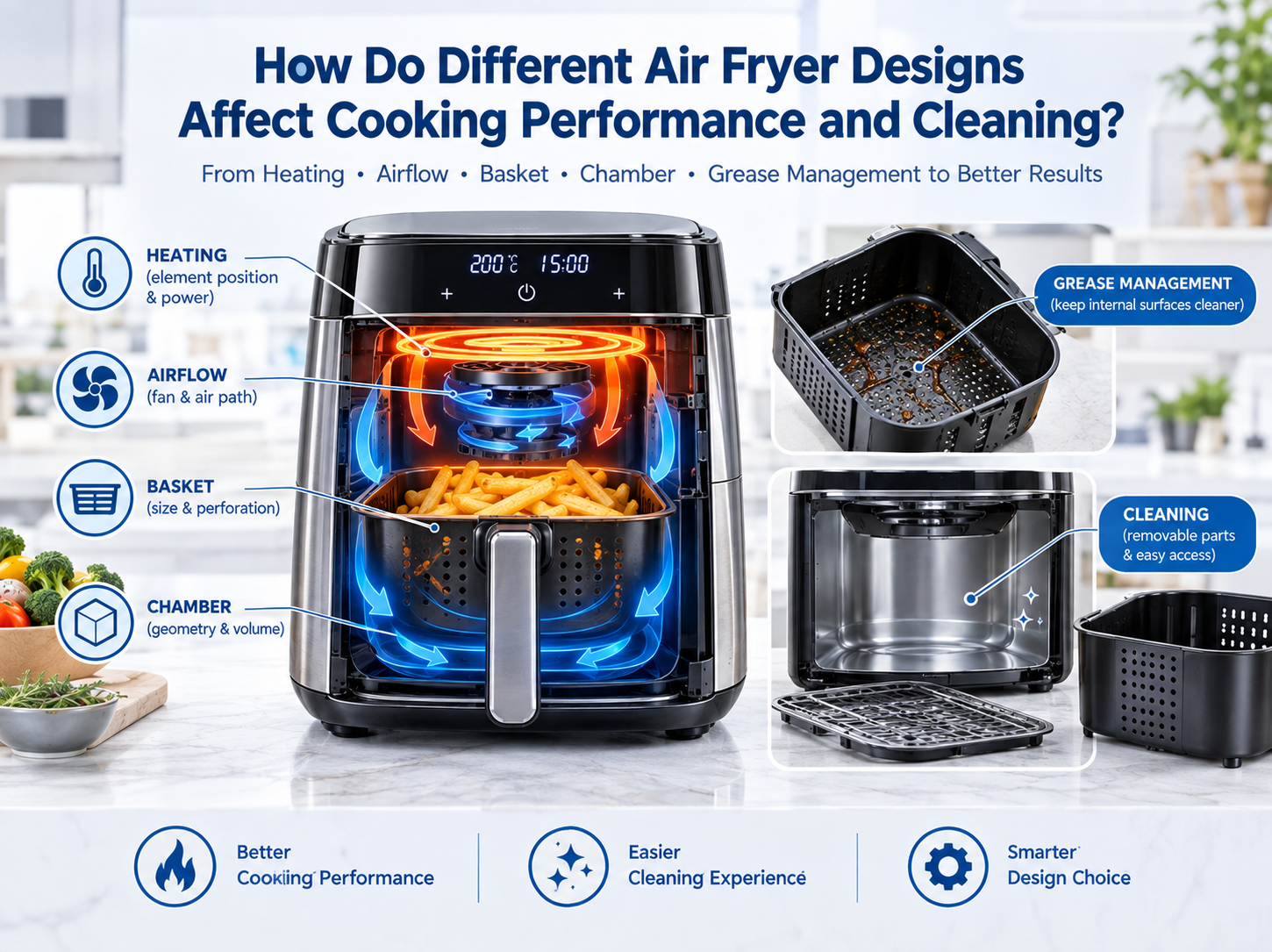
How Do Different Air Fryer Designs Affect Cooking Performance and Cleaning?
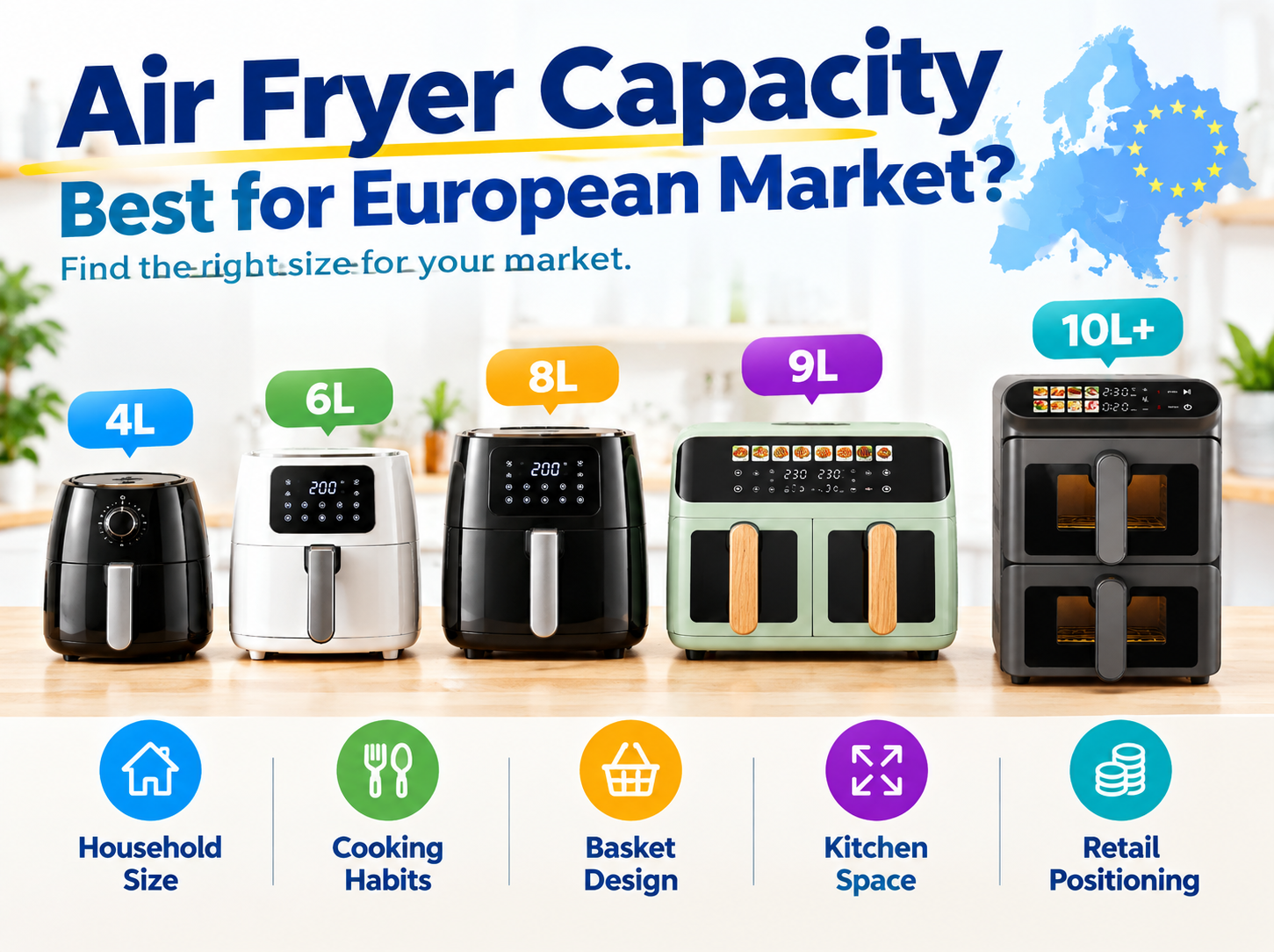
What Air Fryer Capacity Is Best for the European Market? A Buyer’s Guide
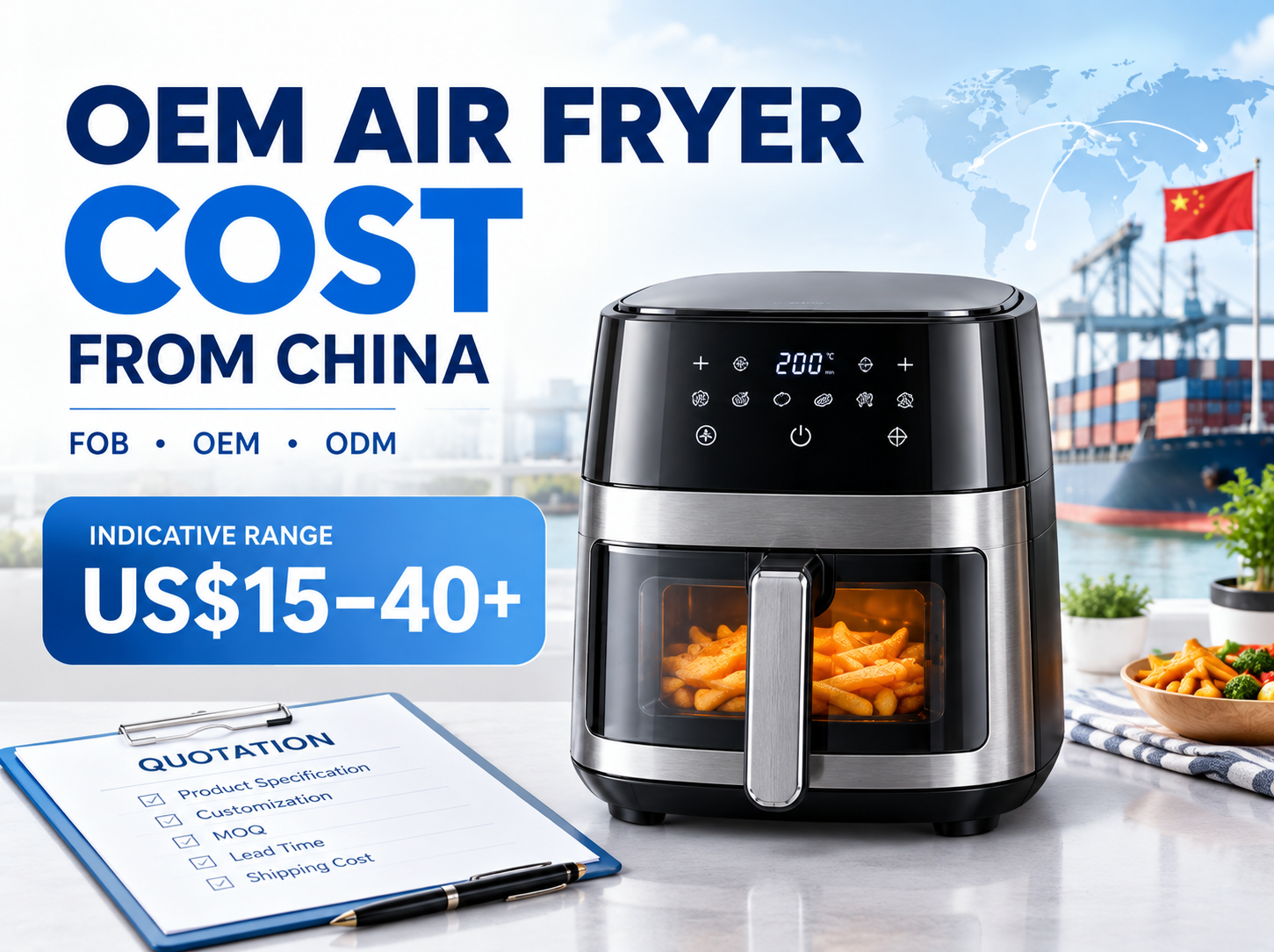
How Much Does an OEM Air Fryer Cost from China?
Can Air Fryer Suppliers Produce Air Fryers for My Country's Voltage?
How Can I Protect My Air Fryer Design When Working with a Chinese Supplier?
 + 86 181 3826 8709
 info@funloiv.com
 6/F., Guanglong Building, Pingxin North Road, Longgang, Shenzhen City, Guangdong, China


@ 2009-2026 Shenzhen Funloiv Electric Appliance Co., LtdAll rights reserved


