 Notice:

 search
search
search
Oct 09, 2026


If you search for air fryer suppliers on Alibaba, you may find hundreds or even thousands of product listings.
That creates an important question for importers, retailers, wholesalers and appliance brands:
How many air fryer suppliers should I actually contact?
Should you contact 3 suppliers?
10 suppliers?
20 suppliers?
Or should you contact as many suppliers as possible to get the lowest price?
There is no universal number.
For a professional B2B sourcing project, the objective is not to contact the largest number of suppliers. The objective is to build a sufficiently competitive shortlist without creating unnecessary work.
A practical sourcing funnel for many air fryer projects can look like this:
20–30 potential suppliers
↓
8–12 suppliers for initial screening
↓
5–8 qualified suppliers for RFQ
↓
2–4 suppliers for sample evaluation
↓
1 primary supplier + 1 backup supplier
These numbers are not an industry standard. They are a practical framework that can help buyers organize the supplier-selection process.
The right number depends on your product, target market, order quantity, customization requirements and sourcing risk.
1. Why Should You Contact More Than One Air Fryer Supplier?
The first reason is simple:
You need a basis for comparison.
If you contact only one supplier and receive a quotation of USD 35, you do not know whether:
l USD 35 is competitive
l the specification is correct
l the material is appropriate
l the MOQ is reasonable
l the supplier has sufficient production capability
l the certification covers your target market
l another supplier could provide a better product
l the supplier can support your required customization
The problem is not necessarily that the supplier is offering a bad price.
The problem is that you have no benchmark.
For an importer or brand owner placing a significant order, contacting several qualified suppliers creates a much stronger basis for negotiation and decision-making.
However, this does not mean you should request quotations from 30 suppliers.
That creates another problem.
2. Why Contacting Too Many Suppliers Can Be Counterproductive
More suppliers do not automatically mean better sourcing.
Imagine that you contact 30 Alibaba suppliers.
You may receive:
l 30 quotations
l 30 catalogs
l 30 product specifications
l 30 different MOQs
l 30 different packaging options
l 30 different certification claims
l 30 different lead times
You then need to determine whether these quotations are actually comparable.
This can quickly become difficult.
For example:
Supplier | Capacity | Body | Heating | Price |
A | 6L | Plastic | Single | $28 |
B | 8L | Metal | Dual | $36 |
C | 8L | Plastic | Single | $29 |
D | 8L | Metal | Single | $33 |
Which supplier is cheapest?
It is impossible to answer without first determining whether the products are actually equivalent.
This is why professional sourcing should focus on qualified suppliers rather than the maximum number of suppliers.
3. A Practical Alibaba Air Fryer Supplier Funnel
For many B2B air fryer sourcing projects, the following structure is a useful starting point:
Stage 1 — 20–30 potential suppliers
These are suppliers you identify through Alibaba search and other sourcing channels.
At this stage, you are not trying to find the final supplier.
You are building a longlist.
Look for suppliers that appear relevant based on:
l Air fryer product range
l Product architecture
l Capacity
l Target market
l OEM/ODM capability
l Supplier profile
l Product specifications
l Experience with your product type
Stage 2 — 8–12 suppliers for initial screening
You do not need to send a complete RFQ to every supplier on your longlist.
First, communicate with approximately 8–12 potentially relevant suppliers.
Observe:
l How quickly do they respond?
l Do they understand your requirements?
l Do they ask useful technical questions?
l Can they explain their products?
l Can they provide specifications?
l Do they understand your target market?
l Can they support OEM or ODM?
l Can they provide samples?
l Can they explain certification?
l Do they communicate professionally?
This stage is extremely useful because the quality of a supplier's questions can tell you a lot about its actual capability.
A supplier that immediately sends a generic catalog and price list is not necessarily a bad supplier.
But for a serious OEM/ODM project, you should investigate further if the supplier does not ask about your product requirements, market or commercial conditions.
FUNLOIV discusses this supplier-evaluation approach in more detail here:
How to Choose an OEM/ODM Air Fryer Supplier in China: 10 Things Brands Should Check
4. Stage Three: Reduce the List to 5–8 Qualified Suppliers
After the initial communication, reduce the number.
For most standard or private-label air fryer projects, 5–8 suppliers is usually enough for a serious RFQ comparison.
At this point, you should have enough information to eliminate suppliers that are obviously unsuitable.
For example:
Supplier A
Good product, but does not support your target voltage.
Eliminate.
Supplier B
Competitive price, but cannot provide the required market documentation.
Investigate or eliminate.
Supplier C
Good product and certification, but MOQ is too high.
Consider only if volume can be increased.
Supplier D
Strong product development capability and good communication.
Keep.
Supplier E
Very low price but unclear product specifications.
Do not select based on price alone.
The purpose of this stage is to create a qualified supplier shortlist, not simply a list of cheap quotations.
5. Before Sending an RFQ, Define Exactly What You Need
One of the biggest mistakes buyers make on Alibaba is contacting suppliers before clearly defining the product.
For example:
“Please quote your best 8L air fryer price.”
This may generate many different quotations.
But an “8L air fryer” can mean very different products.
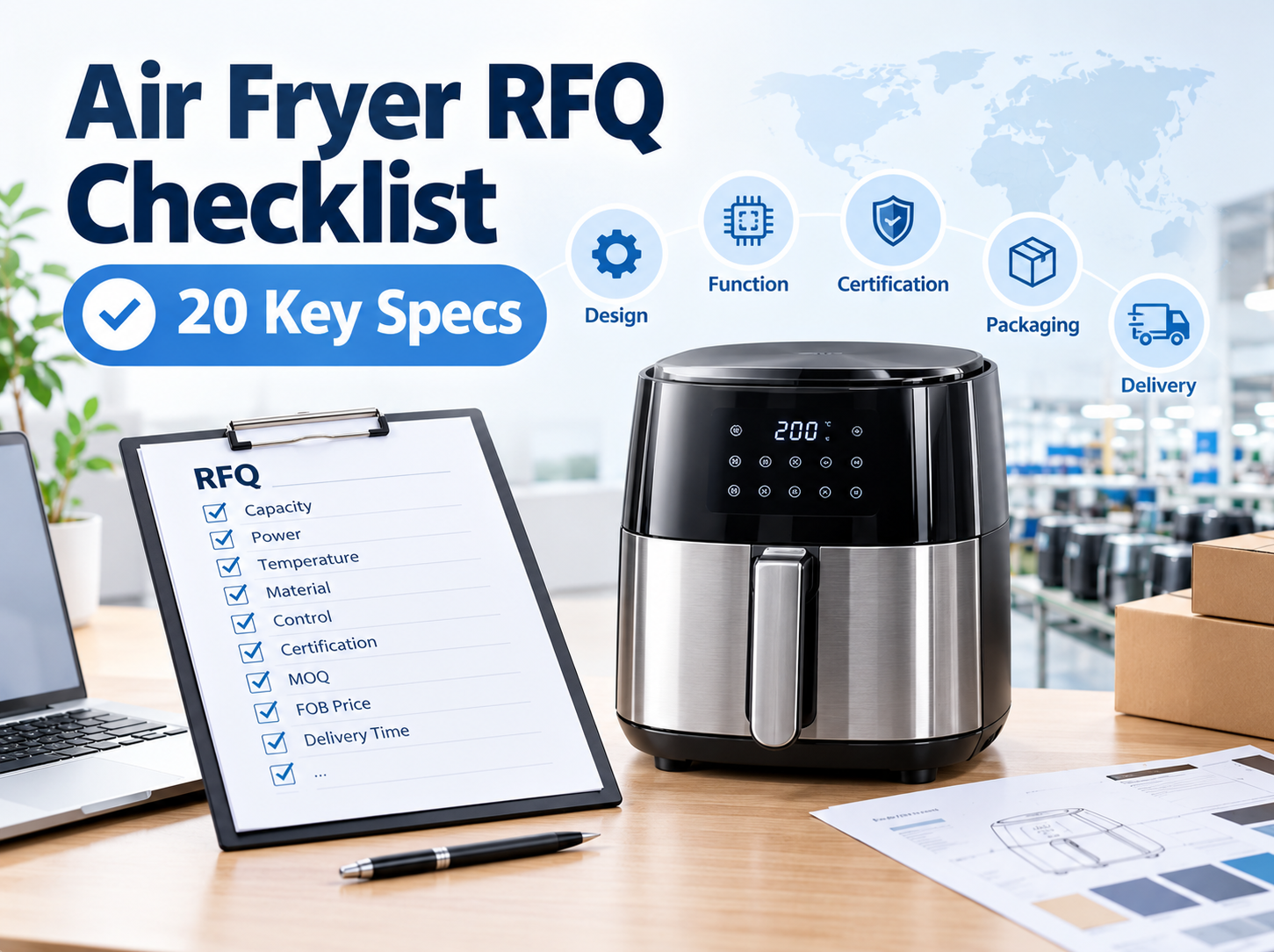
Before sending your RFQ, define as many of the following as possible:
l Capacity
l Single or dual basket
l Drawer configuration
l Rated power
l Voltage and frequency
l Temperature range
l Timer
l Heating system
l Motor and fan requirements
l Body material
l Basket material
l Control type
l Display
l Preset programs
l Accessories
l Packaging
l Certification
l Target market
l MOQ
l Estimated order quantity
l Delivery requirements
A detailed RFQ allows different suppliers to quote the same product requirement.
This makes supplier comparison much more meaningful.
For a complete checklist, see:
Air Fryer RFQ Checklist: 20 Specifications Buyers Should Include
6. Send the Same RFQ to Every Shortlisted Supplier
This is one of the most important steps.
If you send different information to different suppliers, the quotations will not be directly comparable.
For example:
Supplier A:
8L, metal body, 230°C, dual heating
Supplier B:
8L, plastic body, 200°C, single heating
Supplier C:
8L, metal body, 230°C, single heating
Then you cannot simply compare:
A = $38
B = $29
C = $34
These are different products.
A professional sourcing process should try to create an apples-to-apples comparison.
Send the same:
l Product specification
l Quantity
l Target market
l Packaging requirements
l Certification requirements
l Delivery requirements
l Branding requirements
to each shortlisted supplier.
Then compare the responses.
7. Don't Compare Air Fryer Suppliers by FOB Price Alone
This is where many sourcing projects go wrong.
Suppose you receive:
l Supplier A: USD 31
l Supplier B: USD 34
l Supplier C: USD 37
l Supplier D: USD 39
It is tempting to select Supplier A.
But before doing that, check:
Product
l Same capacity?
l Same heating system?
l Same material?
l Same control system?
l Same accessories?
Quality
l Same quality standard?
l Same component specifications?
l Same testing requirements?
Certification
l Does the documentation cover the actual model?
l Does it cover your target market?
l Does it cover the correct configuration?
Commercial Terms
l Same Incoterm?
l Same MOQ?
l Same packaging?
l Same payment terms?
Service
l Same warranty?
l Same spare-parts support?
l Same sample service?
This is why a USD 34 supplier can sometimes represent better value than a USD 31 supplier.
FUNLOIV's quotation-comparison guide explains this approach in detail:
How to Compare Quotations from Different Air Fryer Suppliers
8. How Many Suppliers Should Receive Samples?
Once you have compared the RFQs, you should reduce the list again.
For many projects, 2–4 suppliers are enough for sample evaluation.
Why not test samples from 8 suppliers?
Because sample testing takes time and resources.
You may need to evaluate:
l Temperature accuracy
l Heating performance
l Cooking consistency
l Airflow
l Motor noise
l Fan performance
l Basket quality
l Handle strength
l Material quality
l Surface temperature
l Controls
l Timer
l Electrical safety
l Packaging
A serious sample evaluation is much more than checking whether the air fryer can cook French fries.
FUNLOIV's sample-testing guide covers a practical evaluation process:
How Can I Test an Air Fryer Sample Before Placing a Bulk Order?
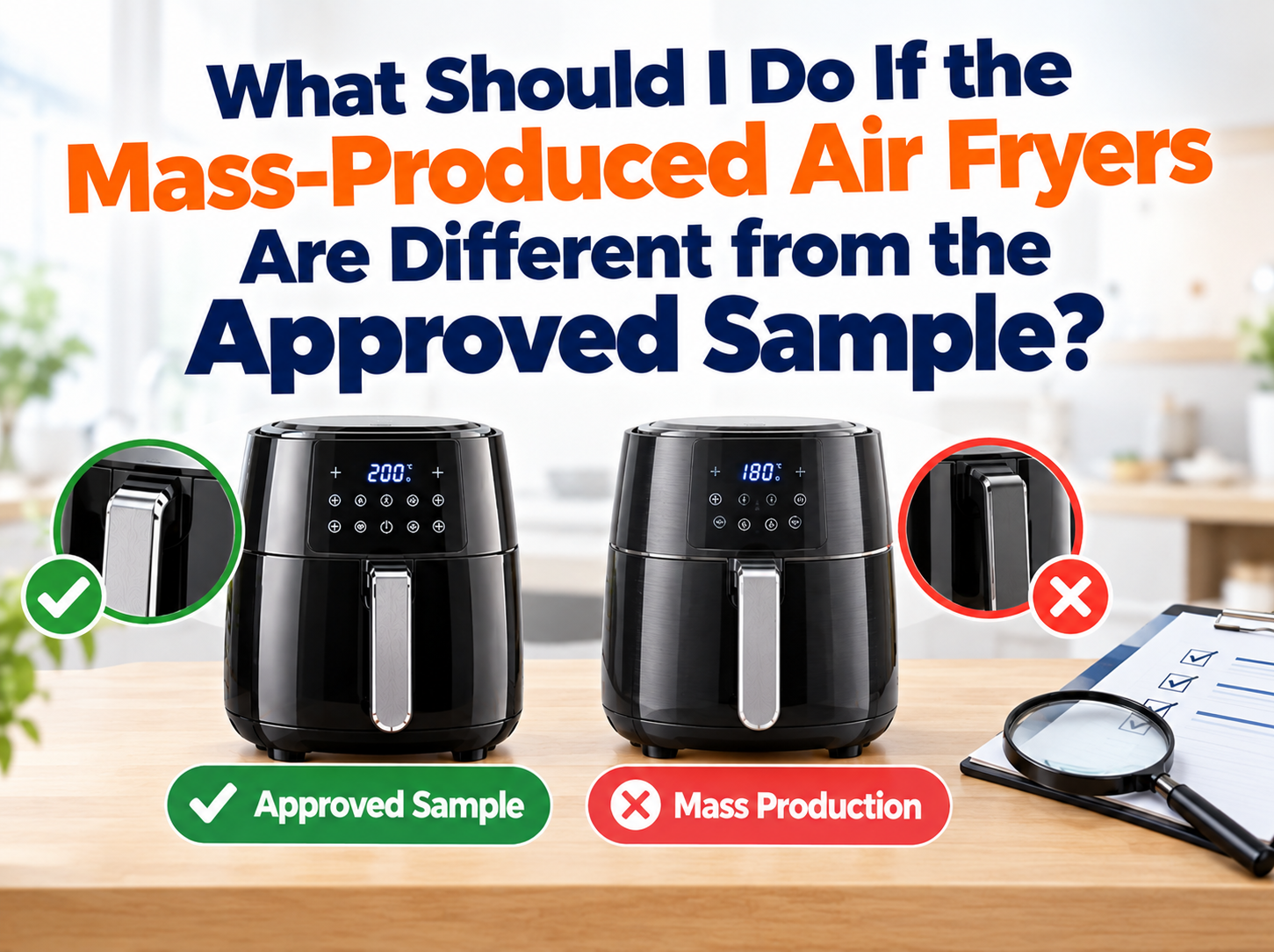
9. One Sample Does Not Always Prove Mass-Production Capability
This is particularly important for new suppliers.
A supplier may send you an excellent sample.
But your real question should be:
Can the supplier reproduce the same product consistently in mass production?
For higher-risk projects, you can consider a staged sample process:
Sample 1 — Engineering Evaluation
Check the product concept, functions and performance.
Sample 2 — Revised Sample
Confirm whether identified problems have been corrected.
Sample 3 — Pre-Production / Golden Sample
Confirm the final version before mass production.
For larger projects, buyers can also consider production-line samples or additional verification.
This is why the supplier's engineering and production-control capability can be more important than the appearance of the first sample.
10. Quality Control Should Be Part of Supplier Selection
Another mistake is evaluating quality only after receiving a sample.
Quality should also be evaluated by asking:
How does this supplier control quality during production?
A professional air fryer supplier should be able to explain a quality-control process such as:
Incoming QC
↓
Production QC
↓
Assembly QC
↓
Functional Testing
↓
Aging Testing
↓
Finished Product QC
↓
Pre-Shipment Inspection
For example, buyers should ask:
l How are heating elements inspected?
l How are motors and fans tested?
l How is temperature accuracy checked?
l Is electrical testing performed during production?
l Is aging testing performed?
l How are plastic and metal components inspected?
l How is the approved sample controlled during mass production?
l Is pre-shipment inspection available?
For a deeper explanation:
What Quality-Control Standards Should I Require from an Air Fryer Supplier?
11. Your Final Shortlist Should Usually Be 1 Primary Supplier + 1 Backup
After RFQ comparison and sample testing, you should normally be able to identify a preferred supplier.
However, for an important air fryer project, maintaining a qualified backup supplier can be useful.
For example:
Primary Supplier
Strongest overall combination of:
l Product
l Quality
l Price
l Certification
l Production capability
l Lead time
l Communication
l After-sales support
Backup Supplier
A supplier that has:
l Passed key product tests
l Acceptable commercial terms
l Sufficient production capability
l Potential to take over or support future orders
The purpose is not to continuously ask both suppliers for lower prices.
The purpose is to reduce supply-chain risk.
12. How Many Suppliers Should You Contact Based on Your Project?
The ideal number also depends on the type of air fryer project.
Project Type | Initial Suppliers | RFQ Shortlist | Sample Suppliers |
Ready-to-ship model | 5–10 | 3–5 | 1–2 |
Private label | 10–15 | 5–8 | 2–3 |
OEM project | 10–20 | 5–8 | 2–4 |
ODM/new product | 8–15 | 3–6 | 2–4 |
Large-volume retail project | 15–20+ | 5–8 | 2–4 |
These are practical sourcing ranges, not fixed industry standards.
A simple standard product may require only a few suppliers.
A customized ODM project may require a broader initial search because the supplier needs to demonstrate engineering, tooling, testing and production capabilities.
13. What Should You Look for When Screening Alibaba Air Fryer Suppliers?
When you create your initial shortlist, don't look only at the product photograph.
Consider at least these areas:
1. Product Experience
Does the supplier specialize in air fryers or simply list many unrelated appliances?
2. Product Range
Can they offer different capacities, basket configurations and product architectures?
3. Engineering Capability
Can they explain heating, airflow, motor, temperature control and product structure?
4. OEM/ODM Capability
Can they support:
l Logo
l Color
l Packaging
l Product modifications
l New tooling
l New product development?
5. Certification
Can they provide documentation relevant to your target market?
6. Quality Control
Can they explain how quality is controlled from incoming materials to shipment?
7. Sample Process
Can they provide samples and support revisions?
8. Mass Production
Can they reproduce the approved sample consistently?
9. Communication
Do they understand your questions and provide useful answers?
10. Commercial Terms
Compare:
l MOQ
l FOB price
l Sample cost
l Lead time
l Payment terms
l Packaging
l Warranty
l Spare parts
This type of evaluation is much more useful than simply asking:
“Who has the lowest price?”
14. Use Alibaba for Supplier Discovery — But Don't Let the Platform Make the Decision
Alibaba can be a useful starting point for B2B sourcing.
Its buyer guidance recommends using tools such as RFQs, seller profiles, supplier badges and direct communication when evaluating sellers. Alibaba also distinguishes between Gold Suppliers, Verified Suppliers and Trade Assurance Suppliers based on different verification or transaction arrangements.
However, these platform indicators should be treated as one part of supplier evaluation, not as a substitute for your own due diligence.
For an air fryer buyer, you still need to determine:
l Can this supplier produce the exact product I need?
l Can the supplier meet my target market requirements?
l Can the supplier maintain the quality during mass production?
l Can the supplier support my expected order volume?
l Can the supplier provide the technical and commercial information I need?
That is the real supplier-selection question.
15. A Better Way to Use Alibaba When Sourcing Air Fryers
Instead of:
Search → Contact 30 suppliers → Collect prices → Choose cheapest
consider:
Define Product Requirements
↓
Search Alibaba
↓
Build 20–30 Potential Suppliers
↓
Initial Screening: 8–12
↓
Evaluate Product + Technical + Commercial Capability
↓
Send Standardized RFQ to 5–8 Suppliers
↓
Compare Quotations
↓
Select 2–4 Suppliers for Samples
↓
Test Samples
↓
Evaluate QC + Mass Production Capability
↓
Select 1 Primary + 1 Backup Supplier
↓
Place Bulk Order
This process creates a much more controlled sourcing decision.
16. What Information Should You Send When Contacting an Air Fryer Supplier?
If you want useful responses from suppliers, don't send only:
“Please send me your best air fryer price.”
Instead, provide:
Product
l Capacity
l Basket configuration
l Power
l Voltage
l Temperature
l Timer
l Heating system
l Main functions
Product Positioning
l Entry-level
l Mid-range
l Premium
Market
l Country
l Sales channel
l Target consumer
l Required compliance
Commercial
l Estimated order quantity
l Target MOQ
l Target launch date
l Packaging requirements
Branding
l Logo
l Color
l Packaging
l Product appearance
l Reference model
The more clearly you define the project, the more meaningful the supplier's quotation can be.
17. What Should a Good Air Fryer Supplier Do After Receiving Your Inquiry?
This is an important point that buyers sometimes overlook.
A good supplier should not simply respond:
“Yes, we can do it. USD XX.”
For a serious B2B project, you should expect the supplier to clarify relevant points.
For example:
l What is your target market?
l What voltage do you require?
l What quantity are you planning?
l Do you need private labeling?
l Do you have a reference product?
l What certification do you require?
l Is your product requirement based on an existing model or a new development?
l What is your target delivery date?
These questions help the supplier determine whether the proposed product is actually suitable for your project.
The quality of the supplier's questions can be an important indicator of its sourcing and development capability.
18. Why the “Cheapest Supplier” Is Often the Wrong Target
For an air fryer importer, the purchase price is only one part of the business equation.
A more realistic calculation is:
Product Cost
Packaging
Shipping
Certification / Testing
Quality Costs
Defect / Return Risk
After-Sales Costs
Inventory Risk
=
Total Sourcing Cost
A supplier offering the lowest FOB price may not necessarily produce the lowest total business cost.
For example, a slightly higher-priced air fryer with better materials, more reliable components and stronger quality control may create fewer returns and complaints.
For a brand owner, that difference can be commercially significant.
19. What If You Already Have Several Alibaba Quotations?
If you have already contacted several suppliers, you do not necessarily need to start again.
You can organize the existing quotations into a comparison table.
Compare:
Evaluation Area | Supplier A | Supplier B | Supplier C |
Product Specification | |||
Capacity | |||
Heating System | |||
Body Material | |||
Basket Material | |||
Temperature | |||
Certification | |||
MOQ | |||
FOB Price | |||
Packaging | |||
Sample Lead Time | |||
Mass Production Lead Time | |||
QC System | |||
Warranty | |||
Spare Parts | |||
OEM/ODM Capability | |||
Communication | |||
Overall Assessment |
This makes it easier to identify which suppliers are genuinely competitive.
And remember:
A supplier comparison is only meaningful when the products being compared are actually equivalent.
20. The Goal Is Not to Find the Most Suppliers. It Is to Find the Right Supplier.
So, how many air fryer suppliers should you contact on Alibaba?
There is no single correct number.
But for many B2B projects, a practical approach is:
20–30
Potential suppliers identified.
8–12
Suppliers contacted for initial screening.
5–8
Qualified suppliers receive the same RFQ.
2–4
Suppliers proceed to sample evaluation.
1 + 1
One primary supplier and one qualified backup supplier.
The important point is not the exact number.
The important point is the process.
You want enough suppliers to create competition and benchmarks, but not so many that you end up comparing dozens of fundamentally different products and quotations.
How FUNLOIV Approaches Air Fryer Supplier Cooperation
At FUNLOIV, we believe a B2B air fryer project should not be evaluated only by:
“What is your lowest price?”
A more useful starting point is:
“What product are you trying to develop or source, for which market, and at what expected volume?”
Based on that information, the discussion can then move toward:
Product Specification → Product Selection → Sample → Testing → Quotation → Quality Control → Mass Production
For OEM and ODM projects, this process becomes even more important because the supplier needs to understand not only the product itself, but also the buyer's market positioning and commercial requirements.
Our existing air fryer sourcing guides cover different stages of this process, including:
l How to Choose an OEM/ODM Air Fryer Supplier in China: 10 Things Brands Should Check — supplier capability, R&D, OEM/ODM, certification, samples and production.
l Air Fryer RFQ Checklist: 20 Specifications Buyers Should Include — how to prepare a clear and comparable air fryer RFQ.
l How to Compare Quotations from Different Air Fryer Suppliers — how to compare specification, price, MOQ, certification, quality and total sourcing value.
l How Can I Test an Air Fryer Sample Before Placing a Bulk Order? — practical sample testing before bulk production.
l What Quality-Control Standards Should I Require from an Air Fryer Supplier? — how buyers can evaluate supplier QC systems.
Looking for an Air Fryer Supplier for Your Next Bulk Order?
If you are currently searching Alibaba for air fryer suppliers, you do not need to contact dozens of companies simply to find out which quotation is competitive.
A more efficient approach is to define your requirements first and compare suppliers on the same basis.
If you already have:
l An Alibaba air fryer product link
l A reference model
l Product photos
l Your required specifications
l An existing supplier quotation
l Your target market
l Estimated order quantity
you can send these details to FUNLOIV.
We can review your requirements and discuss:
l Product configuration
l OEM/ODM options
l Product specifications
l Target market
l MOQ
l Sample development
l Certification requirements
l Quality control
l Lead time
l Bulk-order quotation
Request an Air Fryer Quotation
Send us your product reference, target market and estimated quantity, and let's discuss the right air fryer solution for your business.
Related Articles
l Air Fryer Heating Element: Halogen vs. Stainless Steel Heating Tube.
l Why Does Airflow Matter in an Air Fryer?
l What Is the Difference Between AC and BLDC Motors in Air Fryers?
l What Makes an Air Fryer Cook More Evenly?
l How Can I Test an Air Fryer Sample Before Placing a Bulk Order?
l What Quality-Control Standards Should I Require from an Air Fryer Supplier?
l What Air Fryer Tests Should Be Included in a Pre-Shipment Inspection?
l What Factors Affect the FOB Price of an Air Fryer?
l How to Compare Quotations from Different Air Fryer Suppliers?
l 230°C Air Fryer: What Buyers Should Check Before Importing?
l A Dual Heating vs Single Heating Air Fryer- Which Is Better?
l What Is the Difference Between AC and DC Motors in Air Fryers?
l Air Fryer for the Middle East - A Guide to G-Mark, Specifications and Compliance?
l What Are the Most Common Quality Problems with Air Fryers?
l Air Fryer RFQ Checklist: 20 Specifications Buyers Should Include.
l How To Verify Whether an Air Fryer Supplier Is Reliable?
l How to Choose an OEM-ODM Air Fryer Supplier in China?
l 200°C vs 230°C Air Fryer: Which one is better?
l Metal-body vs plastic-body air fryer: which is better for a premium brand?
l Top Heating vs. Rear Heating Air Fryers: Which one is better for a B2B buyer?
l Is a Vertical Dual-Drawer Air Fryer Better for Saving Kitchen Space?
l Air Fryer Certifications & Compliance by Market- A Safety Guide for Importers.
l Vertical vs. Horizontal Dual-Basket Air Fryer- Which Is Better for Retail?
l What Air Fryer Capacity Is Best for the European Market?
l What Are the Common Warranty and After-Sales Problems with Air Fryers?
l What MOQ, Lead Time and Payment Terms Should I Expect from an Air Fryer Supplier?
l How Can I Prevent Plastic Melting or Deformation in an Air Fryer?
l What Air Fryer Safety Tests Should Be Completed Before Mass Production?
l What Is the Difference Between a Single-Basket and Dual-Basket Air Fryer?
l How Do Different Air Fryer Designs Affect Cooking Performance and Cleaning?
l How Much Does an OEM Air Fryer Cost from China?
l What Are the Most Important Features to Consider When Sourcing an Air Fryer?
l What MOQ Do Chinese Air Fryer Suppliers Usually Require?
l How Can I Import Air Fryers from China?
l Can an Air Fryer Supplier in China Help Design New Products?
l How Can Air Fryer Suppliers in China Support Small Businesses?
l Can Air Fryer Suppliers Produce Products Compatible with the Voltage in My Country?
l Do Air Fryer Suppliers in China Provide Replacement Parts for After-Sales Service?
l How Can I Find Competitive Prices from Air Fryer Suppliers?
l How to Reduce Business Risk When Working with Air Fryer Suppliers in China?
l What Happens If the Air Fryer Supplier Cannot Meet the Agreed Delivery Date?

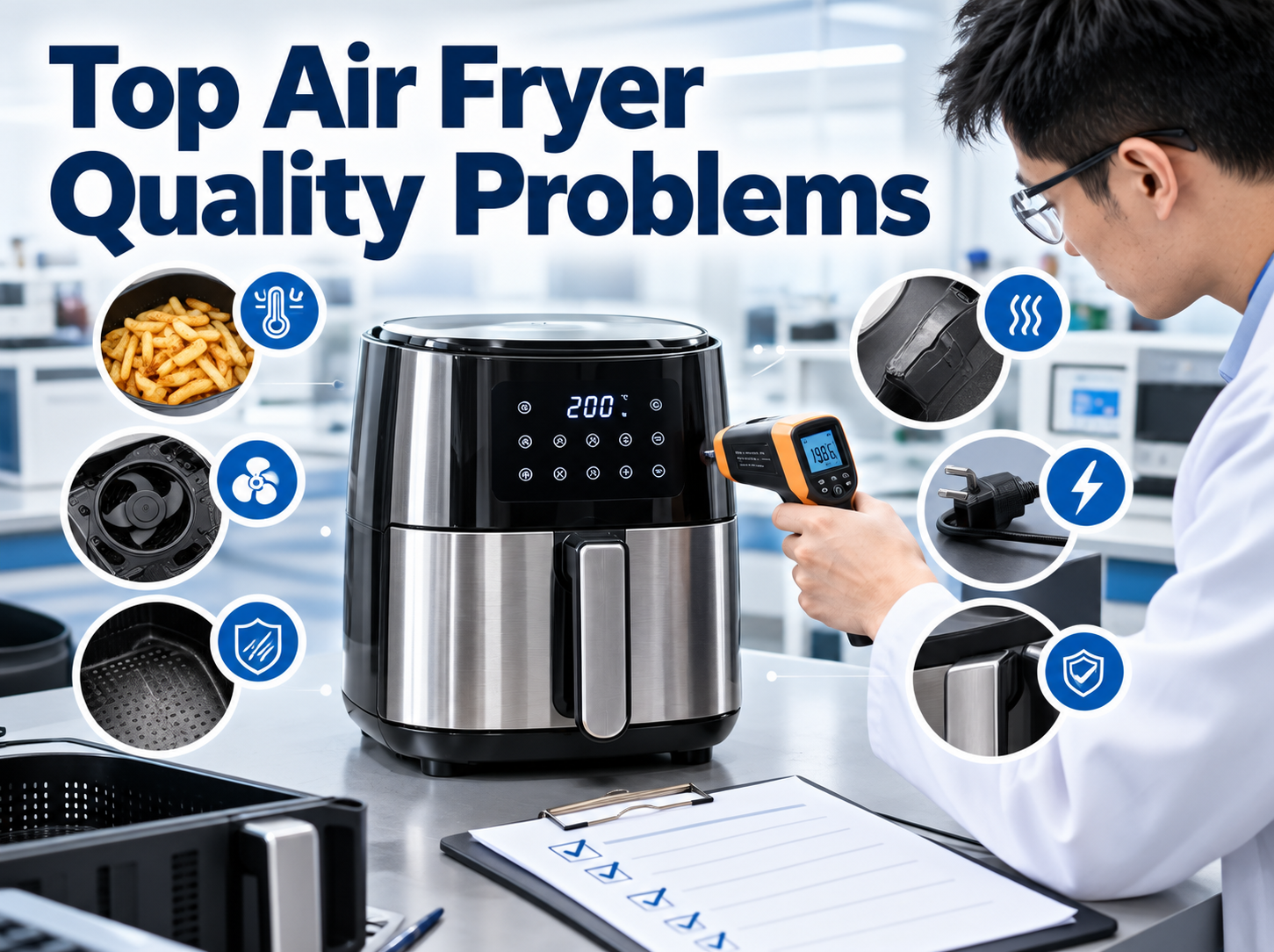
What Are the Most Common Quality Problems with Air Fryers?
Can An Air Fryer Replace A Toaster Oven?
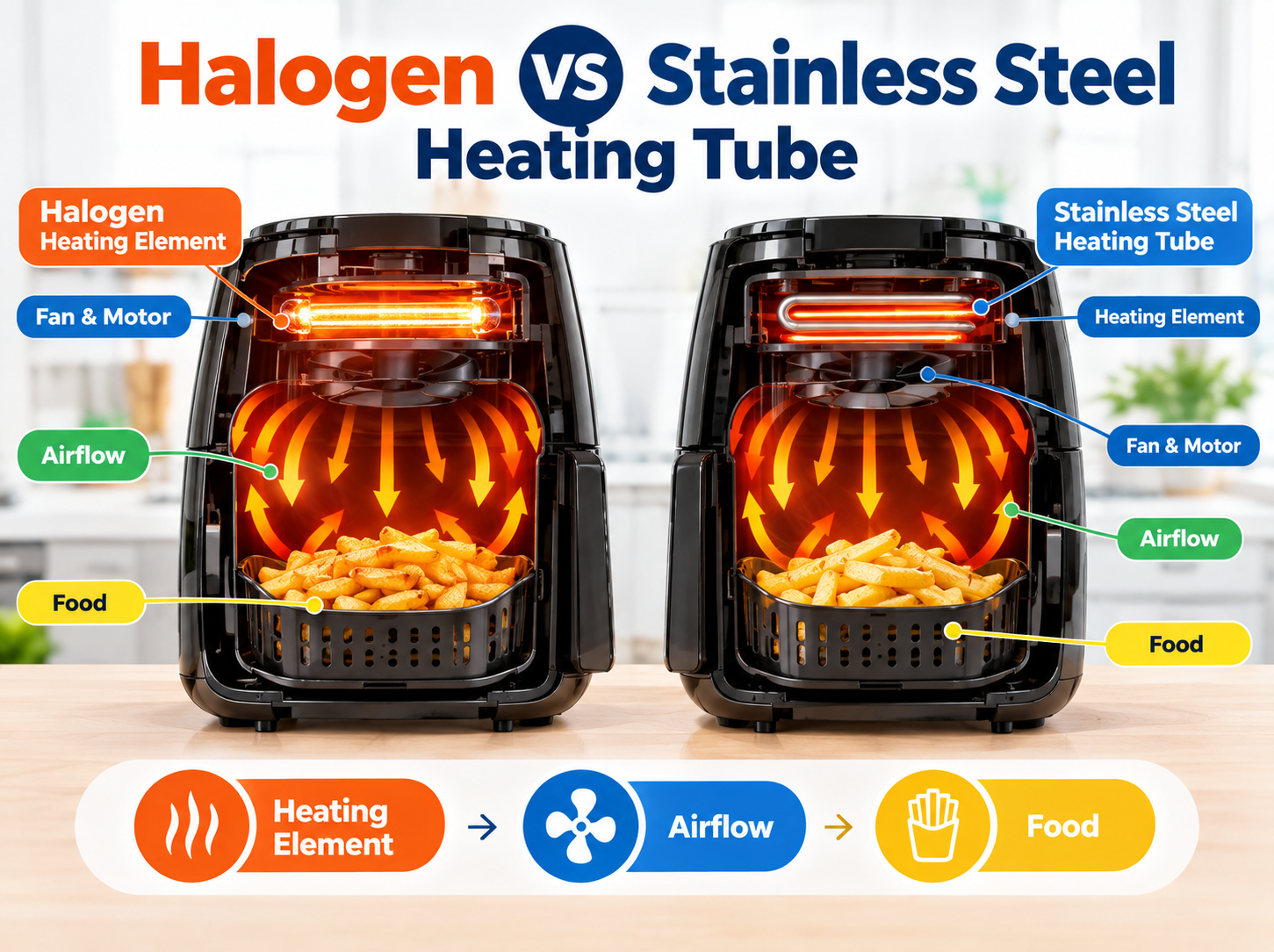
Air Fryer Heating Element: Halogen vs Stainless Steel Tube
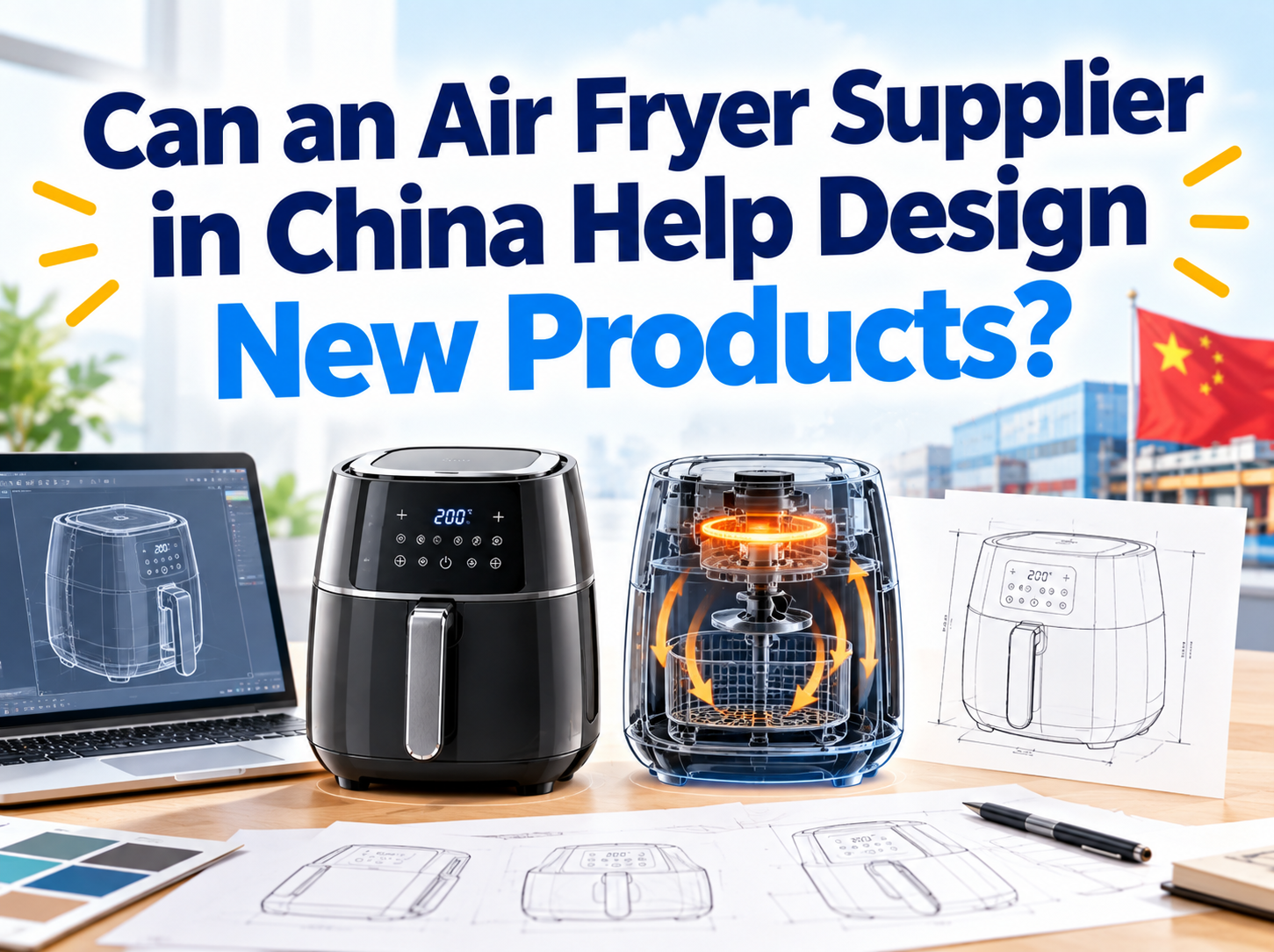
Can an Air Fryer Supplier in China Help Design New Products?
What Should I Do If the Mass-Produced Air Fryers Are Different from the Approved Sample?
Air Fryer RFQ Checklist: 20 Specifications Buyers Should Include
 + 86 181 3826 8709
 info@funloiv.com
 6/F., Guanglong Building, Pingxin North Road, Longgang, Shenzhen City, Guangdong, China


@ 2009-2026 Shenzhen Funloiv Electric Appliance Co., LtdAll rights reserved


