 Notice:

 search
search
search
Oct 12, 2026


If you are an air fryer importer, brand owner, wholesaler, retailer or supermarket buyer, Alibaba can give you access to a large number of potential Chinese suppliers.
But after searching for:
air fryer supplier
you may quickly find that suppliers are not all the same.
Some present themselves as manufacturers. Others offer OEM or ODM services. Some are trading companies, sourcing companies or distributors. Others focus mainly on ready-to-ship or private-label products.
Alibaba's current buyer guidance states that its platform includes manufacturers, wholesalers and distributors, and recommends that buyers assess suppliers through company profiles, supplier badges, direct communication and further due diligence.
So the important question is not simply:
“What types of air fryer suppliers can I find on Alibaba?”
A more useful B2B question is:
“Which type of air fryer supplier is right for my business?”
The answer depends on whether you need a standard air fryer, private-label product, OEM customization, ODM development or a long-term product-development partner.
1. Air Fryer Manufacturers and Factories
The first type of supplier you may encounter is a manufacturer or factory.
A manufacturer generally has direct involvement in production and may have capabilities such as:
l R&D
l Engineering
l Tooling
l Production lines
l Assembly
l Quality control
l Testing
l Packaging
l Export
For air fryers, manufacturing capability can involve much more than simply assembling the final product.
An air fryer requires coordination between:
l Heating system
l Motor and fan
l Airflow
l Temperature control
l Thermal protection
l Cooking chamber
l Electrical components
l Mechanical structure
l Materials
l Food-contact components
l Product safety
Therefore, when evaluating an Alibaba air fryer manufacturer, don't ask only:
“Do you have a factory?”
Also ask:
l How many air fryer models have you developed?
l Do you have an R&D team?
l Do you have engineering capability?
l Can you develop new structures?
l Can you manage tooling?
l How do you test samples?
l How do you control mass production?
l Which certifications can you support?
l What after-sales support do you provide?
For a deeper supplier evaluation framework, see:
How to Choose an OEM/ODM Air Fryer Supplier in China: 10 Things Brands Should Check
The key point is:
A factory is only valuable to a buyer if it has the capabilities needed for the buyer's specific project.
2. OEM Air Fryer Suppliers
The second category is an OEM air fryer supplier.
OEM generally means that the supplier manufactures a product according to the buyer's specifications.
For example, a brand may specify:
l 8L capacity
l Digital control
l 230°C maximum temperature
l Metal housing
l Specific basket design
l Specific heating configuration
l Custom color
l Brand logo
l Retail packaging
l Target-market requirements
The supplier then manufactures the product according to the agreed specification.
OEM may be suitable when:
l You already have a clear product specification.
l You already have a product design.
l You have an existing reference model.
l Your brand controls the product requirements.
l You mainly need manufacturing support.
However, OEM does not necessarily mean:
“Put my logo on your existing product.”
Depending on the project, OEM development may involve:
Specification → Engineering → Tooling → Sample → Testing → Mass Production
This distinction is important when comparing Alibaba suppliers.
A supplier that can print your logo on an existing air fryer may not necessarily have the engineering capability to modify the product itself.
3. ODM Air Fryer Suppliers
An ODM air fryer supplier can be more involved in product development.
This may be particularly useful for brands that know their market requirements but do not have their own engineering team.
For example, a buyer might say:
“We need a premium air fryer for the European market, around 8L, with a differentiated appearance and a target retail price of €129.”
The buyer may not have a finished design.
An ODM supplier may help develop:
l Product architecture
l Industrial design
l Product appearance
l Functional configuration
l Heating system
l Airflow structure
l Mechanical design
l Tooling
l Prototype
l Sample development
l Testing
l Production preparation
ODM may be suitable when:
l You have a market concept but not a final product.
l You want supplier engineering support.
l You need product differentiation.
l You want to develop a new product structure.
l You are building a new air fryer range.
The difference can be summarized simply:
OEM: You provide more of the product definition; the supplier manufactures it.
ODM: You provide the market requirements and product direction; the supplier contributes more of the product-development work.
For brands developing a new air fryer, the difference between OEM and ODM can significantly affect development time, tooling, communication and supplier capability.
For more detail:
How to Choose an OEM/ODM Air Fryer Supplier in China: 10 Things Brands Should Check
4. Private-Label Air Fryer Suppliers
Another common supplier type is the private-label air fryer supplier.
This is usually a simpler model than developing a completely new air fryer.
The supplier may already have an existing product, while the buyer customizes:
l Brand logo
l Product color
l Packaging
l User manual
l Barcode
l Labels
l Accessories
For example:
Existing 6L digital air fryer + buyer's logo + customized retail box
This approach can be attractive for:
l New brands
l Online retailers
l Regional distributors
l Wholesalers
l Buyers testing a new market
l Buyers with limited product-development resources
Advantages
l Faster product launch
l Lower development cost
l Lower tooling requirements
l Existing production experience
l Easier sample approval
Limitations
l Less product differentiation
l Similar products may be available to other buyers
l Limited control over product architecture
l Potentially weaker long-term exclusivity
Therefore, private label can be a good starting point, but it is not the same as developing an exclusive ODM product.
5. Ready-to-Ship and Standard Air Fryer Suppliers
Some Alibaba suppliers focus on standard or ready-to-ship products.
Alibaba itself describes Ready to Ship products as finished products that can be available for relatively fast fulfillment compared with customized development.
This type of supplier can make sense if your priority is speed.
For example:
“I need 1,000 standard air fryers to test a new market.”
You may not need:
l New tooling
l New product architecture
l New PCB
l New housing
l New engineering development
Instead, you may need an existing model with:
l Logo
l Packaging
l Basic customization
Standard-product sourcing may be suitable when:
l Speed is important.
l You want to test market demand.
l Product differentiation is not the main priority.
l You have a limited initial quantity.
l You need an established product rather than a new design.
However, if you are building a long-term brand, standard products may not provide enough differentiation.
6. Trading Companies and Sourcing Companies
You may also encounter trading companies or sourcing companies on Alibaba.
This does not automatically mean that the supplier is unsuitable.
A trading company may provide useful services such as:
l Access to multiple factories
l Multiple product categories
l Supplier coordination
l Export experience
l Product consolidation
l Logistics coordination
l Communication support
For a buyer sourcing several small-appliance categories, this type of supplier may sometimes be convenient.
However, if you are developing a technically demanding air fryer, you should ask:
Who actually develops and manufactures the air fryer?
You may also want to clarify:
l Who controls the BOM?
l Who controls production?
l Who performs QC?
l Who manages tooling?
l Who is responsible for certification?
l Who handles engineering changes?
l Who provides spare parts?
l Who is responsible for warranty claims?
Alibaba itself specifically addresses the question of whether buyers should work with a manufacturer or trading company, which shows that this is a normal supplier-selection issue rather than something buyers should assume from a profile alone.
The right conclusion is not:
Manufacturer = good
Trading company = bad
Instead:
Choose the business model that gives you the level of product control, technical support and supply-chain management your project requires.
7. Suppliers Offering Multiple Appliance Categories
Some Alibaba suppliers offer many categories, such as:
l Air fryers
l Electric kettles
l Toasters
l Coffee machines
l Blenders
l Rice cookers
l Hot water dispensers
l Other kitchen appliances
This can be attractive if you are a wholesaler, supermarket or distributor looking for several product categories from one supplier.
However, there is an important question:
Is the supplier a specialist in air fryers, or is air fryer simply one product among hundreds?
For a simple sourcing project, category breadth may be useful.
For a complex air fryer OEM/ODM project, specialized product knowledge may be more important.
For example, you may want a supplier that can discuss:
l Heating architecture
l Airflow
l Basket design
l Temperature control
l Motor selection
l Thermal protection
l Materials
l Cooking performance
l Product testing
rather than simply showing you a catalog.
8. What Do Alibaba Supplier Badges Actually Tell You?
When evaluating suppliers on Alibaba, you may see different supplier badges.
Alibaba currently describes several important categories:
Gold Supplier
Alibaba states that a Gold Supplier is a business whose legal registration has been verified by a third-party institution.
Verified Supplier
Alibaba describes a Verified Supplier as a Gold Supplier whose company profile, management, production capabilities, products and processes have been assessed, certified and/or inspected by third-party institutions.
Trade Assurance Supplier
Alibaba describes this as a Gold Supplier that accepts payment through Alibaba.com, enabling applicable order and payment protection.
These badges can provide useful information when shortlisting suppliers.
But there is an important limitation:
A supplier badge should not be treated as proof that the supplier is the best air fryer partner for your project.
You still need to evaluate:
l Air fryer experience
l Product development
l Engineering capability
l Product specifications
l Samples
l Certification
l QC
l Production
l MOQ
l Lead time
l Warranty
l After-sales support
A verified company may be legitimate, but legitimacy and product suitability are not the same thing.
9. Which Type of Air Fryer Supplier Is Right for Your Business?
There is no single answer.
Your requirements should determine the supplier type.
Your Requirement | Supplier Type to Consider |
Need an existing air fryer quickly | Standard / Ready-to-Ship Supplier |
Need logo and packaging | Private-Label / OEM Supplier |
Have your own specifications | OEM Supplier |
Have a product design | OEM / Manufacturing Supplier |
Have a market concept but no finished design | ODM Supplier |
Need a new product structure | ODM / OEM Development Partner |
Need several appliance categories | Trading / Sourcing Company |
Need long-term air fryer development | Specialized Air Fryer OEM/ODM Supplier |
Need repeat bulk orders | Manufacturer / Long-Term OEM Partner |
Need strong technical support | Air Fryer Specialist / OEM/ODM Supplier |
The right choice therefore depends on:
Product Requirements + Market + Quantity + Customization + Development Capability + Long-Term Strategy
10. Supplier Type Is Only the First Step
This is perhaps the most important point for B2B buyers.
Knowing that a supplier is a:
Manufacturer
or:
OEM supplier
or:
ODM supplier
does not tell you how well that supplier can execute your project.
A better evaluation should cover several areas.
Air Fryer Experience
Ask:
l How many air fryer models have you developed?
l Which types of air fryers do you produce?
l Do you have single and dual-basket experience?
l Do you develop metal-body models?
l Do you develop different heating configurations?
Engineering Capability
Ask about:
l R&D
l Engineering
l Tooling
l Product structure
l Heating system
l Airflow
l Motor and fan
l PCB/control system
l Thermal protection
Sample Capability
Ask:
l How long does sample development take?
l Can the sample be modified?
l How are sample specifications documented?
l Can the approved sample become the production reference?
Quality Control
Ask how the supplier manages:
Incoming QC → Production QC → Assembly QC → Finished Product QC → Aging Testing → Pre-Shipment Inspection
This is the type of process a B2B buyer should understand before placing a large order.
For a detailed framework:
What Quality-Control Standards Should I Require from an Air Fryer Supplier?
11. Don't Evaluate an Air Fryer Supplier by Price Alone
This is especially important on Alibaba.
You may find:
l Supplier A: USD 29
l Supplier B: USD 34
l Supplier C: USD 39
It is tempting to select Supplier A.
But are they quoting exactly the same product?
You need to compare:
l Capacity
l Basket configuration
l Power
l Heating system
l Body material
l Basket material
l Control system
l Accessories
l Packaging
l Certification
l MOQ
l Incoterm
l Lead time
l Warranty
l QC requirements
For example, an 8L metal-body digital air fryer with dual heating should not automatically be compared with an 8L plastic air fryer with a different heating configuration.
Our quotation guide explains why professional buyers should compare:
Specification + Material + Quality + Certification + MOQ + Lead Time + Warranty + Commercial Terms + Total Cost
rather than simply comparing FOB prices.
See:
How to Compare Quotations from Different Air Fryer Suppliers?
12. What Should You Send an Air Fryer Supplier Before Requesting a Bulk Quote?
Once you know what type of supplier you need, the next step is to prepare a clear RFQ.
Instead of:
“Please send me your best price for an 8L air fryer.”
provide information such as:
Product
l Capacity
l Single or dual basket
l Rated power
l Voltage/frequency
l Temperature range
l Timer
l Heating configuration
l Motor/fan requirements
Materials
l Body material
l Basket material
l Tray material
l Coating requirements
Design
l Logo
l Color
l Control panel
l Product appearance
l Packaging
Market
l Target country
l Sales channel
l Required certification
l Target consumer
l Retail positioning
Commercial
l Initial order quantity
l Annual forecast
l Target delivery date
l Target FOB price, if available
Your RFQ can be much more detailed when the project requires it.
For a complete checklist:
Air Fryer RFQ Checklist: 20 Specifications Buyers Should Include
13. Don't Choose the Supplier Until You Test the Product
Supplier profiles and product pages can help you shortlist suppliers.
They cannot replace product testing.
Before placing a major bulk order, consider testing:
l Temperature accuracy
l Heating performance
l Cooking uniformity
l Timer accuracy
l Airflow
l Motor noise
l Basket durability
l Handle strength
l Surface temperature
l Materials
l Electrical safety
l Continuous operation
l Packaging
For example, if the supplier claims:
230°C maximum temperature
you should determine whether the sample can actually reach and control the claimed temperature under appropriate test conditions.
Our article explains why a sample that looks good does not necessarily guarantee consistent mass production.
See:
How Can I Test an Air Fryer Sample Before Placing a Bulk Order?
For buyers interested in higher-temperature models:
230°C Air Fryer: What Buyers Should Check Before Importing
14. Technical Capability Matters More When the Product Becomes More Complex
Consider two projects.
Project A
5L standard air fryer
Existing model
Logo + retail box
A standard OEM/private-label supplier may be sufficient.
Project B
11L vertical dual-drawer air fryer
Metal body
230°C
New appearance
Specific heating architecture
Customized packaging
European certification
10,000-unit annual forecast
This is no longer simply a product-purchasing project.
It requires stronger:
l Product development
l Engineering
l Tooling
l Thermal design
l Airflow understanding
l Sample testing
l QC
l Certification
l Production management
For example, basket configuration can affect cooking space, airflow architecture, footprint, BOM, cleaning and retail positioning.
See:
What Is the Difference Between a Single-Basket and Dual-Basket Air Fryer?
Similarly, the location of the heating system can affect product architecture and airflow.
Top Heating vs. Rear Heating Air Fryer: Which One Is Better for a B2B Buyer?
The point is not that one design is universally better.
The point is:
A technically capable supplier should be able to explain why a particular design is appropriate for your product requirements.
15. Certification Capability Should Match Your Target Market
Supplier type also matters when certification and compliance become more complicated.
An air fryer intended for:
l Germany
l UK
l USA
l Australia
l GCC markets
l Brazil
may have different compliance considerations.
For example, the buyer may need to consider:
l Electrical safety
l EMC
l Environmental requirements
l Food-contact materials
l Market-specific conformity
l Technical documentation
l Testing reports
l Production control
There is no single certificate that automatically makes an air fryer compliant in every market.
For a deeper guide:
Air Fryer Certifications & Compliance by Market: A Safety Guide for Importers
Therefore, when evaluating an Alibaba supplier, ask:
Can you support the certification and compliance requirements for my specific target market and product configuration?
16. What Makes a Good Air Fryer Supplier Different?
Ultimately, the supplier type is only the beginning.
For a serious B2B buyer, a stronger supplier should be able to connect:
Product Development
↓
Engineering
↓
Sample Development
↓
Testing
↓
Certification
↓
Quality Control
↓
Mass Production
↓
Packaging
↓
Export
↓
After-Sales Support
This is especially important when your air fryer order is not a one-time purchase.
If you are building a brand or distribution business, you may need:
l New models every year
l Product modifications
l New colors
l New capacities
l New basket configurations
l Market-specific versions
l Replacement parts
l Repeat production
l Technical support
In that situation, your supplier becomes more than a product vendor.
It becomes a long-term product and supply-chain partner.
From Alibaba Supplier Search to a Bulk Air Fryer Order
A practical B2B sourcing process can look like this:
Step 1 — Define Your Business Requirement
Determine:
l Target market
l Product positioning
l Capacity
l Quantity
l Sales channel
l Target retail price
Step 2 — Identify the Right Supplier Type
Decide whether you need:
l Standard supplier
l Private-label supplier
l OEM supplier
l ODM supplier
l Manufacturer
l Long-term development partner
Step 3 — Shortlist Suppliers
Evaluate:
l Air fryer experience
l Technical capability
l Product range
l QC
l Certification
l Communication
Step 4 — Send a Standardized RFQ
Give suppliers the same product requirements.
Step 5 — Compare Quotations
Compare equivalent specifications, not simply FOB prices.
Step 6 — Request Samples
Test actual products.
Step 7 — Confirm Certification and QC
Make sure the supplier can support your target market.
Step 8 — Approve the Final Specification
Confirm:
l Product
l BOM
l Packaging
l Certification
l Golden sample
l Commercial terms
Step 9 — Place the Bulk Order
Start controlled mass production.
Step 10 — Build a Long-Term Relationship
Use the supplier for:
l Repeat orders
l New models
l OEM
l ODM
l Product upgrades
l Market expansion
Why FUNLOIV Can Be More Than a Standard Air Fryer Supplier
For an importer, brand owner, wholesaler or supermarket buyer, the goal is not simply to find an air fryer at the lowest Alibaba price.
The more important question is:
Can the supplier understand my market, develop the right product, manufacture it consistently and support my business after the order?
This is the approach FUNLOIV takes with air fryer projects.
FUNLOIV's published OEM/ODM capability covers product development, engineering, tooling, sample development, testing, mass production, QC, packaging and export coordination.
For B2B buyers, this can include:
l Existing air fryer models
l Private-label products
l OEM customization
l ODM development
l Metal-body air fryers
l Single-basket designs
l Dual-basket designs
l Vertical air fryer designs
l Different heating configurations
l Product appearance development
l Packaging customization
l Market-specific certification support
l Sample development
l Mass production
The objective is not simply to supply an air fryer.
It is to help convert:
Market Requirement → Product Specification → Sample → Approved Product → Repeatable Mass Production
Frequently Asked Questions
Ø What types of air fryer suppliers can I find on Alibaba?
You can find manufacturers, OEM suppliers, ODM suppliers, private-label suppliers, trading companies, sourcing companies, distributors and suppliers offering standard or ready-to-ship products.
Ø What is the difference between an air fryer manufacturer and a trading company?
A manufacturer generally has direct production capability, while a trading company may source products from one or more factories. However, the distinction should be verified rather than assumed from an Alibaba profile.
Ø What is the difference between OEM and ODM air fryer suppliers?
OEM generally means manufacturing according to the buyer's specifications. ODM involves greater supplier participation in product development, engineering and design.
Ø Should I choose a manufacturer instead of a trading company?
Not automatically. The right choice depends on your product requirements, technical needs, number of categories, order volume and desired level of supplier control.
Ø Is a private-label air fryer the same as an OEM air fryer?
Private label usually involves branding an existing product with customization such as logo and packaging. OEM can involve broader customization according to the buyer's specifications.
Ø Should I choose an Alibaba Verified Supplier?
Verified Supplier status can be useful during supplier screening because Alibaba says the supplier's company profile, management, production capabilities, products and processes have undergone third-party assessment, certification and/or inspection.
However, it should not be your only selection criterion.
Ø Which type of supplier is best for bulk air fryer orders?
There is no universal answer. For standard products, a ready-to-ship or private-label supplier may be sufficient. For customized or long-term projects, an experienced OEM/ODM supplier with strong engineering, QC and production capabilities may be more appropriate.
Ø What should I do before placing a large air fryer order?
Define your specifications, shortlist suppliers, compare quotations, request samples, test the samples, verify certification and QC capability, approve the final specification and then proceed with controlled mass production.
Final Takeaway
Alibaba gives B2B buyers access to many types of air fryer suppliers—but the supplier category alone does not determine whether a supplier is right for your business.
You may find:
l Manufacturers
l OEM Suppliers
l ODM Suppliers
l Private-Label Suppliers
l Trading Companies
l Sourcing Companies
l Standard / Ready-to-Ship Suppliers
The right choice depends on your:
Product + Market + Quantity + Customization + Technical Requirements + Long-Term Strategy
For a simple standard product, a ready-to-ship or private-label supplier may be enough.
For a customized product, OEM may be more appropriate.
For a differentiated product or new air fryer range, ODM capability may become more important.
And for a long-term brand or retail program, you should look beyond the Alibaba profile and evaluate the supplier's product experience, engineering, sample development, certification, QC, mass-production and after-sales capabilities.
Looking for an Air Fryer Supplier in China?
If you are sourcing air fryers for import, private label, wholesale, retail or supermarket distribution, send FUNLOIV:
l Target capacity
l Product design or reference model
l Target market
l Required functions
l Estimated order quantity
l Target retail positioning
We can then discuss the most suitable product configuration, OEM/ODM options, sample development, certification requirements, MOQ, quotation and mass-production plan.
Send us your air fryer requirements and let us discuss your next bulk-order project.
Related Articles
l Air Fryer Heating Element: Halogen vs. Stainless Steel Heating Tube.
l Why Does Airflow Matter in an Air Fryer?
l What Is the Difference Between AC and BLDC Motors in Air Fryers?
l What Makes an Air Fryer Cook More Evenly?
l How Can I Test an Air Fryer Sample Before Placing a Bulk Order?
l What Quality-Control Standards Should I Require from an Air Fryer Supplier?
l What Air Fryer Tests Should Be Included in a Pre-Shipment Inspection?
l What Factors Affect the FOB Price of an Air Fryer?
l How to Compare Quotations from Different Air Fryer Suppliers?
l 230°C Air Fryer: What Buyers Should Check Before Importing?
l A Dual Heating vs Single Heating Air Fryer- Which Is Better?
l What Is the Difference Between AC and DC Motors in Air Fryers?
l Air Fryer for the Middle East - A Guide to G-Mark, Specifications and Compliance?
l What Are the Most Common Quality Problems with Air Fryers?
l Air Fryer RFQ Checklist: 20 Specifications Buyers Should Include.
l How To Verify Whether an Air Fryer Supplier Is Reliable?
l How to Choose an OEM-ODM Air Fryer Supplier in China?
l 200°C vs 230°C Air Fryer: Which one is better?
l Metal-body vs plastic-body air fryer: which is better for a premium brand?
l Top Heating vs. Rear Heating Air Fryers: Which one is better for a B2B buyer?
l Is a Vertical Dual-Drawer Air Fryer Better for Saving Kitchen Space?
l Air Fryer Certifications & Compliance by Market- A Safety Guide for Importers.
l Vertical vs. Horizontal Dual-Basket Air Fryer- Which Is Better for Retail?
l What Air Fryer Capacity Is Best for the European Market?
l What Are the Common Warranty and After-Sales Problems with Air Fryers?
l What MOQ, Lead Time and Payment Terms Should I Expect from an Air Fryer Supplier?
l How Can I Prevent Plastic Melting or Deformation in an Air Fryer?
l What Air Fryer Safety Tests Should Be Completed Before Mass Production?
l What Is the Difference Between a Single-Basket and Dual-Basket Air Fryer?
l How Do Different Air Fryer Designs Affect Cooking Performance and Cleaning?
l How Much Does an OEM Air Fryer Cost from China?
l What Are the Most Important Features to Consider When Sourcing an Air Fryer?
l What MOQ Do Chinese Air Fryer Suppliers Usually Require?
l How Can I Import Air Fryers from China?
l Can an Air Fryer Supplier in China Help Design New Products?
l How Can Air Fryer Suppliers in China Support Small Businesses?
l Can Air Fryer Suppliers Produce Products Compatible with the Voltage in My Country?
l Do Air Fryer Suppliers in China Provide Replacement Parts for After-Sales Service?
l How Can I Find Competitive Prices from Air Fryer Suppliers?
l How to Reduce Business Risk When Working with Air Fryer Suppliers in China?
l What Happens If the Air Fryer Supplier Cannot Meet the Agreed Delivery Date?

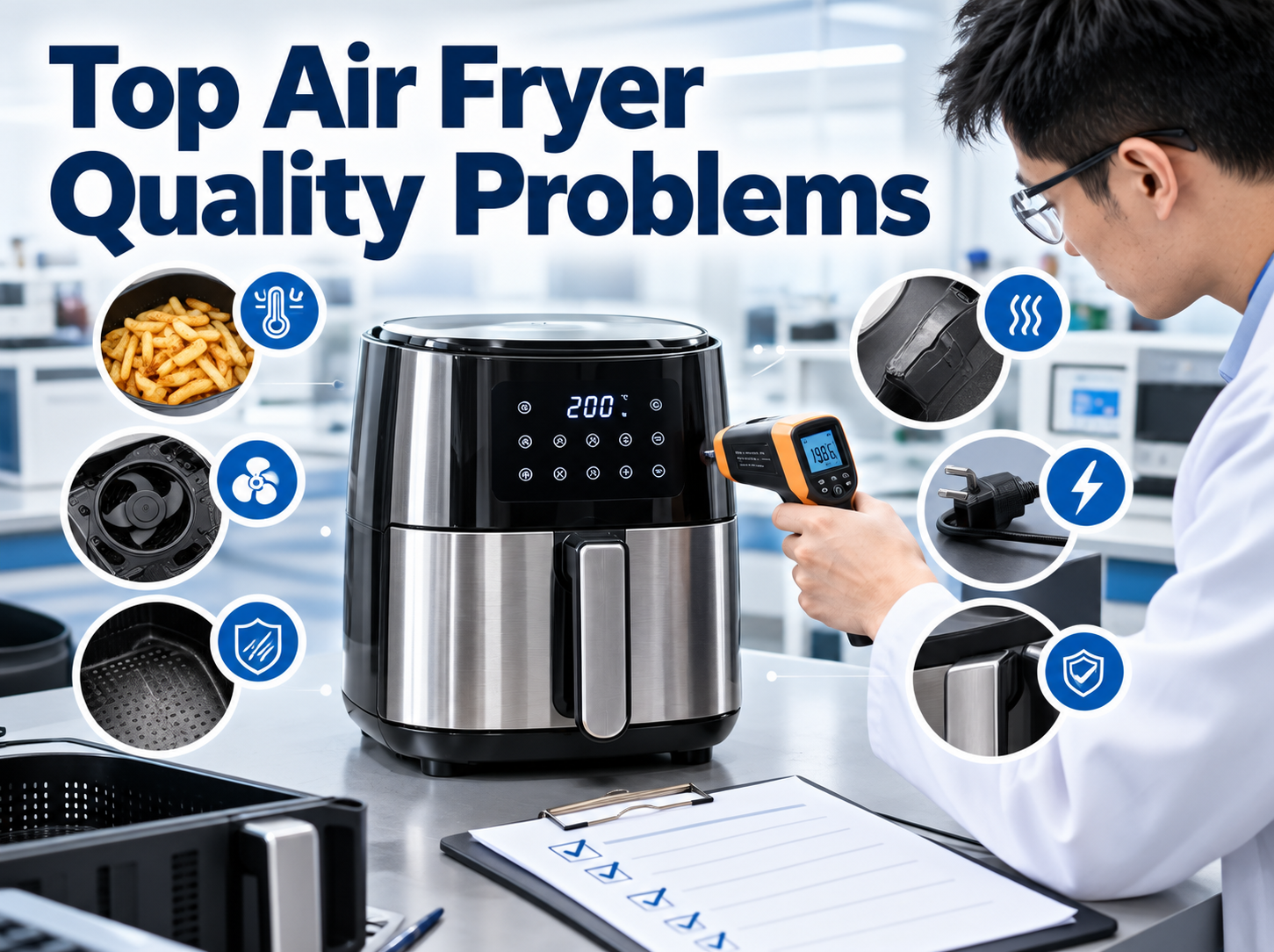
What Are the Most Common Quality Problems with Air Fryers?
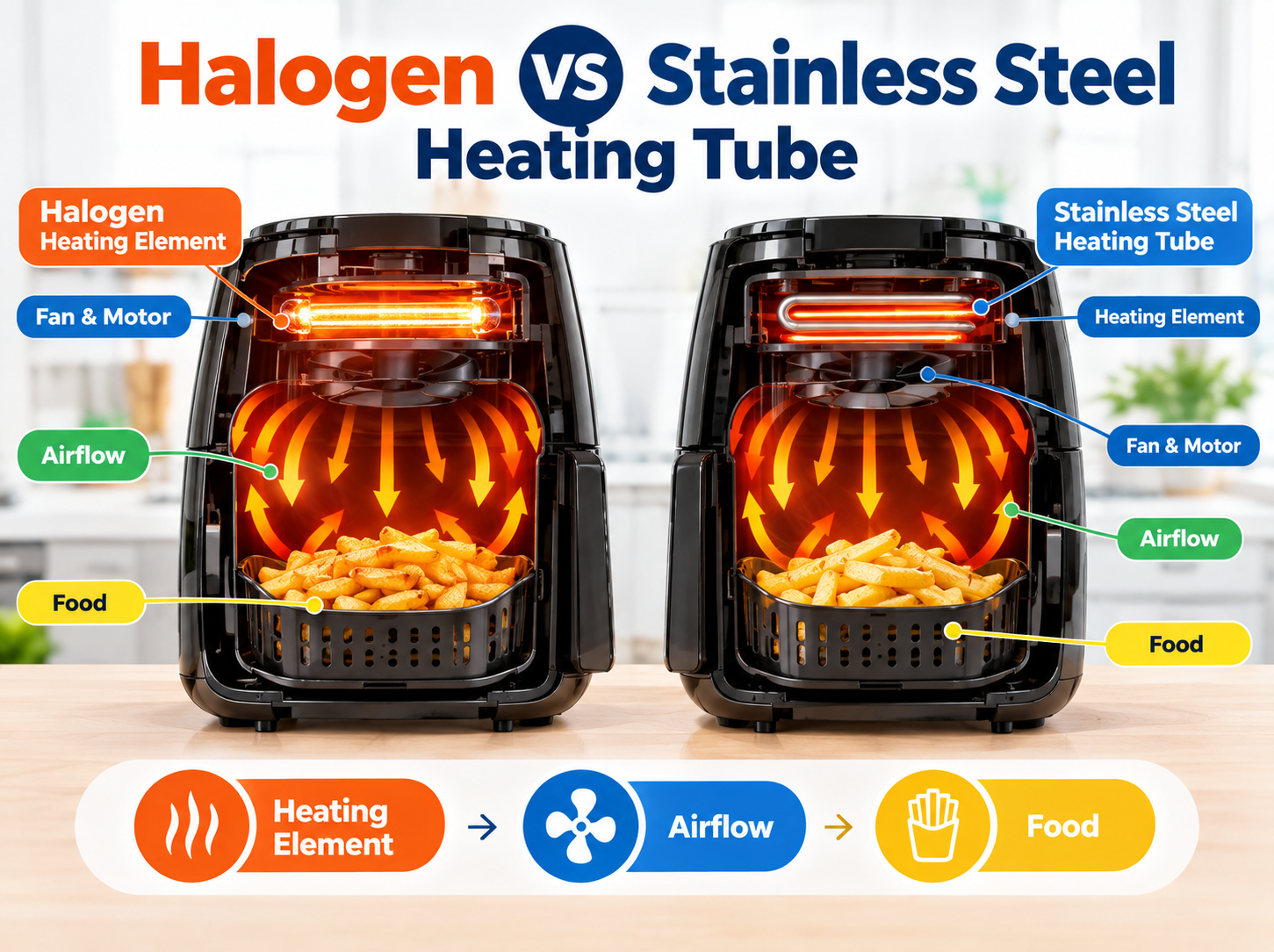
Air Fryer Heating Element: Halogen vs Stainless Steel Tube
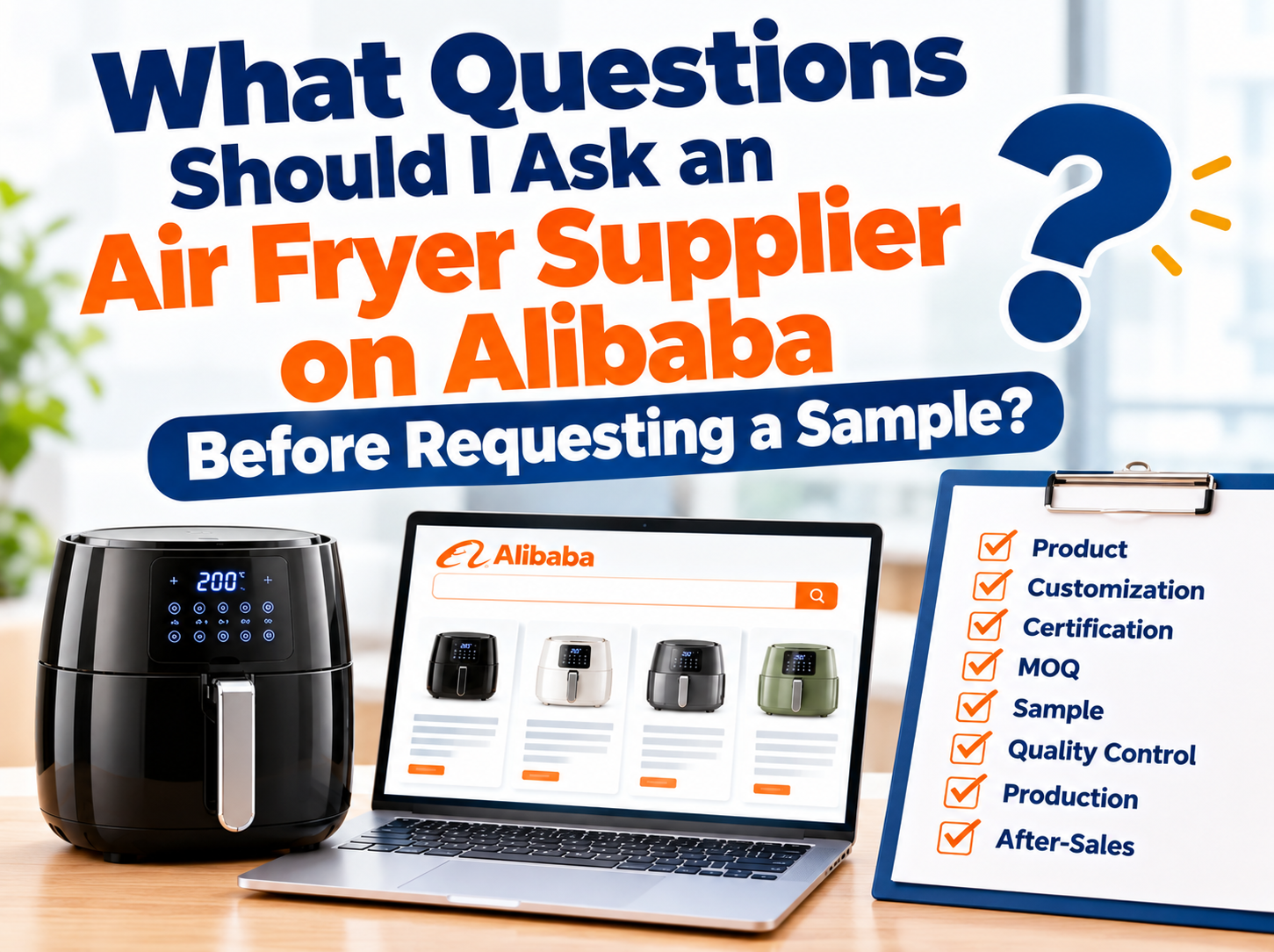
What Questions Should I Ask an Air Fryer Supplier on Alibaba Before Requesting a Sample?
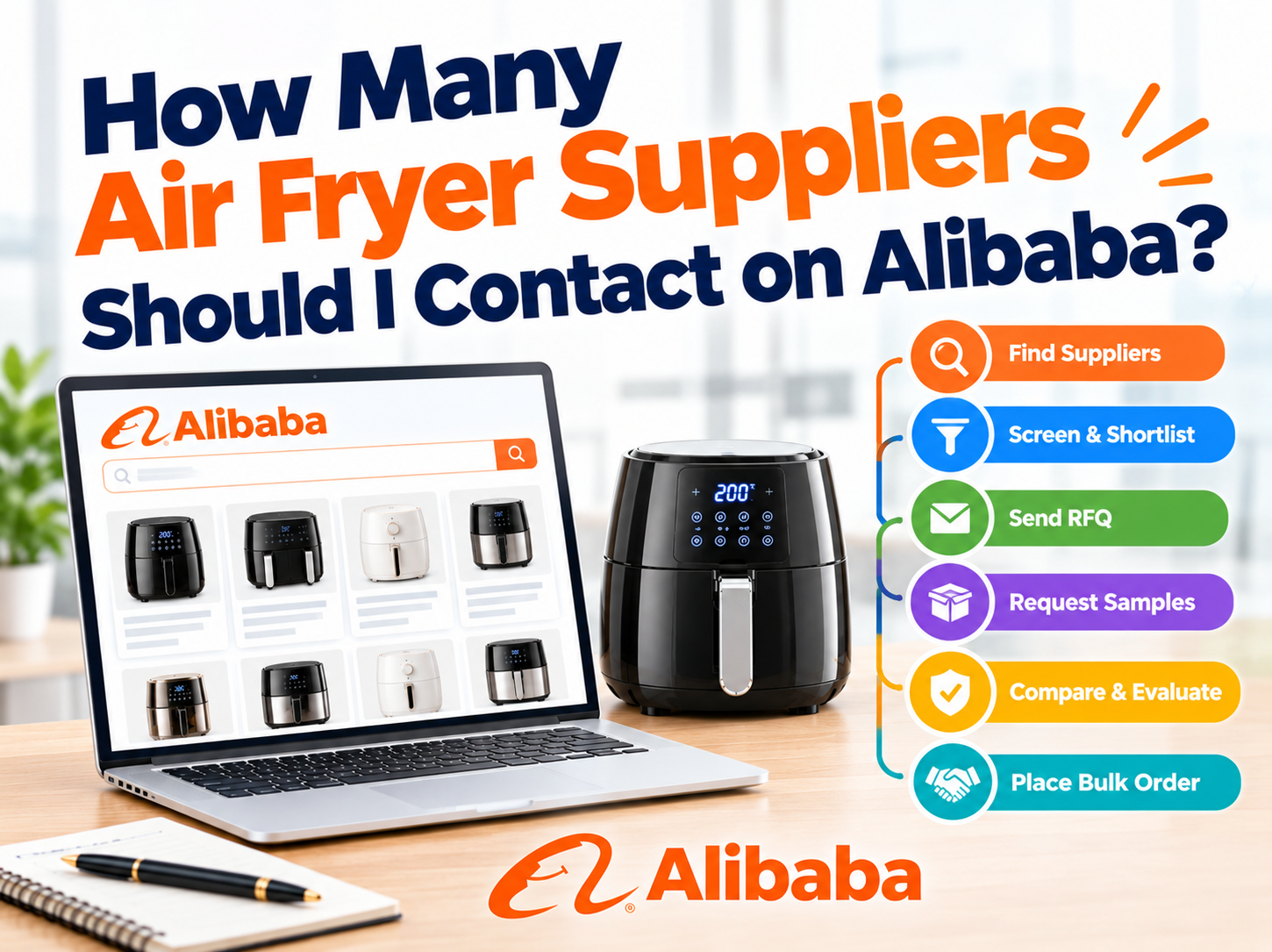
How Many Air Fryer Suppliers Should I Contact on Alibaba?
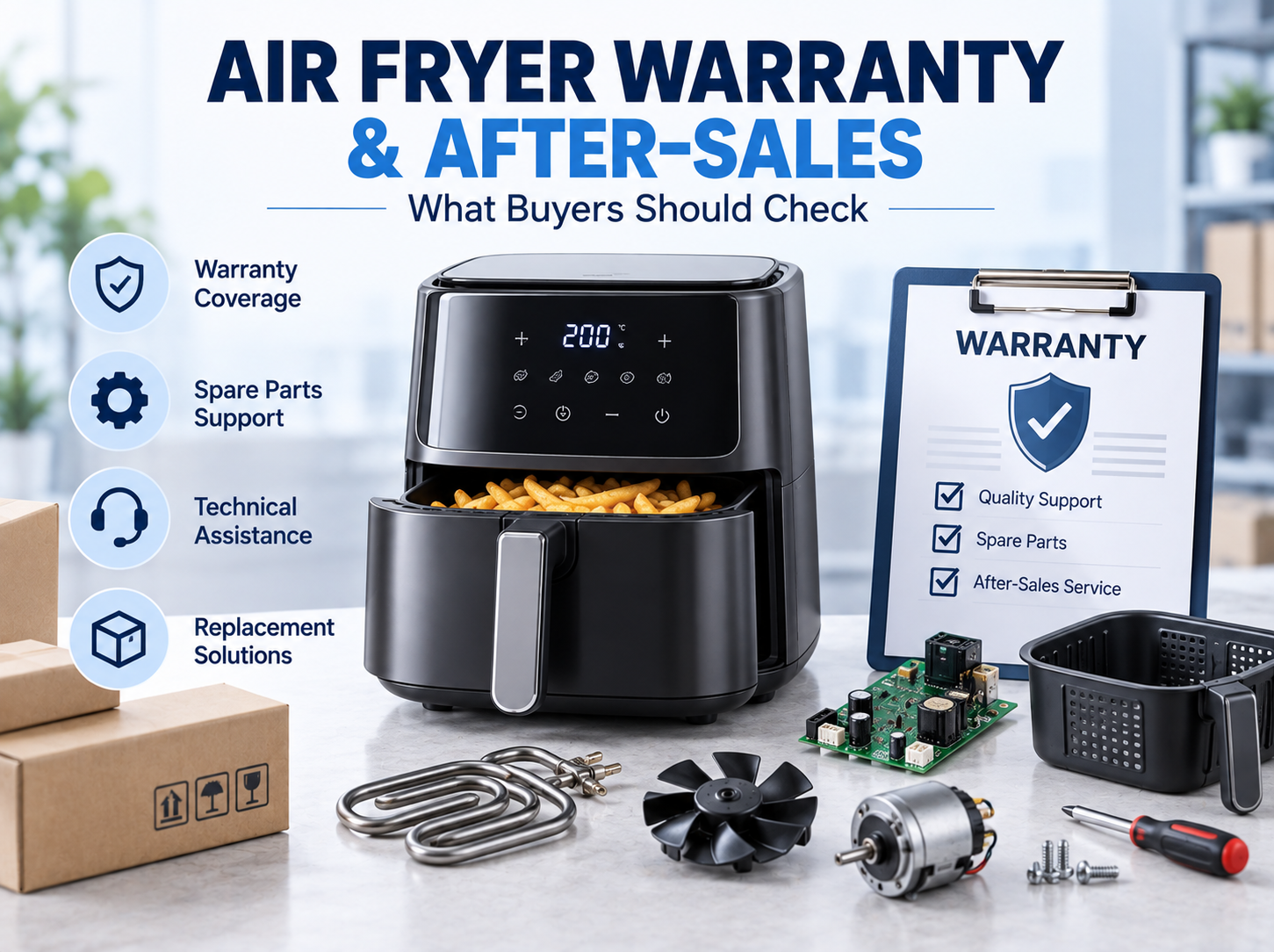
What Are the Common Warranty and After-Sales Problems with Air Fryers?
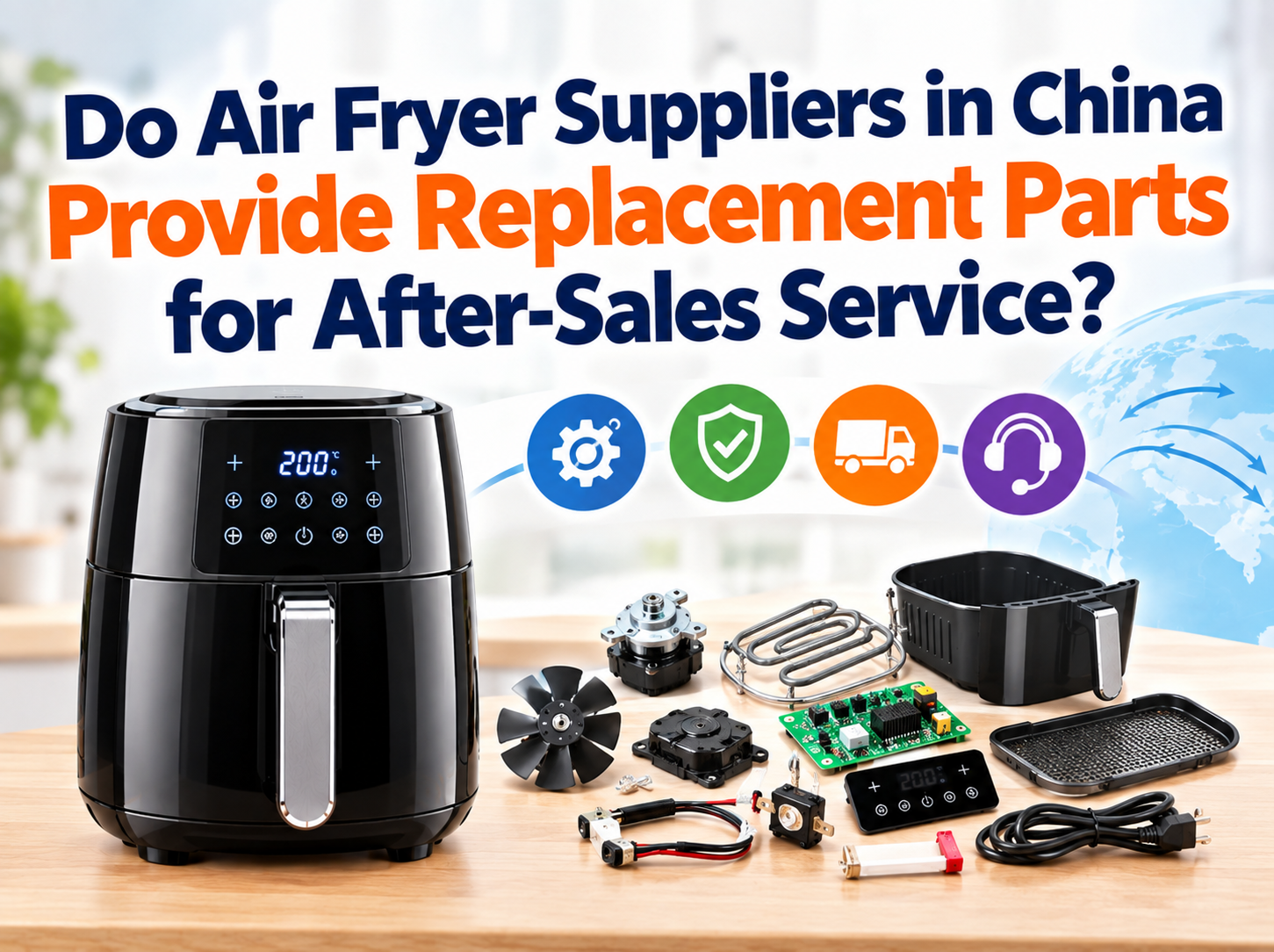
Do Air Fryer Suppliers in China Provide Replacement Parts for After-Sales Service?
 + 86 181 3826 8709
 info@funloiv.com
 6/F., Guanglong Building, Pingxin North Road, Longgang, Shenzhen City, Guangdong, China


@ 2009-2026 Shenzhen Funloiv Electric Appliance Co., LtdAll rights reserved


