 Notice:

 search
search
search
Oct 12, 2026


If you search for air fryer suppliers on Alibaba, you may notice something confusing:
Several suppliers appear to sell exactly the same, or very similar, air fryers.
The product photos may look almost identical.
The capacity may be the same.
The control panel may look the same.
The product dimensions may even be similar.
You may then wonder:
l Are these suppliers actually selling the same product?
l Are they using the same factory?
l Is one supplier simply copying another supplier's product?
l If the products look the same, why are their prices different?
These are reasonable questions for an importer, brand owner, wholesaler or supermarket buyer.
From a supplier's perspective, however, similar-looking products on Alibaba do not necessarily mean that the suppliers are the same, nor do they mean that the products have exactly the same internal construction or quality.
The important question is not simply:
“Why do these suppliers show the same air fryer?”
The more useful purchasing question is:
“What is actually different between these suppliers, and which one can reliably produce the product I need?”
This article explains the main reasons why Alibaba air fryer suppliers may show the same or similar products and how B2B buyers can evaluate them before placing a bulk order.
1. Why Do Different Alibaba Suppliers Show the Same or Similar Air Fryer?
There are several common reasons.
Reason 1: They Source From the Same Manufacturer
One possibility is that several Alibaba suppliers purchase products from the same factory.
For example:
Factory A
↓
Supplier A
Supplier B
Supplier C
All three companies may sell the same basic air fryer.
This can happen when the product is a standard model or an established ODM platform.
In this situation, the Alibaba supplier you are communicating with may not necessarily be the company that originally developed or manufactured the product.
This does not automatically mean that the supplier is unreliable.
A trading company or sourcing company can still provide useful services.
However, as a buyer, you should understand:
Who actually manufactures the product, and who is responsible for quality control?
That distinction becomes particularly important when you are planning a large order or long-term cooperation.
2. Several Suppliers May Be Selling the Same ODM Platform
This is another common situation in the small-appliance industry.
A manufacturer may develop an air fryer platform and then offer it to different customers for:
l OEM
l Private label
l ODM
l Customized packaging
l Customized colors
l Customized control panels
For example, the basic product architecture may remain similar:
Same basic platform
↓
Brand A → Logo + Color + Packaging A
Brand B → Logo + Color + Packaging B
Brand C → Logo + Color + Packaging C
The products may therefore look very similar even though they are sold under different brands.
This does not necessarily indicate poor product development.
ODM is often used because developing a completely new air fryer from the beginning requires engineering resources, tooling, testing and time.
The important question is whether the buyer needs:
A proven existing platform
or:
A genuinely differentiated product.
For brands that need deeper product development, see:
How to Choose an OEM/ODM Air Fryer Supplier in China: 10 Things Brands Should Check
The article explains the difference between OEM and ODM and why buyers should evaluate engineering, product development, samples, tooling and manufacturing capability—not just logo customization.
3. Some Air Fryers Use Common Industry Designs
Not every similar-looking product is copied from another supplier.
Air fryer technology has developed into several relatively familiar product architectures.
For example:
l 4–5L single-basket air fryers
l 6–8L digital air fryers
l Dual-basket air fryers
l Vertical dual-drawer air fryers
l Air fryer ovens
l Mechanical air fryers
l Touch-control air fryers
Products within the same category may naturally share certain characteristics.
They may use similar:
l Basket structures
l Heating configurations
l Fan positions
l Control layouts
l Product dimensions
l Cooking chambers
Therefore:
Similar appearance does not automatically prove that one supplier copied another supplier.
For a professional buyer, the more important issue is whether the product satisfies your required performance, materials, safety and market requirements.
4. Why Do Some Suppliers Use the Same Product Photos?
Another reason buyers see identical Alibaba listings is product photography.
A manufacturer may provide product photos, product videos and technical information to its distributors, trading partners or brand customers.
Those companies may then use similar images on their own Alibaba listings or websites.
As a result, you may see:
l The same front-view photo
l The same lifestyle photo
l The same product video
l The same dimensions
l The same specification table
This can make several suppliers appear to be the same company.
But a product image alone cannot tell you:
l Who manufactures it
l Where it is produced
l Which components are used
l How it is tested
l How production is controlled
l Whether the supplier can customize it
l Whether the quoted product is exactly the same configuration
Therefore:
Treat product photos as an initial screening tool—not as proof of supplier capability.
5. Does the Same Product Photo Mean the Same Product?
Not necessarily.
This is one of the most important points for B2B buyers.
Two air fryers can look almost identical from the outside while having different internal specifications.
For example, two 8L air fryers may have the same external housing but use different:
l Heating elements
l Motors
l Fans
l PCBs
l Thermal protection
l Wiring
l Plastic materials
l Metal thickness
l Basket coatings
l Accessories
One supplier may also provide a different:
l Power rating
l Temperature range
l Control system
l Certification configuration
l Packaging
l Warranty
l Quality-control standard
Therefore:
Two air fryers that look identical online should not automatically be treated as identical products.
The actual product specification needs to be verified.
6. Why Can Similar Air Fryers Have Different Prices?
This is one of the most common questions buyers ask.
Suppose you find:
Supplier | Quoted Price |
Supplier A | US$30 |
Supplier B | US$34 |
Supplier C | US$38 |
If the product photos look almost identical, why is there an US$8 difference?
There can be many reasons.
Materials
One supplier may use:
l Standard plastic
while another uses:
l Higher-grade heat-resistant material
l Metal housing
l Stainless-steel components
Heating system
The suppliers may use different:
l Heating elements
l Heating power
l Heating configurations
Motor and fan
The motor and airflow system can also affect cost and performance.
Airflow is particularly important because an air fryer is not simply a heating appliance. Heating, airflow and temperature control work together to determine cooking performance.
Electronics
Different PCB, display or control systems can change the product cost.
Basket and coating
The basket structure, material and coating can also affect cost.
Packaging
One supplier may quote:
Brown carton
while another includes:
Customized retail packaging.
Certification
Testing and compliance requirements can also affect the quotation.
Quality control
Suppliers with more extensive testing and inspection processes may have a different cost structure.
Therefore:
The lowest quotation is not necessarily the lowest-cost solution for your business.
For a detailed quotation-comparison framework, see:
How to Compare Quotations from Different Air Fryer Suppliers?
The article explains why buyers should compare specification, material, quality, certification, MOQ, lead time, warranty, commercial terms and total sourcing cost—not FOB price alone.
7. How Can I Tell Who Actually Manufactures the Air Fryer?
If several Alibaba suppliers show the same product, one of the first questions you should ask is:
Who actually manufactures this model?
You can start by checking the supplier's information.
Look for:
Factory information
l Factory location
l Production facility
l Production lines
l Factory photos
l Manufacturing capability
Engineering capability
l R&D team
l Product development
l Tooling
l Prototyping
l Sample development
Quality system
l Incoming inspection
l Production QC
l Functional testing
l Aging testing
l Final inspection
Certification
l Relevant product certificates
l Test reports
l Factory information
l Applicable product models
Export experience
l Target markets
l Export history
l Product range
l Customer types
You can also ask direct questions:
l Are you the manufacturer of this model?
l Is this model developed by your company?
l Can you provide information about the production facility?
l Can you support OEM or ODM development?
l Can you provide a production sample?
A professional supplier should be able to explain the supply chain clearly.
8. Should I Avoid Trading Companies?
Not necessarily.
This is an important distinction.
A trading company may provide:
l Supplier sourcing
l Product selection
l Communication
l Quality coordination
l Export documentation
l Multi-category sourcing
For some buyers, these services may be valuable.
However, if you are buying a large quantity of air fryers, you should understand who controls:
l Product engineering
l Critical components
l Production
l Quality control
l Testing
l Packaging
l Mass production
The key question is therefore not:
“Is this supplier a trading company?”
The better question is:
“Can this supplier control and take responsibility for the product and supply chain I am buying?”
For long-term OEM/ODM cooperation, direct access to engineering and manufacturing capabilities can become particularly important.
9. Why Do Different Brands Sell Similar Air Fryers?
This question is especially relevant to brand owners.
You may find several brands selling air fryers that look very similar.
There are several possible reasons.
One brand may have purchased an existing ODM platform.
Another may have customized:
l Color
l Logo
l Packaging
l Control panel
l Handle
l Accessories
A third brand may have made deeper modifications to:
l Heating system
l Airflow
l Product structure
l User interface
l Product materials
Therefore, brand differentiation does not always mean completely new hardware architecture.
However, if your business depends on having a distinctive product, simply adding a logo to an existing model may not be enough.
You may need to discuss:
l Product appearance
l Industrial design
l Color
l Control interface
l Functions
l Accessories
l Internal construction
l Packaging
l Tooling
l Product positioning
This is where a capable ODM partner can add value.
10. Same Appearance Does Not Mean Same Internal Construction
For an air fryer, some of the most important differences cannot be seen in an Alibaba product photo.
Consider the following.
Heating Element
Two products may have similar external appearance but use different heating-element configurations.
This can affect:
l Heating performance
l Temperature distribution
l Energy consumption
l Cooking time
l Product cost
Motor and Fan
The motor and fan influence:
l Airflow
l Noise
l Vibration
l Temperature distribution
l Cooking consistency
l Long-term reliability
Our website's article:
Why Does Airflow Matter in an Air Fryer?
explains why an air fryer should be understood as a heating + airflow + temperature-control system, rather than simply a heating appliance.
Thermal Protection
Different products may use different thermal protection designs and components.
PCB and Controls
Two products may have similar touch panels but use different electronic platforms.
Materials
External appearance alone cannot confirm:
l Plastic material
l Metal thickness
l Internal cavity material
l Basket material
l Coating specification
This is why technical specification and sample verification are important.
11. How Should I Compare Two Similar Air Fryers?
If you find two suppliers showing what appears to be the same air fryer, compare them in several layers.
Layer 1 — External Product
Check:
l Dimensions
l Weight
l Appearance
l Color
l Basket size
l Handle
l Control panel
Layer 2 — Product Specification
Check:
l Capacity
l Power
l Voltage
l Temperature range
l Timer
l Cooking programs
l Accessories
Layer 3 — Internal Construction
Ask about:
l Heating element
l Motor
l Fan
l PCB
l Thermal protection
l Wiring
l Materials
Layer 4 — Compliance
Check:
l Applicable certification
l Test reports
l Product model
l Voltage version
l Target market
l Factory information
Layer 5 — Production
Evaluate:
l Sample
l QC process
l Aging testing
l Pre-shipment inspection
l Production consistency
This creates a much more meaningful comparison than simply comparing two Alibaba product photos.
12. Use a Standardized RFQ to Compare Similar Suppliers
If several suppliers appear to offer the same air fryer, send them the same requirements.
For example:
l Product: 8L digital air fryer
l Capacity: 8L
l Power: 1800W
l Temperature: 60–230°C
l Body: Metal
l Control: Digital touch
l Target market: EU
l Packaging: Customized retail box
l Quantity: 2,000 pcs
Then ask each supplier to confirm:
l Exact product model
l Full specification
l Material
l Heating system
l Motor and fan
l Certification
l MOQ
l FOB price
l Packaging
l Sample lead time
l Mass-production lead time
l Warranty
This prevents suppliers from quietly quoting different products.
For a complete RFQ structure, see:
Air Fryer RFQ Checklist: 20 Specifications Buyers Should Include
The checklist covers capacity, basket configuration, power, voltage, heating system, motor and fan, materials, controls, packaging, certification, target market, MOQ and delivery requirements.
13. Don't Choose Between Similar Suppliers Based Only on Alibaba Photos
If two suppliers still look almost identical after your initial screening, the next step should be verification.
This is where samples become important.
You can compare:
Product performance
l Heating performance
l Temperature accuracy
l Cooking consistency
l Airflow
l Fan noise
l Cooking time
Product construction
l Housing quality
l Basket construction
l Handle strength
l Assembly quality
l Surface finish
Safety-related functions
l Thermal protection
l Automatic shut-off
l Overheating protection
l Electrical performance
User experience
l Control interface
l Basket operation
l Cleaning
l Noise
l Cooking visibility
If you are comparing several suppliers, use the same testing procedure for every sample.
This gives you a much more objective comparison.
For a detailed testing framework:
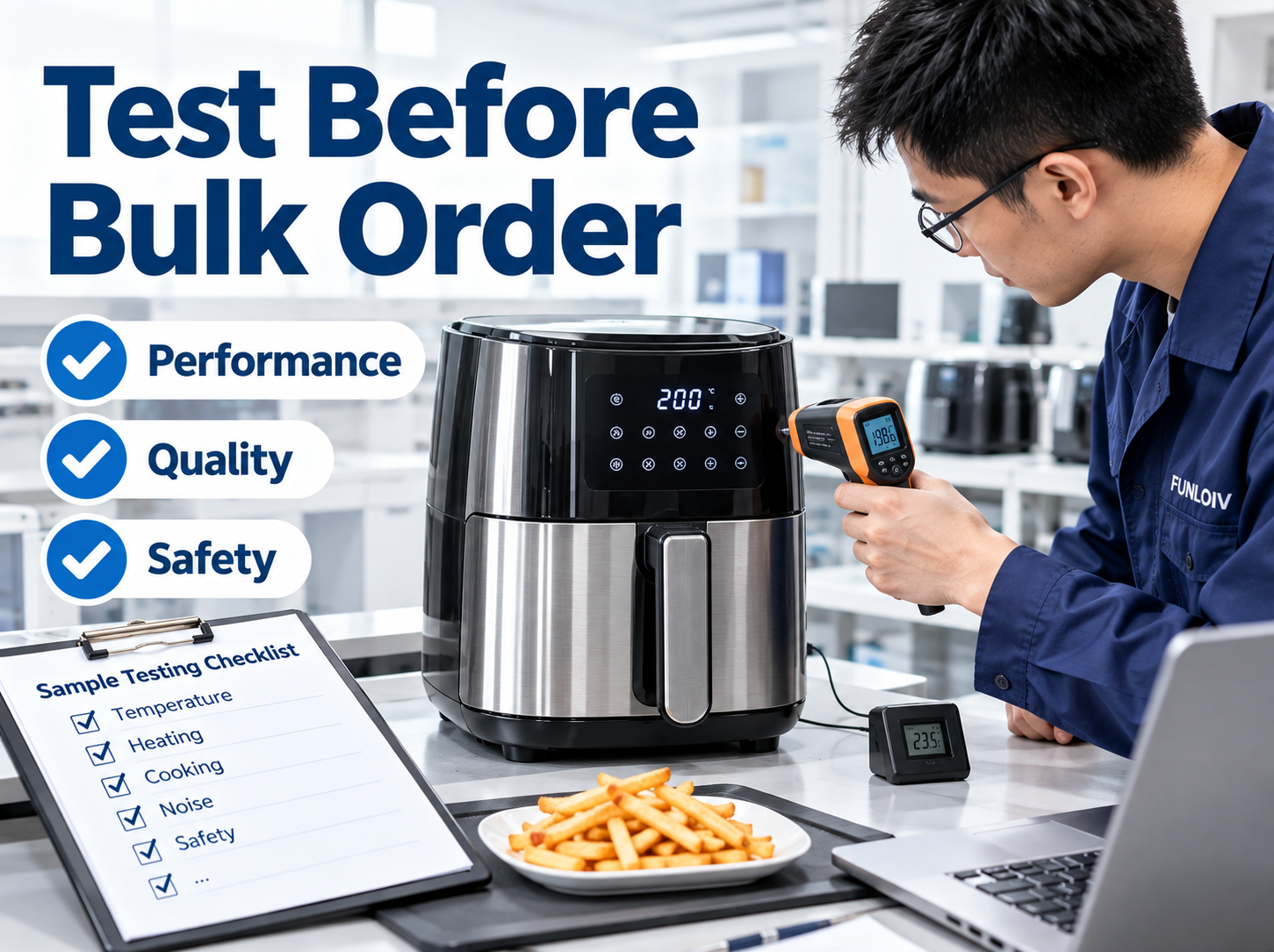
How Can I Test an Air Fryer Sample Before Placing a Bulk Order?
The article explains why a good sample does not automatically prove consistent mass production and recommends evaluating heating, cooking consistency, temperature accuracy, motor noise, basket durability, electrical safety and other performance areas.
14. Sample Testing Is Also a Supplier Test
There is another reason to compare samples.
You are not only testing the air fryer.
You are also testing the supplier.
Suppose you discover that the sample has a problem with:
l Temperature accuracy
l Uneven cooking
l Motor noise
l Basket coating
l Handle strength
Pay attention to how the supplier responds.
A professional supplier should be able to discuss:
l What caused the problem
l Whether the result is within specification
l What corrective action is possible
l Whether the design needs modification
l Whether the problem can be controlled in mass production
This is often more informative than a supplier simply saying:
“No problem, quality is good.”
Your supplier is ultimately a partner in managing product risk.
15. Quality Control Can Be More Important Than the Alibaba Product Listing
A product page tells you what a supplier wants you to see.
A quality-control system tells you more about how the supplier manages production.
Before placing a bulk order, ask whether the supplier has controls for:
Incoming QC
Are key components checked before production?
Production QC
Are products tested during assembly?
Functional testing
Are heating, controls, motor and other functions checked?
Aging testing
Are selected units tested for extended operation?
Final inspection
Are finished products inspected before shipment?
Pre-shipment inspection
Can the supplier support an internal or third-party inspection?
For more information:
What Quality-Control Standards Should I Require from an Air Fryer Supplier?
The article discusses repeatable testing for heating uniformity, airflow, motor and fan quality, aging and other quality-control areas.
16. The Same-Looking Product May Still Be the Wrong Product for Your Business
This is an important point for buyers.
Imagine you need a:
Premium 8L metal-body air fryer for the European market.
You find a similar-looking model from five suppliers.
But one supplier may be offering:
l Plastic body
l 200°C maximum temperature
l Basic heating system
l Entry-level packaging
Another may offer:
l Metal body
l 230°C specification
l Different heating configuration
l Premium packaging
l Different certification package
The external product photo may not make these differences obvious.
Therefore:
Product similarity should be the beginning of your investigation, not the end of it.
17. What Should I Compare Before Choosing the Supplier?
A practical comparison can look like this:
Evaluation Factor | Supplier A | Supplier B | Supplier C |
Exact Product Match | ✓ / ✕ | ✓ / ✕ | ✓ / ✕ |
Capacity | |||
Heating System | |||
Body Material | |||
Basket / Cavity Material | |||
Motor / Fan | |||
Temperature | |||
Control System | |||
Certification | |||
OEM/ODM Capability | |||
MOQ | |||
FOB Price | |||
Packaging | |||
Sample Lead Time | |||
Mass Production Lead Time | |||
QC System | |||
Warranty | |||
After-Sales Support | |||
Supplier Capability | |||
Overall Score |
This makes it much easier to avoid choosing a supplier simply because its Alibaba page looks attractive.
18. What Is the Real Difference Between Similar Air Fryer Suppliers?
After all these comparisons, the answer becomes clearer.
The difference may not be obvious from:
l Product photos
l Capacity
l Alibaba titles
l Product videos
The real differences may be in:
Engineering
l Components
l Materials
l Testing
l Certification
l Quality Control
l OEM/ODM Capability
l Production Consistency
l After-Sales Support
l Long-Term Supply Capability
This is particularly important for B2B buyers.
You are not purchasing a product photo.
You are purchasing:
A repeatable supply capability.
19. The Best Supplier Is Not Necessarily the Supplier With the Lowest Price
When several Alibaba suppliers show similar products, it can be tempting to select the lowest quotation.
However, a professional sourcing decision should consider:
Product Specification
Quality
Certification
MOQ
Lead Time
Packaging
Warranty
Supplier Capability
Total Sourcing Cost
rather than:
Lowest FOB price
A supplier offering a slightly higher quotation may provide better materials, more complete testing, stronger QC, better certification support or more reliable production.
The right supplier is therefore the supplier that provides the best overall fit for your product and business model.
20. What Should a Professional Air Fryer Supplier Be Able to Explain?
If you are seriously considering a supplier for a bulk order, the supplier should be able to discuss your project beyond price.
For example:
Product
Which air fryer configuration best fits my target market?
Engineering
What heating and airflow configuration does the product use?
Materials
What materials are used for the body, cavity and basket?
Compliance
What certification and documentation apply to this model?
Customization
What can be changed for my brand?
Sample
How will the sample be developed and tested?
Quality
How will the approved sample be controlled during mass production?
Production
Can you support my expected order quantity?
After-Sales
What happens if quality problems occur after shipment?
The quality of these answers can tell you much more than an Alibaba supplier badge or product photograph.
21. How FUNLOIV Approaches Similar Air Fryer Products
From a supplier's perspective, we understand why buyers may see similar air fryers across Alibaba.
Some products are based on established industry platforms. Some are standard models. Some are OEM products. Some are ODM products. Some may be supplied through trading or sourcing companies.
For a buyer, the important question is therefore not simply:
“Does FUNLOIV have a different-looking air fryer?”
The more important question is:
“Can FUNLOIV provide the product configuration, quality, customization and production capability required for my market?”
Our approach is to start with the buyer's requirements and then evaluate the appropriate product solution.
Depending on the project, this may include:
l Existing air fryer models
l Metal-body air fryers
l Single-basket models
l Dual-basket models
l Vertical dual-drawer designs
l Heating-system options
l Product customization
l OEM projects
l ODM development
l Packaging
l Certification requirements
l Sample development
l Mass production
A capable air fryer supplier should help convert:
l Market Requirements
l Product Requirements
l Engineering
l Sample
l Testing
l Mass Production
rather than simply sending a product catalog and a price list.
FUNLOIV's existing OEM/ODM guidance similarly emphasizes product development, engineering, tooling, sample development, testing and manufacturing capability as important supplier-selection factors.
22. What Should You Do If You Find the Same Air Fryer From Several Alibaba Suppliers?
Use this process:
Step 1 — Don't assume they are the same supplier
Similar product photos are not enough evidence.
Step 2 — Compare the exact specifications
Check:
l Capacity
l Power
l Temperature
l Heating
l Motor
l Fan
l Materials
l Controls
Step 3 — Identify who actually manufactures the product
Ask about:
l Factory
l R&D
l Production
l QC
l Certification
Step 4 — Send the same RFQ
Make all suppliers quote the same requirements.
Step 5 — Compare quotations on an apples-to-apples basis
Do not compare FOB prices alone.
Step 6 — Test samples
Use the same testing procedure for each supplier.
Step 7 — Evaluate mass-production capability
Ask how the approved sample will be controlled during production.
Step 8 — Choose based on total sourcing value
Select the supplier that provides the best combination of:
Product + Quality + Compliance + Cost + Service + Reliability
Frequently Asked Questions
Ø Are all Alibaba air fryer suppliers selling the same product?
No. Some suppliers may sell products from the same manufacturer or the same ODM platform, while others may offer products with similar external designs but different internal components, specifications and quality levels.
Ø Why do Alibaba suppliers have the same air fryer photos?
They may source from the same manufacturer, use manufacturer-provided product images, sell the same ODM platform, or use similar industry-standard product designs.
Ø Does a similar air fryer mean the suppliers are the same company?
No. Similar products do not prove that the suppliers are the same company or that they have the same manufacturing capability.
Ø Why do similar air fryers have different prices?
Differences may come from materials, heating systems, motors, fans, electronics, packaging, certification, MOQ, quality control, customization and commercial terms.
Ø How can I find the real manufacturer behind an Alibaba air fryer?
Ask about the production facility, product development, factory capability, quality-control process, certification and whether the supplier manufactures the specific model itself.
Ø Should I order samples from several suppliers?
If several suppliers remain qualified after your initial screening, comparing samples using the same testing procedure can help you evaluate product performance and supplier responsiveness.
Ø Is the cheapest Alibaba air fryer supplier the best choice?
Not necessarily. A lower price may reflect different specifications, materials, packaging, certification or quality assumptions. Compare equivalent products before comparing prices.
Need Help Comparing Similar Air Fryer Suppliers?
If you have found several similar air fryer products on Alibaba, you do not need to make your decision based only on product photos or the lowest quotation.
You can send an air fryer supplier:
l Product link
l Product photo
l Product specification
l Target market
l Estimated quantity
l Required functions
l Existing quotation
A professional supplier should then be able to discuss the product configuration, technical specifications, customization possibilities, certification, MOQ, lead time and bulk-production requirements.
If you are sourcing air fryers for a brand, importer, wholesaler, supermarket or retail business, FUNLOIV can evaluate your requirements and provide a quotation based on the same product specifications.
Request an Air Fryer Quotation
Send us your air fryer reference, target market and estimated quantity. We can discuss the product configuration and bulk-order requirements with you.
Related Articles
l Air Fryer Heating Element: Halogen vs. Stainless Steel Heating Tube.
l Why Does Airflow Matter in an Air Fryer?
l What Is the Difference Between AC and BLDC Motors in Air Fryers?
l What Makes an Air Fryer Cook More Evenly?
l How Can I Test an Air Fryer Sample Before Placing a Bulk Order?
l What Quality-Control Standards Should I Require from an Air Fryer Supplier?
l What Air Fryer Tests Should Be Included in a Pre-Shipment Inspection?
l What Factors Affect the FOB Price of an Air Fryer?
l How to Compare Quotations from Different Air Fryer Suppliers?
l 230°C Air Fryer: What Buyers Should Check Before Importing?
l A Dual Heating vs Single Heating Air Fryer- Which Is Better?
l What Is the Difference Between AC and DC Motors in Air Fryers?
l Air Fryer for the Middle East - A Guide to G-Mark, Specifications and Compliance?
l What Are the Most Common Quality Problems with Air Fryers?
l Air Fryer RFQ Checklist: 20 Specifications Buyers Should Include.
l How To Verify Whether an Air Fryer Supplier Is Reliable?
l How to Choose an OEM-ODM Air Fryer Supplier in China?
l 200°C vs 230°C Air Fryer: Which one is better?
l Metal-body vs plastic-body air fryer: which is better for a premium brand?
l Top Heating vs. Rear Heating Air Fryers: Which one is better for a B2B buyer?
l Is a Vertical Dual-Drawer Air Fryer Better for Saving Kitchen Space?
l Air Fryer Certifications & Compliance by Market- A Safety Guide for Importers.
l Vertical vs. Horizontal Dual-Basket Air Fryer- Which Is Better for Retail?
l What Air Fryer Capacity Is Best for the European Market?
l What Are the Common Warranty and After-Sales Problems with Air Fryers?
l What MOQ, Lead Time and Payment Terms Should I Expect from an Air Fryer Supplier?
l How Can I Prevent Plastic Melting or Deformation in an Air Fryer?
l What Air Fryer Safety Tests Should Be Completed Before Mass Production?
l What Is the Difference Between a Single-Basket and Dual-Basket Air Fryer?
l How Do Different Air Fryer Designs Affect Cooking Performance and Cleaning?
l How Much Does an OEM Air Fryer Cost from China?
l What Are the Most Important Features to Consider When Sourcing an Air Fryer?
l What MOQ Do Chinese Air Fryer Suppliers Usually Require?
l How Can I Import Air Fryers from China?
l Can an Air Fryer Supplier in China Help Design New Products?
l How Can Air Fryer Suppliers in China Support Small Businesses?
l Can Air Fryer Suppliers Produce Products Compatible with the Voltage in My Country?
l Do Air Fryer Suppliers in China Provide Replacement Parts for After-Sales Service?
l How Can I Find Competitive Prices from Air Fryer Suppliers?
l How to Reduce Business Risk When Working with Air Fryer Suppliers in China?
l What Happens If the Air Fryer Supplier Cannot Meet the Agreed Delivery Date?

How Can I Test an Air Fryer Sample Before Placing a Bulk Order?
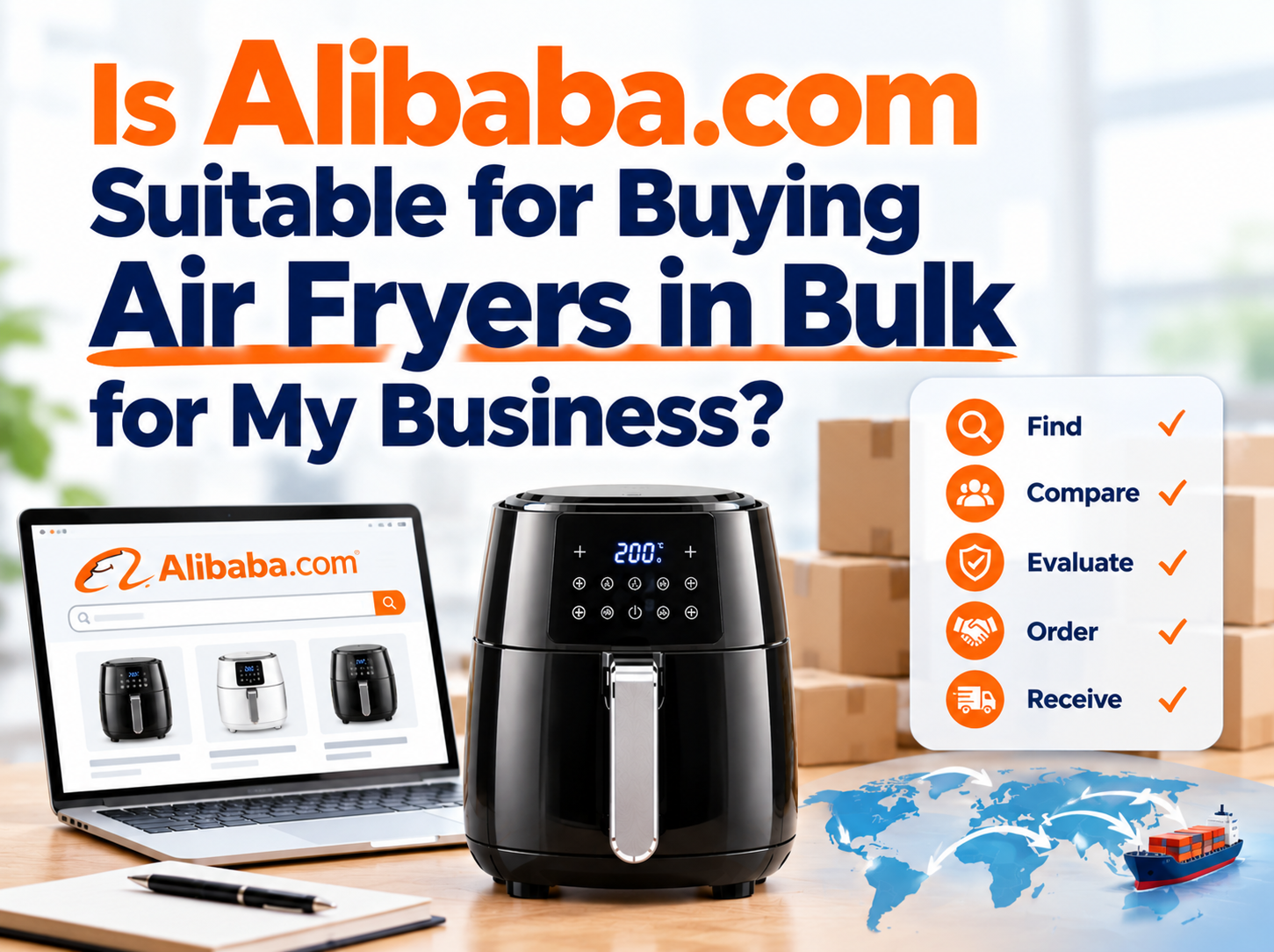
Is Alibaba.com Suitable for Buying Air Fryers in Bulk for My Business?
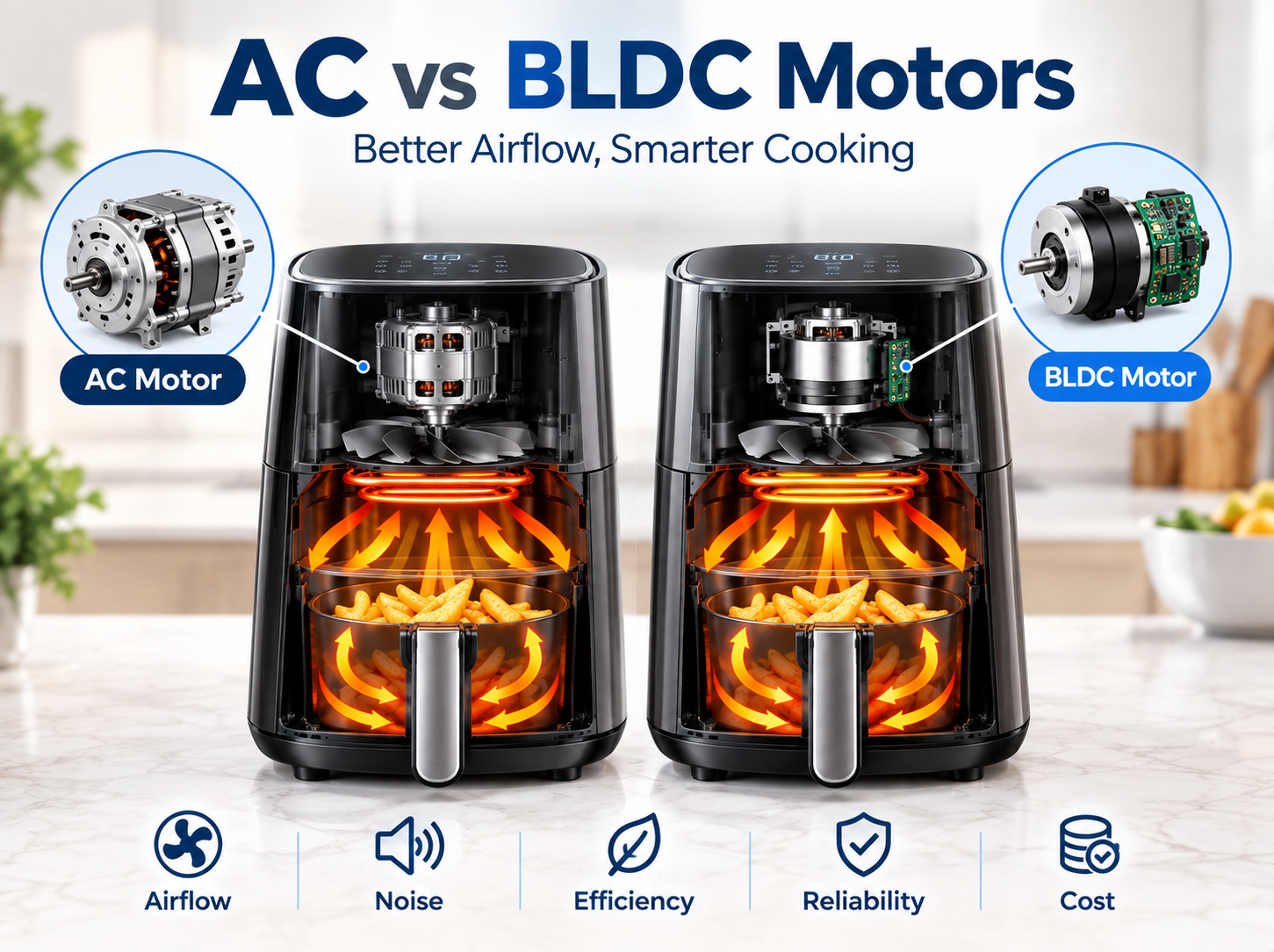
What Is the Difference Between AC and BLDC Motors in Air Fryers?
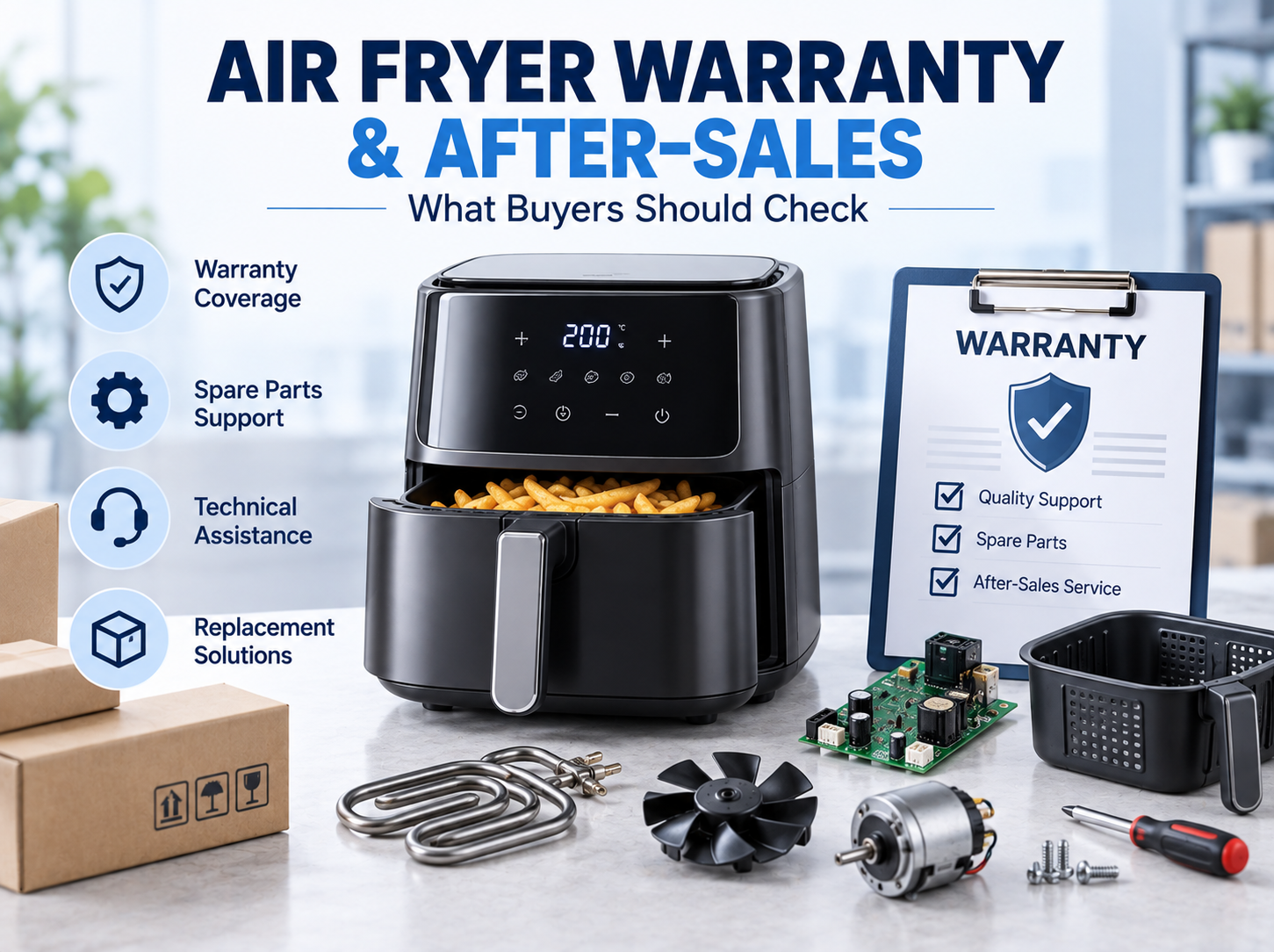
What Are the Common Warranty and After-Sales Problems with Air Fryers?
How Can I Import Air Fryers from China? A Step-by-Step Guide for Importers and Brands
How Do Different Air Fryer Designs Affect Cooking Performance and Cleaning?
 + 86 181 3826 8709
 info@funloiv.com
 6/F., Guanglong Building, Pingxin North Road, Longgang, Shenzhen City, Guangdong, China


@ 2009-2026 Shenzhen Funloiv Electric Appliance Co., LtdAll rights reserved


